
Mandy Shunnarah gives voice to an overlooked skate community in ‘Midwest Shreds’
The Columbus author and poet will celebrate their new collection with a book release event at Two Dollar Radio Headquarters on Tuesday, July 16.
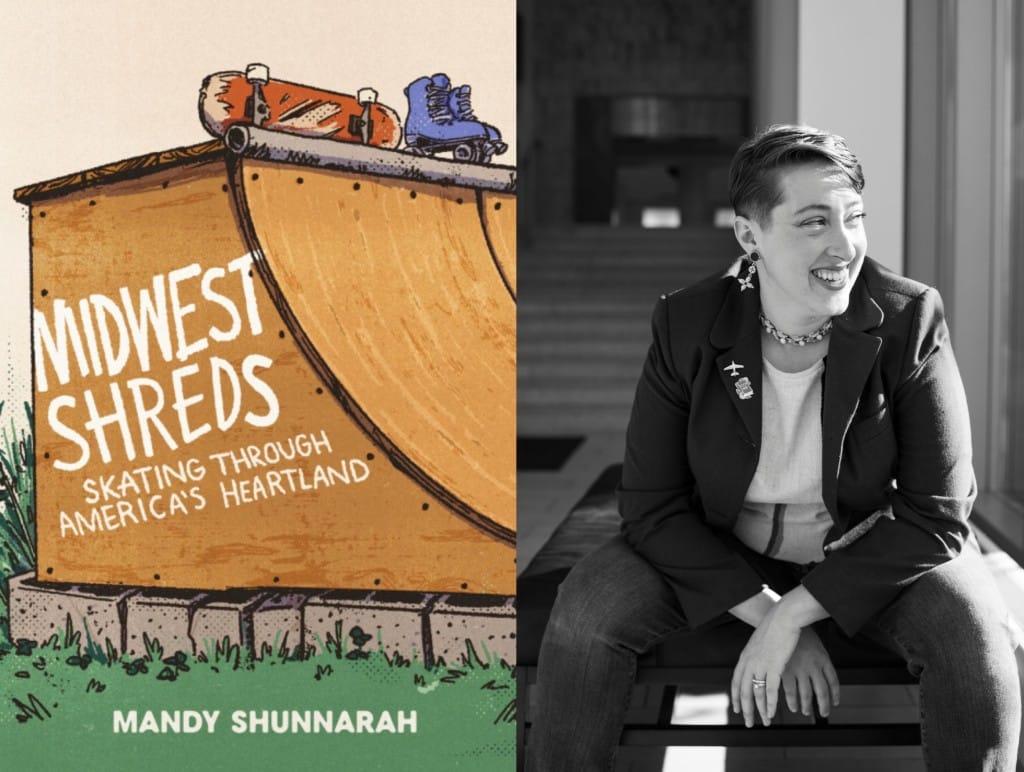
As a middle schooler growing up in small town Alabama, author and poet Mandy Shunnarah became obsessed with breaking down the skateboard tricks they watched unfold on MTV shows such as “Jackass” and “Viva La Bam.” In an early July interview, Shunnarah recalled how they would press their face close to the TV screen, locking their eyes on the skaters’ feet in the hopes of decoding how they managed to exact all manner of flips, grinds and spins while maintaining control of their boards.
At age 13, Shunnarah purchased the best (and only) skateboard available to teenage riders at Walmart and immediately set out trying to replicate these tricks in the driveway of their family’s home. Shortly thereafter, overcome with an unearned confidence, Shunnarah decided they would skateboard the large hill that ran down the family’s street. Positioning themselves at the top, Shunnarah pushed off, making it nearly halfway before realizing their error.
“Around that point, the board started warping back and forth because it was going too fast and the wheels were too tiny,” Shunnarah said. “And so, I fell off and tumbled down this hill. And miraculously I wasn’t hurt aside from a few cuts and scrapes. But I landed on my ass just in time to watch my skateboard carve this perfect path into the storm drain. And it was like nothing but net into the drain. And what made it worse was my mom was working in the yard, and the storm drain was right in front of our house, and she just started laughing. … And that was literally weeks of allowance down the drain.”
A donation powers the future of local, independent news in Columbus.
Support Matter News
From that point forward, Shunnarah ditched the board and leaned into roller skating, realizing the benefit of a sport in which the equipment, by its nature, remained firmly attached to the participant’s feet.
This recollection is one of many surfaced in Shunnarah’s new book, Midwest Shreds: Skating Through America’s Heartland, which lovingly documents the current quad skating scene in the Midwestern United States. Much of the text took shape during a five-week trek undertaken by the author in the second year of the pandemic, a period of time in which Shunnarah visited more than a dozen skate parks stretching from Des Moines, Iowa, to the Ohio/West Virginia border. The resulting collection, which Shunnarah will celebrate with a book launch at Two Dollar Radio Headquarters on Tuesday, July 16, serves as a travelog, a vivid portrait of the modern Midwest skate scene, a memoir, a historical excavation, and a corrective to the larger narrative around skating, which has frequently centered white male voices to the detriment of the diverse communities forged within the sport.
Shunnarah traced the roots of Midwest Shreds to their decision to again take up skating in April 2019, which was accompanied by an innate need to learn everything they could about the sport.
“Whenever I get into a new hobby, I want to read all about it. I want to know the history, who the major players are, who invented the sport,” Shunnarah said. “And so, I started looking around at libraries and bookstores, asking where to find the books on skating. … And everything I found was memoirs of skateboarding dudes in California, which, fine, whatever. And then [there were books on] skatepark architecture and city planning, which, okay, cool, but still not what I’m looking for. And I kept digging, and aside from a few articles, I couldn’t find anything narrative about skate parks that didn’t center on the West Coast. … And there’s a saying in the writing world that if there’s a book you want to read that doesn’t exist, you have to write it.”
The natural sense of curiosity that fueled these explorations has been present in Shunnarah from childhood, the author recalling how as a child they would frequently question the curriculum to which they were exposed while attending a private fundamentalist elementary school. A particular turning point arrived when Shunnarah transferred to public school and upon the recommendation of a librarian read the book The Watsons Go to Birmingham – 1963.
“And when I returned it, the librarian said, ‘What did you think?’ And I said, ‘Oh, it was really good. But that bombing at the end was really wild. How do authors think of these things?’” Shunnarah said. “And it occurred to her that I didn’t know it was an actual, historical event. And when she told me, I just had this moment, like, ‘How did I not know this?’ I was 13 years old, and it seemed unconscionable nobody would have told me this happened just 45 minutes from where I grew up. And that got me thinking, what else aren’t people telling me?”
Midwest Shreds is shot through with this kind of curiosity. Shunnarah introduces a trip to Detroit as an open-ended search for new stories. When the author visits a skate park in St. Louis, the text doubles as an exploration of the history of race within the sport, the chapter unfolding against the backdrop of the 2014 police killing of Black teenager Michael Brown in nearby Ferguson, Missouri. And when they trek to Chicago, they opt to visit a skate park widely regarded as the worst in the city, digging into the inequity of how resources are applied and how these decisions can influence the makeup of the larger skate community.
“I thought the book would get really boring really fast if I was like, ‘Here’s the best skate park in each state,’” Shunnarah said. “I really wanted to do something different.”
This open-minded approach repeatedly proved beneficial, with Shunnarah being granted in-kind access to spaces and people who have typically existed off-the-radar. When the writer visited Madison, Wisconsin, for instance, they gained access to the guarded DIY community at the Shred Shed, which embraces secrecy not as a means of exclusion but rather as a tool for preservation.
It helped, of course, that Shunnarah had their own history with the sport on which to draw, recalling how the heckling of male skateboarders made them briefly question their desire to pursue roller skating when they took it up again in 2019. “I tried to think of all the things that stopped me from going to the skate park, historically,” they said. “I didn’t want to be the only non-dude skater and the only quad skater at the park. And I kept thinking, ‘How many other people do you not see because they don’t want to deal with the bullshit?’ And I wanted to write a book for them.”
Even in the limited time Shunnarah spent on the road, they encountered more stories than they could have hoped to bring to life in a single collection. And they stressed a hope that the book might lead others to continue the exploration. “Let’s say I found a dozen stories that hadn’t been given adequate representation. Now, how many more are there?” they said. “Legacy skate media, while great and wonderful in some ways, is still male-centric, skateboard-centric and in many ways behind the times. … I really hope this book encourages people not to rely on legacy skate media and to get out there and look for those stories.”
Author
Related Articles
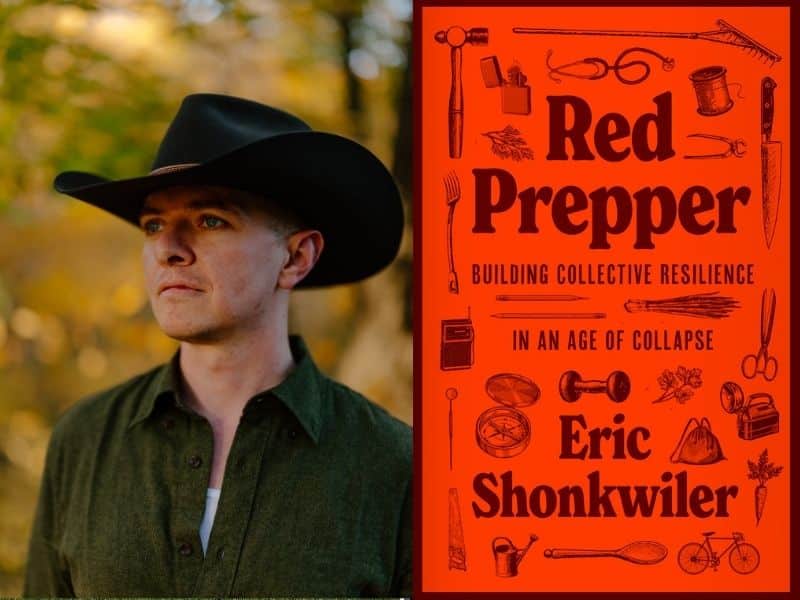
Eric Shonkwiler wants to help you survive societal collapse
The Columbus author will celebrate the release of ‘Red Prepper: Building Collective Resilience in an Age of Collapse’ with an event at Prologue Bookshop on Thursday, Oct. 22.
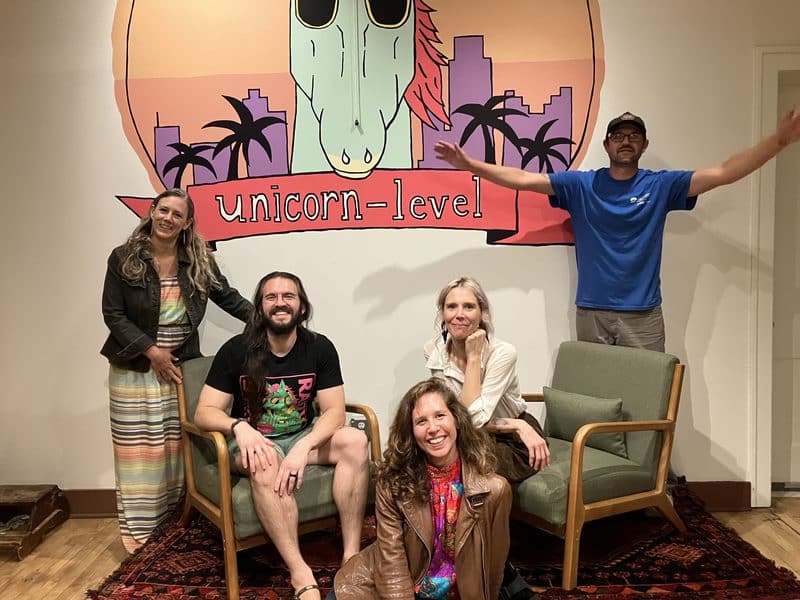
Two Dollar Radio HQ reopens with an expanded ownership group and a similarly expanded vision for the future
‘I think a big part from opening was to give authorship of the space to people with good ideas, to open the doors to people to try different things.’
Edward Julian Sr. embraces poetry as a means to release and reflect
Ohio’s poet laureate features at Urban Arts Space tonight (Thursday, Sept. 24), appearing as part of the Poetry Festival, which continues through the weekend at Thurber House and the Grange Insurance Audubon Center.