
Printmaker Felicity Gunn centers the cycle of life
The Columbus-born artist, whose new exhibit opens at 934 Gallery on Saturday, July 20, has long been fascinated by the fragility and resilience of the natural world.
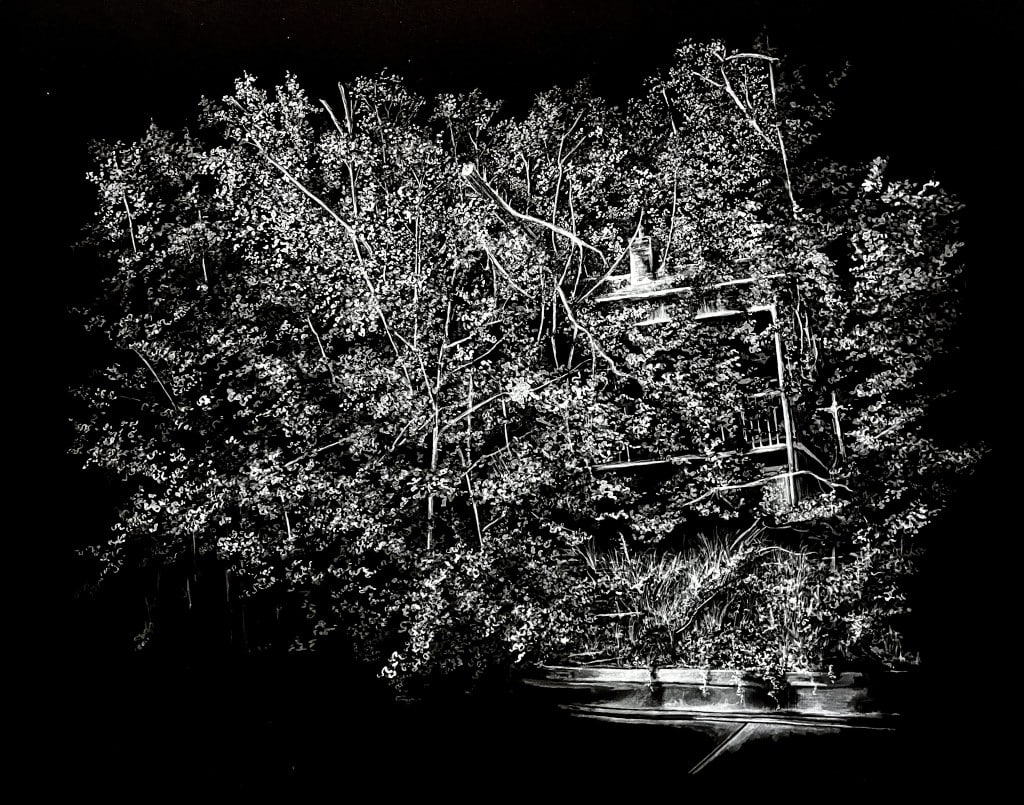
Though printmaker Felicity Gunn grew up in the Short North area, the inspiration for her artwork often comes from more remote locales, featuring abandoned Nelsonville houses reclaimed by nature and overgrown, wooded trails located somewhere off the Blue Ridge Parkway outside of Asheville, North Carolina.
In a mid-July interview at 934 Gallery, Gunn said she has long been enamored with the resilience of the natural world and the way various structures over time can lose the battle with cut-back trees and cultivated landscapes. “Even my college thesis at OU (Ohio University) was looking at the interaction of human structures like houses and buildings with the landscape in Athens,” said Gunn, whose new exhibit opens at 934 on Saturday, July 20. “I thought it was so interesting how the houses were built to interact with the hills and the landscapes, and then I would watch and observe how the landscape overtook or enforced itself on the structure, whether the house was sloping, or it had been overgrown with vines.”
In time, these investigations became synonymous with death – not as a cataclysmic ending but rather as part of an repeated cycle, such as the way new growth can take root in dead, rotted trees. This idea surfaces most cleanly in “Is This Because You Burnt the House Down?,” a piece Gunn created for the Blockfort exhibition “Heavy Is a Heavy Thing,” and which features a dilapidated house so overgrown with skeletal trees that it practically looks staged. “But this is pretty much an exact image,” said Gunn, who also imprinted the form of a dead deer within the paper, further teasing out the theme of the piece. “All of my work is in some way about human destruction and the resilience of nature. And, for me, in this one, I immediately went to wood and death and fire. And I pulled these images together to show the cycle of life through death.”
A donation powers the future of local, independent news in Columbus.
Support Matter News
Posted nearby are a pair of prints that echo this idea. The first depicts a winter scene of trees that have overtaken a home, all skeletal and cool and foreboding. And the second shows the same scene in the spring, softened immeasurably by the presence of new growth.
Along with pieces exploring the fragility and buoyancy of nature, there’s also an outlier image rooted in Gunn’s love of music (she also plays in the great Columbus rock band Big Fat Head), and which she previously displayed in the “Make Me a Mixtape” print exchange show at Blockfort a couple of months back. Dubbed “The World Is Yours and Mine,” the print is warm and vibrant, created as Gunn listened to a mix of love songs by artists such as the Beatles, Junior Kimbrough and the Rolling Stones, among others. For me, the piece immediately brought to mind the song “Have You Ever Seen Peaches Growing on a Sweet Potato Vine,” by the folk singer Jake Xerxes Fussell, due to a similar bear-hug warmth exuded by both, in addition to the sweet potato vine that stretches across the print. (“I had a sweet potato I grew for six months, and the vine kind of took over my whole kitchen window,” Gunn said.)
Gunn became enamored with screen printing during her senior year of high school. From the jump, the artist said she was drawn to the way that printmaking could incorporate numerous artforms: illustration, photography and even sculpture, in the way plates are carved and shaped. There’s also a natural push and pull inherent to the form between maintaining control and learning to let go, embracing the accidents that can give finished prints an unexpected new dimension.
“Printmaking has such a traditional background, and that can be so confining at times,” said Gunn, who received early mentorship from the likes of Nicholas Nocera and Michael Weigman, the latter of whom she first crossed paths with while interning at Columbus Printed Arts Center. “Embracing those mistakes or those little changes can be hard, because in my mind it’s like, ‘Oh, this isn’t what the masters would do.’ … I think it’s something I just need to get out of my head about.”
This idea echoes in the most recent piece undertaken by Gunn. Dubbed “Of Our Own Doing,” the print is based on a photograph taken on a hike outside of Asheville, North Carolina. The illustration itself is pristinely detailed, featuring bony winter trees crowding a trail, which is further obscured by a human-made structure made from fallen branches. “And as I was looking at it, the trees and branches came to represent … how complicated all of our human networks can be both socially and politically,” Gunn said. “It’s kind of showing how the path to any kind of clearing or freedom isn’t straightforward.”
But the piece also leans into its flaws, showing fingerprints and scratches that existed on the copper plate Gunn carved the illustration into, and which she inherited from longtime mentor Art Werger, formerly a professor at Ohio U.
“It’s actually on the back of a plate he did and gave to me, and he was like, ‘Here, this is all scratched up. … Figure it out,’” Gunn said. “So, these deep scratches on the edge, they were already on the plate. And the fingerprints are his. And I know that, technically, a lot of old printmaking people, and maybe even him, would be like, ‘Oh, all those scratches. Don’t you want to get that out of there?’ … But I love it so much. It’s like an unintentional collaboration.”
Author
Related Articles
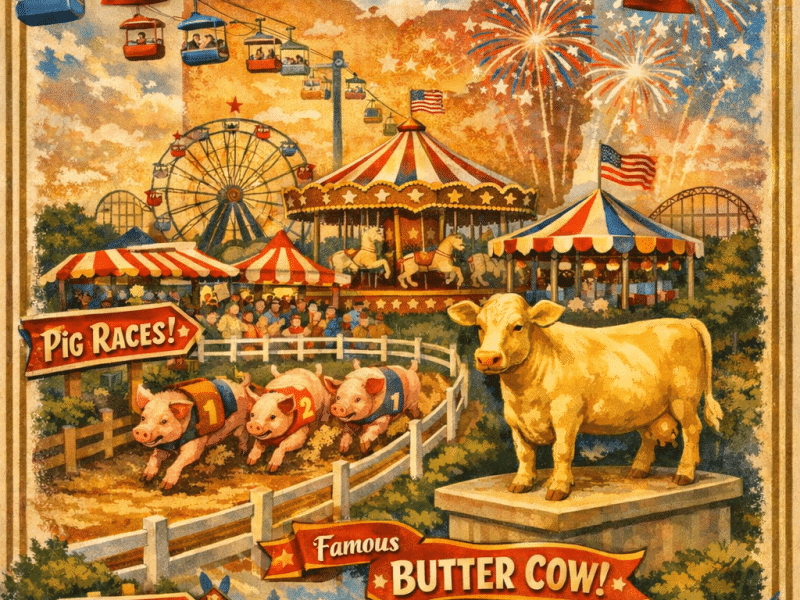
‘What message are we sending when we reward work with no humanity whatsoever?’
After an AI-created image won the grand prize in the Ohio State Fair poster competition, organizers announced their intent to reconsider the use of the technology in future contests amid vocal backlash from the state’s arts community.
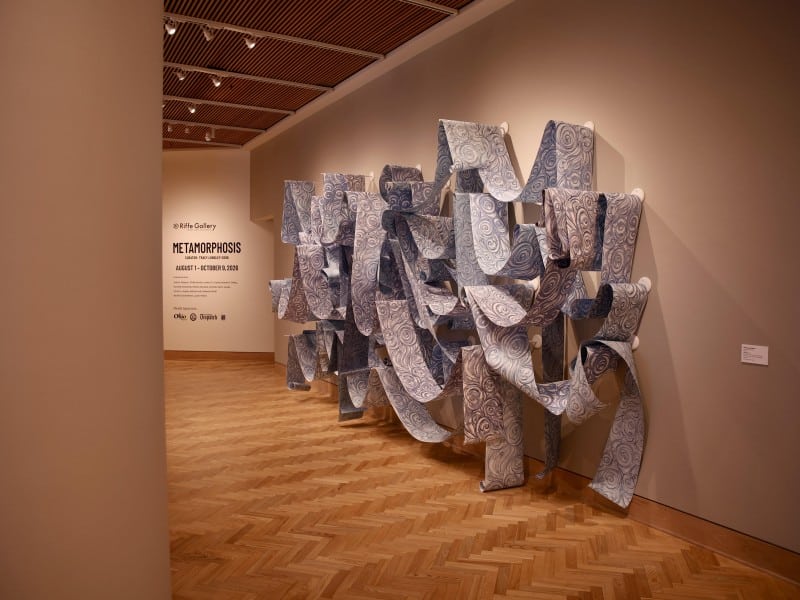
Change takes many forms within ‘Metamorphosis’
The new group exhibition at the Riffe Gallery kicks off with an opening reception from 2-4 p.m. on Saturday, Aug. 1.
Straight Through provides space for healing, connection
Dr. Adrienne Kennedy created Straight Through, the next installment of which takes place at Urban Arts Space on Thursday, July 30, as means to embrace the act of listening to music as a cultural practice and to foster community.