
Jeffrey Smalldon chronicles his life with serial killers in ‘That Beast Was Not Me’
The retired forensic psychologist, whose new memoir releases on Tuesday, Aug. 6, will appear in conversation at Gramercy Books on Tuesday, Aug. 13.
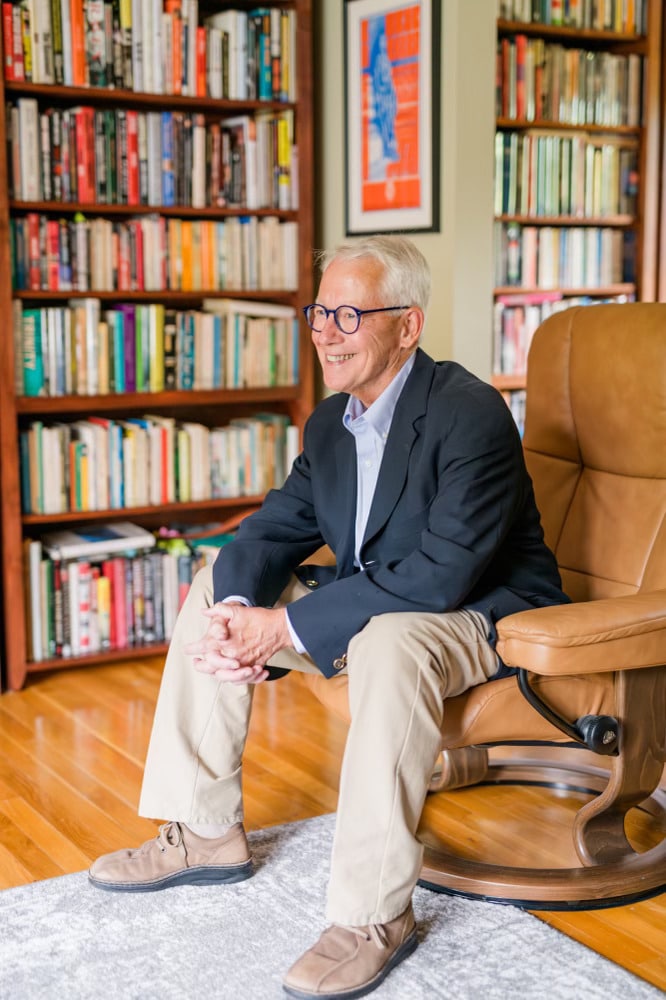
The first time Jeffrey Smalldon sat in a prison visiting room opposite serial killer John Wayne Gacy, he spent a chunk of their conversation wishing he could escape to the bathroom.
“About 45 minutes ago, a moderate urge to pee started becoming something more urgent,” Smalldon writes in That Beast Was Not Me, a new memoir in which the retired forensic psychologist recounts his long career and the many notorious figures with whom he crossed paths, including Gacy, Charles Manson and Ted Bundy, among countless others. “I’ve resisted the urge to speak up because, well, who really wants to have to ask a sadistic sex killer for help locating a restroom?”
The opening scene sets the tone for a collection that gets much of its shape and definition from those things Smalldon knew he didn’t want the book to be. “There have been so many books written about the psychology of the serial killer by a lot of people posturing as if they have something new or unique to say, and then a lot of it ends up covering the same ground,” said the Columbus-based Smalldon, who will appear in conversation with Andrew Welsh-Huggins at Gramercy Books on Tuesday, Aug. 13. “But I thought what I have that are unique and different are my experiences. And I’d rather tell those.”
A donation powers the future of local, independent news in Columbus.
Support Matter News
And so, the story that emerges becomes one that combines the personal with the professional, horror with humor. Early in the book, Smalldon recalls an exchange with his daughter that took place as he neared retirement, when she confessed in jest that there were times she wondered if he too were a serial killer. When he assures her that he is not, she replies, “But that’s exactly what you would say if you were one.” “That’s my girl,” Smalldon counters.
From an early age, Smalldon had an intense interest in the macabre. In the book, he recalls a third-grade visit to the Ford Theater in Washington D.C. from which he walked away not with a renewed interest in Abraham Lincoln but rather in his assassin and the various conspiracy theories surfaced in the wake of the president’s murder. “I was eight years old and already exhibiting signs of the obsessive preoccupation with outsiders and outlaws—all those quirky people, all those strange agents—that would become a hallmark of my adulthood,” he writes.
This fascination only intensified during his college years at Valparaiso University, when a conversation with a professor led Smalldon to strike up written correspondence first with the imprisoned Charles Manson and then later “family” members including Lynette “Squeaky” Fromme and her friend and roommate, Sandy Good. At the time, Smalldon writes, he struggled with some of the media coverage surrounding the Manson family, which he felt portrayed its members as “one-dimensional robots” who “had all but lost the ability to think and act independently.”
If you feel that way, Smalldon’s professor countered, why don’t you write to them and learn for yourself?
“I was not a psychologist at the time … but I expected the correspondence with them to be sort of a visual analog of these crazy things I’d heard them say,” said Smalldon, pointing to an early documentary he viewed in which Fromme was shown fondling a knife and talking about killing people. “And then the first letter I got from Squeaky was on this floral stationary and written in this loopy, middle-school-girl-ish handwriting with smiles and hearts and all this talk of peace and love. And I was intrigued by them and couldn’t figure out how the persona that came through in these letters was connected to these brutal murders, which I knew she knew all about.”
Gradually, however, the correspondences Smalldon received from Fromme and especially Good grew more unhinged, smiley faces giving way to sketched-in angry frowns and flowery idealism stomped out by violent calls to action. “We’re moving out of the realm of words,” Good wrote in one of her final letters, making direct reference to the murder of Sharon Tate and calling on Smalldon or any willing accomplices he could muster to commit acts of real-world violence. (Not long after, Fromme was arrested in a failed attempt to assassinate President Gerald Ford.)
“Up until then, most of the references to the murder had been oblique,” said Smalldon, who was instructed by Good to destroy the letter once he finished reading it. (He ignored the command and kept the handwritten note, which he now stores in a file folder alongside letters from Manson, Bundy, Gacy and others). “And at that point, I did feel like I was in too deep. And I started having all of these intrusive thoughts of them or their friends showing up on my parents’ doorstep, to where I thought, ‘I gotta get out of this.’”
Smalldon said his parents were aware of his “academic” interests in the Manson family, recalling how his father, a lifelong FBI agent, barely raised an eyebrow when he received a teletype communication from the FBI field office in Sacramento, California, in which an agent informed him that letters written by a Jeffrey Smalldon with whom he shared a home address had been discovered in the possession of a woman who had just attempted to assassinate the president.
“We talked about it, but he never told me to stop, and it was never like, ‘You’re jeopardizing my career,’” Smalldon said, and laughed.
At times, the experiences Smalldon recounts in That Beast Was Not Me cast him as a darker, more death-prone Forrest Gump, a guileless character who repeatedly found himself witness to historical moments purely by happenstance. In 1983, less than two years after Smalldon landed a residency in hospital administration at Riverside Methodist Hospital in Columbus, for instance, two of his colleagues were brutally killed in a still-unsolved murder.
“And nobody saw anybody leave the lab, even though there was only a single door leading in or out,” said Smalldon, who was visiting his parents out of state when the murders occurred. “And that sort of brought back the whole Manson experience from a decade before. And I thought, ‘What is going on here?’ It was like murder as a theme was following me through life.”
Eventually, Smalldon embraced these circumstances, staking out a decades-long career in forensic psychology in which he evaluated some of Ohio’s most notorious killers, including serial sniper Thomas Lee Dillon, Alva Campbell and nursing assistant Donald Harvey, who claimed to have killed as many as 87 people, though just 37 murders have been confirmed.
Part of Smalldon’s fascination with killers stems from a belief that somewhere inside everybody exists a basic humanity and the challenge inherent in navigating that chasm. Of course, sometimes Smalldon’s interactions with convicts only deepened the initial distaste he might have felt. Though Gacy addresses Smalldon as a friend in his letters – and even gifted him a trio of paintings – Smalldon didn’t like Gacy, describing him as boring, self-involved and overly willing to cast himself as the victim. As one example, Smalldon brought forth a rare copy of Gacy’s memoir, A Question of Doubt. Written while he was on death row, Smalldon said the killer initially wanted to call the book The 34th Victim in reference to the 33 men and young boys he murdered plus the person Gacy viewed as the 34th victim in his case: himself.
Along with the idea that we’re each instilled with a basic humanity, Smalldon’s investigations have led him to consider that there exists in everyone an opposing force with the potential to harm. “Had I been born in a different place to different parents, could I have ended up a criminal like these people?” Smalldon said. “Would that have been a possible pathway for me?”
The author wrestles with this contrast most openly in a passage detailing a series of interviews he conducted with the television news program 60 Minutes II in 2002, at a time when the residents of Washington D.C. were under attack by an unknown sniper. For the program, anchor Scott Pelley interviewed Smalldon, owing to the forensic psychologist’s experiences working with Ohio sniper Thomas Lee Dillon. But in the course of conducting these interviews, a producer receives a call that the D.C sniper might have been apprehended by law enforcement.
Smalldon’s initial reaction is one he blanches at now, recalling how he first harbored hope that the news would prove false, understanding if the killer had been caught that his interview was likely headed for the scrap heap.
“For the few moments I allowed myself to think such thoughts, I wondered if my real but hard-to-acknowledge hope that the men currently in custody weren’t the ones responsible for the sniper attacks meant that I wasn’t all that different from some of the remorseless killers I evaluated and offered expert opinions about,” Smalldon writes in the memoir. “Was I secretly wishing for an outcome that could very well set the stage for the loss of more lives?”
“And it was honest, but it still bothers me that I had those feelings,” said Smalldon, who in that moment began to reinvestigate what he had previously viewed as a moral gulf existent between himself and the killers he profiled throughout his career. “And it made me think, ‘Am I all that different from these people?’”
Even the title of That Beast Was Not Me – taken from a letter to Smalldon written by Manson – is a purposeful nod to this duality. “When I say, ‘That beast was not me,’ I’m nothing like these people,” Smalldon said. “But are there things about me that are more like them than I’d like to admit? Or maybe that I’m comfortable admitting?”
Correction: One of the letter writers was initially identified as Susan Atkins. It was actually Lynette Fromme’s roommate, Sandy Good. Matter News regrets the error.
Author
Related Articles
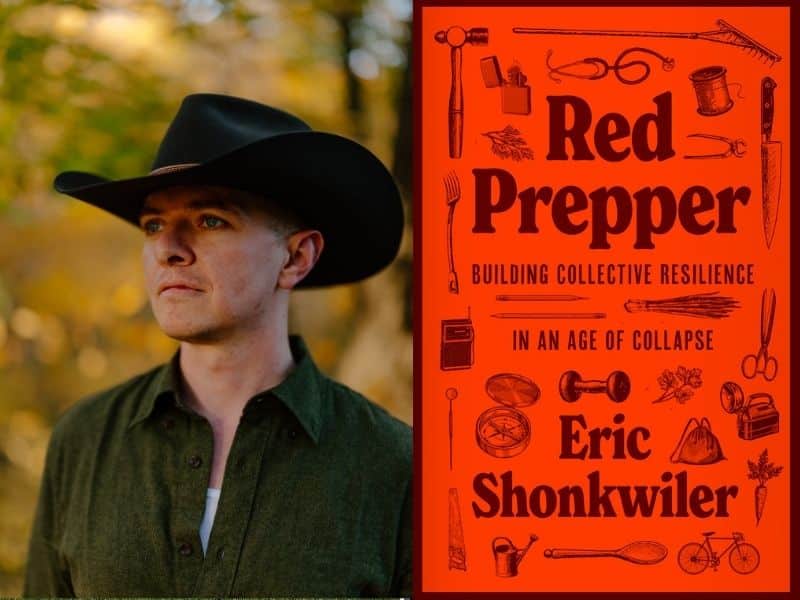
Eric Shonkwiler wants to help you survive societal collapse
The Columbus author will celebrate the release of ‘Red Prepper: Building Collective Resilience in an Age of Collapse’ with an event at Prologue Bookshop on Thursday, Oct. 22.
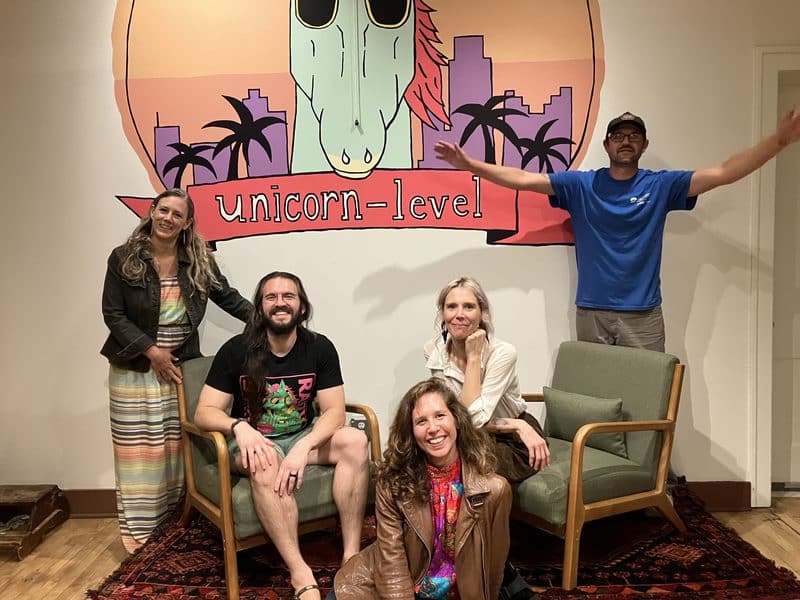
Two Dollar Radio HQ reopens with an expanded ownership group and a similarly expanded vision for the future
‘I think a big part from opening was to give authorship of the space to people with good ideas, to open the doors to people to try different things.’
Edward Julian Sr. embraces poetry as a means to release and reflect
Ohio’s poet laureate features at Urban Arts Space tonight (Thursday, Sept. 24), appearing as part of the Poetry Festival, which continues through the weekend at Thurber House and the Grange Insurance Audubon Center.