
Bill Ayers keeps his eyes open to the beauty, chaos, and cruelty in the world
The militant activist and co-founder of the Weather Underground will appear in conversation at Two Dollar Radio Headquarters on Wednesday, Oct. 16.
At one point in his new book, When Freedom Is the Question, Abolition Is the Answer: Reflections on Collective Liberation, Bill Ayers writes about being arrested as he protested at the 1968 Democratic National Convention in Chicago. Packed into the back of a crowded police van, he recalls the energy and the sense of hope that swelled within him as officers sped the detainees toward Cook County Jail.
“The whole world was watching that night, and in that dark and stuffy van, holding a rag to my bleeding head, I felt myself breathing the refreshing air of freedom as if for the first time,” writes Ayers, who will discuss the book in conversation with writer Eric Shonkwiler at Two Dollar Radio Headquarters on Wednesday, Oct. 16. “This paradox lies at the very heart of freedom: We are perhaps most free when we’re standing in front of an imposing wall.”
Speaking from his home in Chicago, Ayers, a retired professor, author and organizer who first achieved notoriety as a leading figure in 1960s radical-left groups such as Students for a Democratic Society and the Weather Underground, said he began to reassess how he viewed the concept of freedom about five years ago after launching “Under the Tree,” a podcast in which he and his co-hosts interview a range of activists, asking each to define what the word means to them.
“And it was interesting how everyone was for freedom, but what it means is anybody’s guess,” said Ayers, who was particularly struck by the way the term was so often described in personal aims rather than communal ones, evolving into a concept that could divide as much as unite. “Because we live in an individualistic society, freedom is often reduced to the idea of what I want, what I need, what I deserve. And that challenged me to think more deeply about what I mean by freedom. … You can sit on your couch and smoke a joint and feel free, but it’s illusory in a certain way, or it’s on a different level than what you feel when you’re actually resisting war or resisting apartheid or resisting slavery. There, even if you’re entangled, you feel a rush of freedom. Feeling that wall and doing something about it is a different level. And there’s something exhilarating about being arm in arm with people and naming that thing that’s fucking you over.”
A donation powers the future of local, independent news in Columbus.
Support Matter News
Ayers described his initiation into the world of activism as almost accidental, recalling how he grew up in “a normal, loving family” as the middle of five children. Early on, Ayers’ father worked as the chief executive officer of Commonwealth Edison of Chicago, and Ayers said he was on track to do “pretty normal, conventional things” when the nascent Black freedom movement knocked him off his axis. From there, he spiraled into activism, moving from the anti-war movement to the founding of the Weather Underground, a radical collective that attempted to draw public attention to wartime atrocities unfolding in Vietnam with a series of early 1970s bombings, striking a dozen targets that included the New York City Police Headquarters, the Capitol building and the Pentagon. Though no one was harmed in the attacks, three members of the Weather Underground were killed in an explosion while making bombs in a Greenwich Village townhouse. These collective events forced Ayers into hiding – an experience he recounted in his 2001 memoir Fugitive Days – until charges that included “’conspiracy to bomb police stations and government buildings” were dropped in 1974 owing to prosecutorial misconduct.
These decades-old activities account for Ayers’ presence in Columbus this week; for the last 15 years, he’s appeared as a featured speaker in the popular and long-running political radicalism class taught at Worthington Kilbourne High School. “I think all of this was ancient history even 15 years ago,” Ayers said when asked if student questions related to his past had changed appreciably over the last decade-plus he has visited the class. “When you say, ‘Here’s somebody from the so-called ’60s,’ it’s like bringing out someone from the Civil War, walking in with a crutch and a wounded head.”
But Ayers history and experiences have given him a unique perspective on current events, enabling him to see parallels between atrocities that took place in Vietnam and the genocide currently being waged by Israel against Palestinians living in Gaza.
“I don’t think history repeats itself, but I do think that we can see patterns and ripples,” said Ayers, who sees similarities in the way the Vietnamese and Palestinians were both portrayed as sub-human by those waging the war – lines of thought then parroted and amplified by some media outlets. “But there’s one thing that’s not a parallel, and it’s that when I was first arrested in 1965, it wasn’t until three years later that we got any of the mainstream media to begin to even consider a different narrative about what was going on [in Vietnam]. It took Students for Justice in Palestine, Jewish Voice for Peace and the Palestinian diaspora a matter of weeks before the narrative was crumbling. … And I took so much to heart, because last week [my wife] Bernardine [Dohrn] and I were at one of our favorite restaurants on 55th Street called the Nile, which was run by an old Palestinian guy who’s now retired. But he was in the restaurant the other night when we went in, and he sat with us for a bit, and he said, ‘Obviously, I’m in terrible pain, and I’m sad, and I’m angry. But I’m also overjoyed, because if you told me a year ago that this large section of American people would see the truth about what’s going on in Palestine, I would have said you’re nuts, and this would never happen.’”
With the benefit of distance, Ayers said he has become more aware of the missteps he made as a younger man in the movement, the bulk of which he traced to a tendency to become too dogmatic and inflexible, falling prey to finger-wagging at the expense of a greater dialogue he now views as essential to moving the abolitionist cause forward.
“I think the rhythm of being an activist is easy to say, but difficult to enact day in and day out. And the rhythm is you have to pay attention. You have to open your eyes. And not once, but every day, because the world is swirling and turning and changing, and so are you,” he said. “So, you have to pay attention. And you have to be astonished at not only the cruelty and pain that we inflict upon each other, but on the beauty and the ecstasy that humans can produce. Then you have to do something. You have to act.”
Author

Related Articles
Leslie Battle seeks, finds connection in ‘From Spark to Fire’
The Columbus poet will read from her forthcoming collection at Streetlight Guild on Sunday, Dec. 7, joining the likes of Karen Scott, Marquita Byars, Schyler Butler, Rachael Scott, and Miccau McClelland.
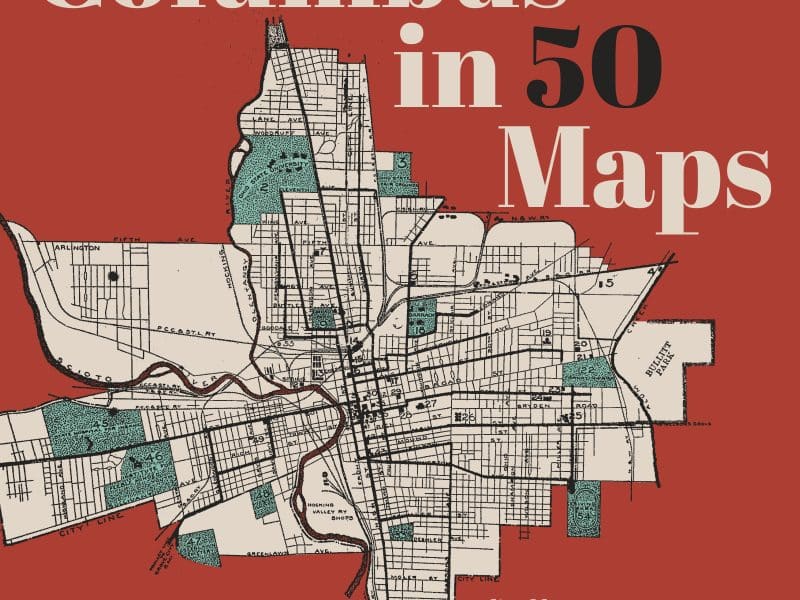
Brent Warren puts Columbus on the map
The longtime local reporter will celebrate the release of ‘Columbus in 50 Maps’ at Prologue Bookshop tonight (Tuesday, Dec. 2).
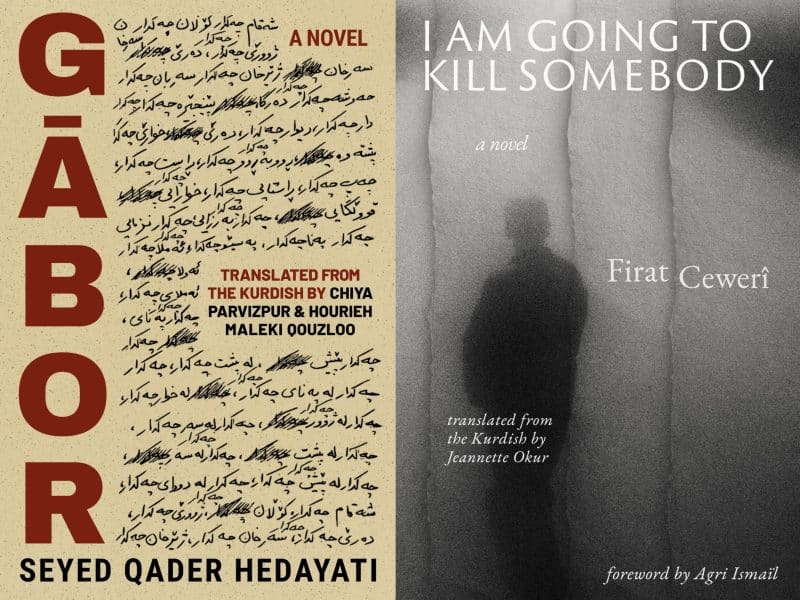
Aryan Omar Hassan finds his way home with Henar Press
The Columbus-based publisher, which is set to release its first two books next year, hopes to draw greater attention to the more experimental strains of Kurdish literature that have long been overlooked.