
The biggest college football rivalry in central Ohio
The rivalry between Otterbein and Capital universities started with yearly canoe races in the 1890s before moving to the gridiron.
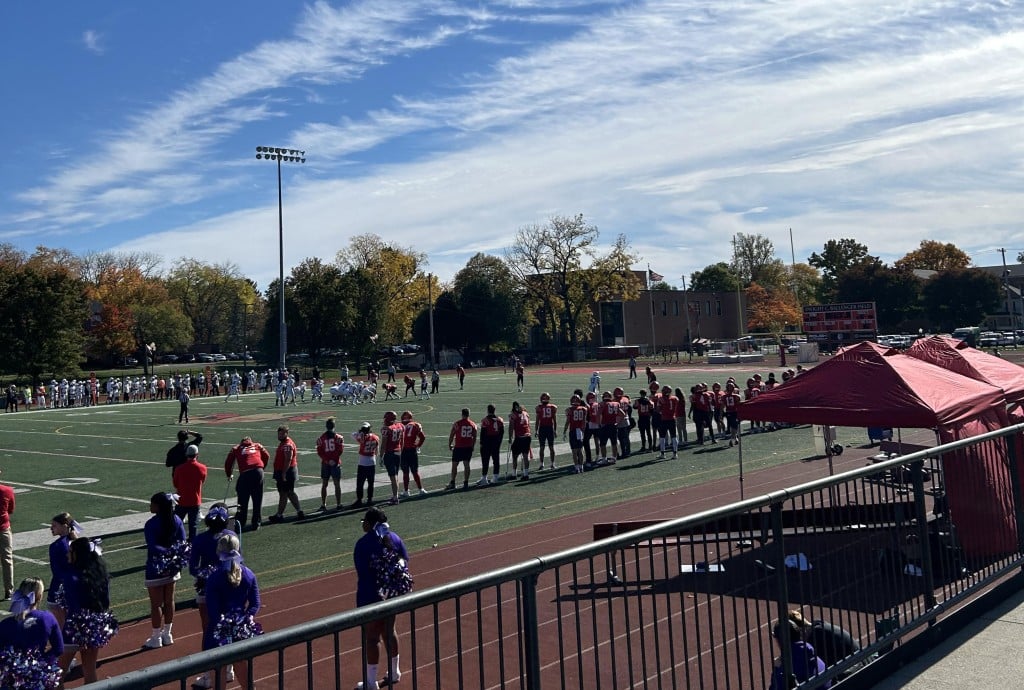
I am a rather unathletic man. The nature of physically demanding sports – which happens to be most of them – requires a set of traits that seem laborious, herculean, and completely foreign to me. I have known very few athletes either professionally and privately, and if I were to write about the intricacies of a sport like college football, anyone proficient in the terrain would simply laugh. So, I will instead limit myself to one college football rivalry that technically predates far more renowned showdowns such as Ohio State vs. Michigan, surging to such intense heights that it resulted in one death. I’m talking, of course, about the two central Ohio Division III teams: Capital and Otterbein universities.
Even in my ignorance, I’ve observed a series of essential characteristics of high school and smaller college football games, the first – outside of the usual suspects including cheerleaders, football players and student sections – being the small cluster of elders gathered to intently discuss the decades of sports wisdom they’ve accumulated. On a recent Saturday in October, I found this coalition nestled discreetly in the corner of the bleacher’s exit ramp at Otterbein’s Memorial Stadium.
One, a former player, was now somewhat of a dainty thing – tall and thinning with gas station glasses but sharp as ever his knowledge of Otterbein’s football history. He stood slouched over the railing and recalled like a wizard a specific play from the 1970s in which a runner ran out of bounds at the 16-yard line to honor another player. “But I don’t think [the player] actually knew,” he said.
A donation powers the future of local, independent news in Columbus.
Support Matter News
When I inquired as to the current fervor of the Capital-Otterbein rivalry, he replied that the once fierce rivalry wasn’t “like it used to be.” Hoping for a glimpse into the sordid underbelly of the past, I pressed him to tell me what the rivalry had been like in former years. “Intense,” he rumbled pridefully. And it was.
“Otterbein has never been specifically known for her consistent football prowess,” wrote Susan DeLay in a 1975 paper. “Her overall record would at best appear mediocre.” The relatively limited talents of the private college located in Westerville did not, however, prevent the school from going to war against other college teams. While Capital was not Otterbein’s first rival (it was actually Kenyon), they have emerged as the longest and most intense. DeLay goes as far to compare the rivalry to the Army-Navy, Harvard-Yale and OSU-Michigan contests. The Capital-Otterbein games, DeLay wrote, “carry a long tradition that has resulted in arson, victory, violence, and even death.”
According to Otterbein’s student newspaper, Tan & Cardinal, the rivalry began in the 1890s with canoe races from Alum Creek to Columbus, with the first football game between the two schools taking place in 1894. In the opening game, Otterbein subdued Capital, then named the Crusaders, winning by a final score of 60-0. It would be 33 years before the teams again met on the football field in 1927, at which point the rivalry truly took hold. After an exchange of letters between the two university presidents, Capital’s President, Otto Mees, ended his letter writing, “This is our ‘lean’ year, especially on the grid-iron, but we will fight hard, but fair, and if we must leave the decision with you, we will walk off the field with heads ‘bloody but unbowed.’”
The night before the game, Otterbein’s stadium was burned to the ground.
The rivalry has continued every year since – except for 1943, when Capital didn’t assemble a team owing to WWII. Various incidents of vandalism, arson, and one occasion of an automobile paint fight took place throughout those years, so much so that it led to an official peace agreement being signed in 1948, establishing an exchange program and setting up chess and debate events. It didn’t work. One editorial claimed that the players on the field were safer than the spectators because “the players have helmets to protect themselves from the egg barrage.”
One Capital student took to the medium of verse to depict the mania, ending a poem with the lines:
The name they finally chose we know,
Most infamous of words.
They call themselves the Cardinals,
They’re really for the birds;
And in the pigskin game, they’ll see
It really is a grind
Our Slaughterettes know what to do,
Yes, them they otter bind!
On February 15, 1950, four Otterbein students attempted to canoe Alum Creek to Capital. The boat ran into a tree limb and capsized. Three of the students swam to shore, but Robert Buck, unable to swim, was discovered that morning wedged between two trees with only his feet showing.
The day after the weekend’s rivalry game, while waiting to pick up auction winnings, I found myself in conversation with the man in line behind me. When the talk turned to football, as it inevitably does when I wear my Browns hat, he said that the best football games to go to, if one wanted to avoid the pitfalls of minimal leg space and a depleted bank account, are Otterbein games. And, as it happened, his nephew played on the team – although he was currently injured.
“I think I saw him yesterday,” I said, “raising his crutches every time they scored a touchdown.”
The Otters won the game 39-10, bringing the football oar trophy back to Westerville and sealing the latest chapter in a rivalry that, while no longer at the heights of intensity seen decades back, still carries meaning and history for those usual suspects on the field and in the stands.
Related Articles

The Worker’s View: Dough Mama temporarily closes after half the staff quits
‘This was obviously a big wake-up call that something needed to change,’
The Crew comes up just short in electrifying U.S. Open Cup final
Columbus nearly delivered a highlight in what has been a challenging season, playing St. Louis City SC to a dead heat for 120 minutes on Wednesday before falling in penalty kicks.

‘Pitchfork Populism’ Over Data Centers Rattles Ohio’s U.S. Senate Race
The issue, which barely registered with candidates last year, looms large in a race that could determine control of Congress.