
Brittany Rogers sharpens her pen, steps out with ‘Good Dress’
The Detroit native, who recently released her debut poetry collection, will appear in conversation with Hanif Abdurraqib at Urban Arts Space on Friday, Dec. 6.
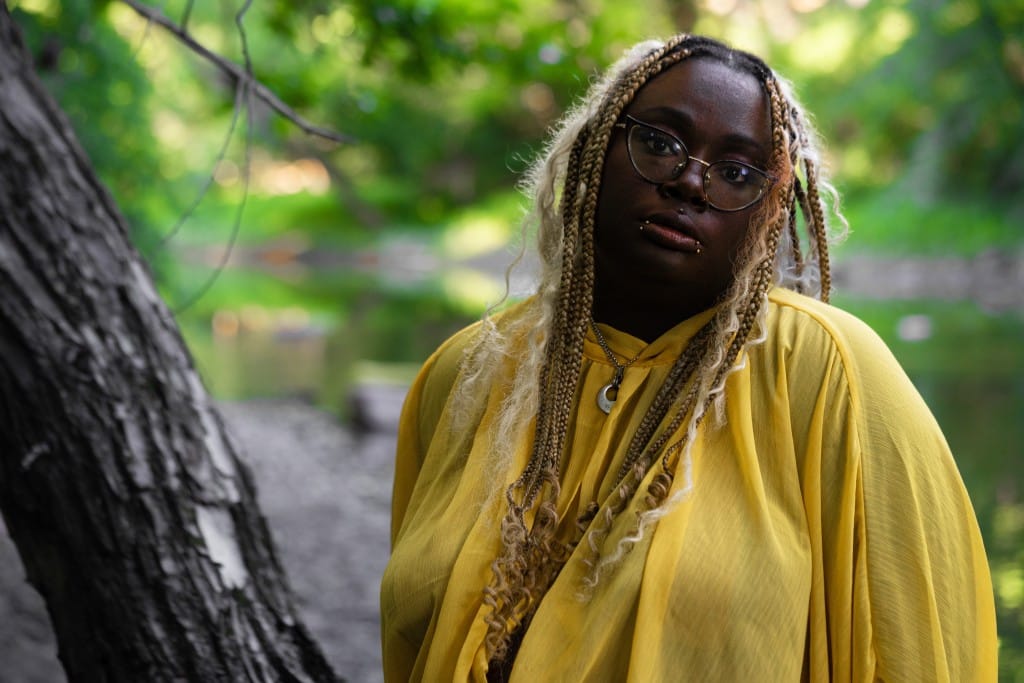
In her debut poetry collection, Good Dress, Brittany Rogers displays a masterful economy of language, able to capture complex generational relationship dynamics in just a few keyboard strokes. In recalling her father, for one, Rogers writes, “I have never liked being pushed; he has never enjoyed being refused,” and these dozen words somehow contain volumes about the pair’s complex history.
“I always joke and say that I’m a much stronger editor than I am a writer,” said Rogers, who will appear in conversation with Hanif Abdurraqib at Urban Arts Space on Friday, Dec. 6. “I used to write really long, really, really wordy poems. And now when I get things down on the page, I’m confident I can figure out what needs to stay there. … It’s about the cleanness of the line, and making sure each word in the poem has a function.”
Rogers experienced similar evolutionary leaps in breathing life into Good Dress, which went through several permutations, originating as a chap book with a different title and themes in 2017 before the poet scrapped everything midway through 2020 and began writing anew. At the time, Rogers said she lacked enthusiasm for the early work that had emerged, describing it as part of a needed excavation that enabled her to get down to the core of what she actually wanted to say, much of which centered on the concept of migration.
A donation powers the future of local, independent news in Columbus.
Support Matter News
“Everywhere I’m from is theory,” she writes in “Good Ground.” “I gather a bouquet of maps and mark: We Were Here.”
“As a Black Detroiter, I’m always thinking of the Great Migration, because that’s how a lot of us ended up here,” Rogers said of the Jim Crow-era mass movement of Black Americans from South to North. “And I was thinking a lot about family, legacy and history, and how much of it for me is connected to the Great Migration. There are so many things that are unknown to me because they happened down South. But then there are also many things that are known to me because my grandparents brought these practices and rituals and habits with them.”
In unpacking this larger family history, Rogers also presents a richly detailed, supremely vulnerable self-portrait, tracing her growth from adolescence and hailing the strong female lineage from which she emerged. “In this family,” she writes in one poem, “it’s the women who grill.”
“I come from a complete matriarchy. My grandmother and all of her sisters married once, got divorced, and never married again,” she said. “So, as a result, there were very few men – maybe an uncle or two – and it was all of us women together figuring things out.”
Starting off in poetry, allowing readers this kind of access might have seemed foreign to Rogers, who experimented tentatively with spoken word beginning in 10th grade. “I don’t want to say they were generic,” she said of these early efforts, “but it was very, very fluffy.”
Gradually, though, Rogers learned to drop this guard, leaning into the ephemeral aspect of spoken word, which afforded her a freedom to navigate these internal spaces, content in the knowledge that once a poem had been performed it essentially ceased to be. Moving to the page, in contrast, continues to be a struggle, with the comparative permanence of the form sometimes giving Rogers pause.
“If you write and publish something, the record is there and you kind of have to wrestle with what you said – even if it’s years later and things have shifted to where you don’t feel the same way,” she said. “So, I’m always reminding myself to take the risk on the page, to say the thing.”
These vulnerabilities surface in a series of poems centered on various branches of the Detroit Public Library included in Good Dress, with the different locations recalling distinct eras of Rogers’ life, owing to a transient young adulthood that necessitated frequent moves. “I can literally trace where I was living by which library I was going to,” said the poet, who fostered an early love for language in these public spaces.
Equally important is Detroit itself, which comes to serve as a major character within the collection. In writing, Rogers navigates everything from the weight of the city’s past to the harsh reality that more of Detroit could become unavailable to some longtime residents moving into the future. “They done put – of all things – a cocktail bar at the corner of my granny’s old block,” she writes in one poem.
“It can be frustrating seeing the places where investors put money compared with places they don’t, like the schools and the libraries,” Rogers said. “But so many of my ideas around beautification and audacity and resilience – even the ways I view community and my identity as a Black woman specifically – are intrinsic to growing up in Detroit. I have no idea what I’d be like if I wasn’t a Detroit girl.”
Author

Related Articles
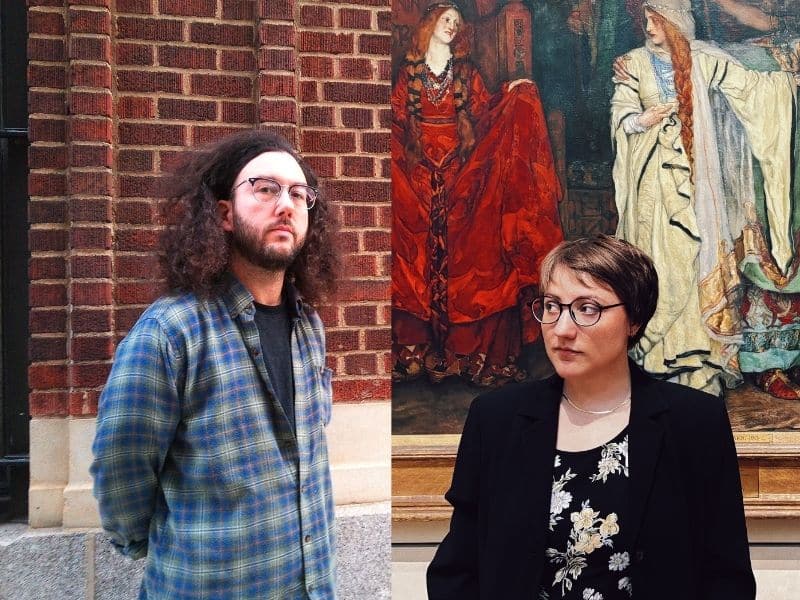
A decade later, Matthew Erman and Lisa Sterle revisit ‘Long Lost’
First released in 2016, the husband-wife duo’s first collaborative series was recently reissued as a graphic novel by Vault Comics. To celebrate, the couple will appear in-person at the Book Loft on Wednesday, Oct. 28.
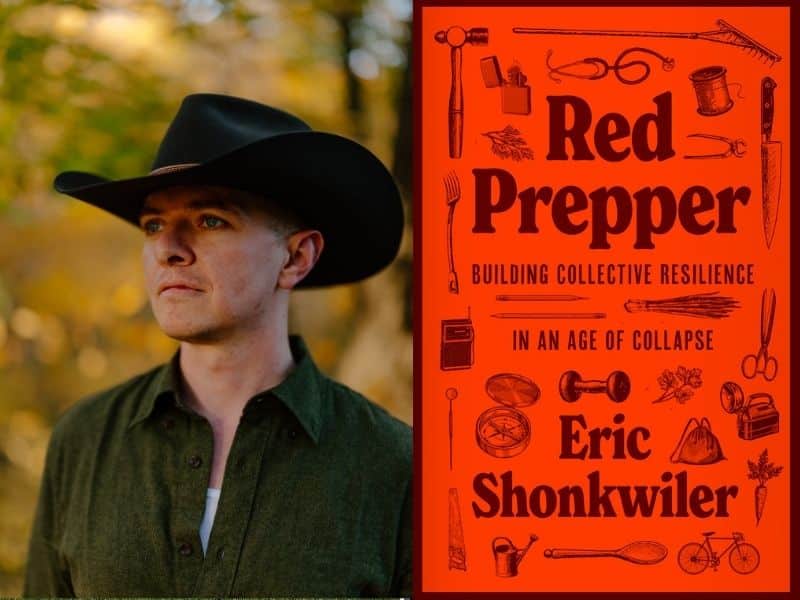
Eric Shonkwiler wants to help you survive societal collapse
The Columbus author will celebrate the release of ‘Red Prepper: Building Collective Resilience in an Age of Collapse’ with an event at Prologue Bookshop on Thursday, Oct. 22.
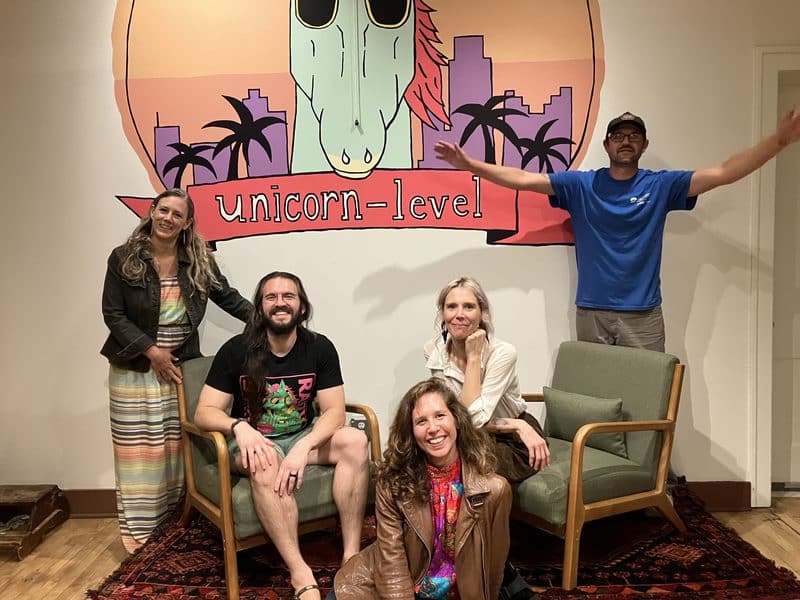
Two Dollar Radio HQ reopens with an expanded ownership group and a similarly expanded vision for the future
‘I think a big part from opening was to give authorship of the space to people with good ideas, to open the doors to people to try different things.’