
The Worker’s View: Inside the Planned Parenthood of Greater Ohio vote to unionize
The workers at PPGOH face constant challenges from Ohio’s Republican-led government but working conditions under management’s control are what moved employees to form a union this year.
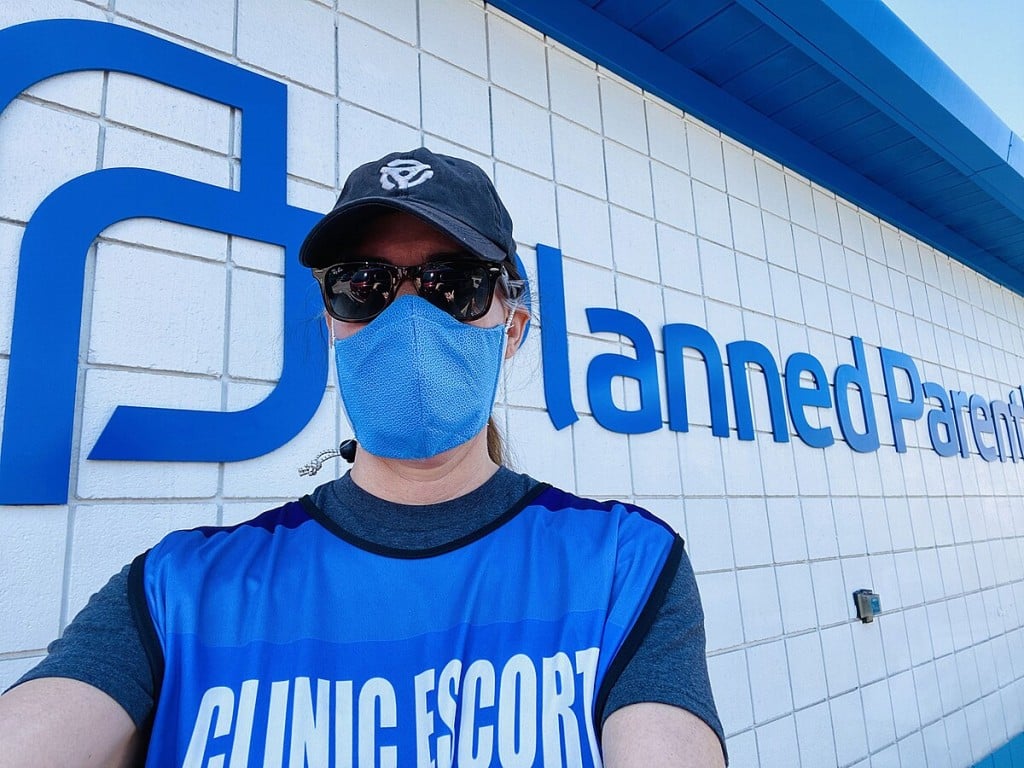
UPDATE: PPGOH Workers United posted to Instagram today, writing that a supermajority of employees had signed a union card, and that the union had been officially recognized.
The union spread across industries in central Ohio is continuing into 2025. On Jan. 13, the workers of Planned Parenthood of Greater Ohio (PPGOH) announced they were unionizing under OPEIU Local 98, one of the state chapters of the Office and Professional Employees International Union, to form PPGOH Workers United.
PPGOH faces constant challenges from Ohio’s Republican government, which falls on the shoulders of employees and makes their jobs stressful under everyday circumstances. However, employees said working conditions within management’s control have worsened over the past year, necessitating the move to form a union.
A donation powers the future of local, independent news in Columbus.
Support Matter News
“About a year ago, management decided to do some layoffs and close down three health centers. It came out of the blue,” said union organizer Olivia Oney, the Central Ohio Field Manager for PPGOH. (When you see Planned Parenthood tabling at Pride, for example, that’s Oney and her team of volunteers.) “They had us in an all-staff meeting and we didn’t know going into it that layoffs were going to happen. They just said, ‘We’re closing three health centers and we’re not going to tell you on this call right now, but we’ll send you an email that will say if you’re going to be laid off or not.’”
The news was particularly shocking to employees who, a few months before, had been promised performance-based bonuses. Evaluations had recently been completed, and many workers expected an update as to when that money would come. Instead, in addition to the layoffs, employees were told there would be no bonuses.
“They kept saying it’s due to finances,” Oney said. “Part of that is due to abortion bans, so I can’t blame them entirely, but it’s also due to them not handling finances correctly. … They used classic management phrases like: ‘We’re trying to stand together’; and ‘We’re all working towards the same mission’’; and ‘We’re just struggling with funding during these anti-abortion administrations.’ And we were like, ‘True, but you also get paid a lot of money as a CEO.’”
The statewide, all-staff meeting in which the layoffs were announced was held on Zoom, and workers in the chat immediately began asking if executive staff would be taking any pay cuts. Leadership answered yes – a 5 percent cut. According to PPGOH’s 2023 tax filing, the organization spent a total of $770,200 on executive compensation. Erica Wilson Domer’s salary accounted for $206,616 of that total (she was the Chief Strategy and Transformation Officer in 2023 and is now President and CEO). While the 2024 tax filings are not yet available, Wilson Domer’s predecessor, Iris Harvey, earned $318,703 in the position. Five percent of the total executive compensation – spread out across everyone at the C-suite level – adds up to $38,510.
Several workers didn’t feel that was enough of a sacrifice.
“So you can lay off all this staff but only take a 5 percent pay cut? That infuriated a lot of people. They turned comments off halfway through that meeting because they realized how angry we were,” Oney said. “I know some of the health center assistants make $17 an hour, so comparatively, it’s just a crazy difference in what Erica, our CEO makes, versus the rest of us.”
Even before the all-staff meeting went awry, Oney noticed disparities between PPGOH workers’ pay. She started PPGOH’s healthcare advocacy program, which means she and her team set up tables in the lobbies of Planned Parenthood health centers across central Ohio and talked to patients before their appointments to keep them updated on what PPGOH is doing advocacy-wise, such as fighting anti-abortion bills. Visiting these health centers gave Oney a front-row view of how difficult these healthcare workers’ days can get.
“They were always rushing to close and were always tired. Even in their downtime, they always had something to work on,” Oney said. “While there are difficulties in my job, as well, it’s wild the disparity of a health center assistant getting $17 an hour versus me getting a salary. I was disappointed that they work so much, make so little, and don’t get overtime.”
While the lowest paid workers suffer most, Oney wants to get many more people raises – especially after she had her own experience with pay disparity.
“When I got hired, I was paid $45,000. Then I compared notes with my other regional field managers, and we all had different pay, which was strange because some of us were hired at the same time. Of the two of us who were hired at the same time, I had more experience, but he got paid significantly more than me,” Oney said. “Like, oh, we’re doing the gender pay gap at Planned Parenthood? We did push management to give us a raise, which got it up to $55,000, but that required a lot of pushing and a lot of risk because we didn’t have a union at the time.”
Through the union, Oney wants to make the process of asking for a raise in the future less risky – not just for herself but for every Planned Parenthood worker – because the more Oney asked around, the more stories she heard.
“I talked to an RN (registered nurse) in Cleveland, and she said they were asking RNs to travel from Cleveland to Columbus to work at the [Planned Parenthood] East health center because they didn’t have enough consistent staff. But that’s like a five-hour round trip, and they weren’t going to give them a raise. They’d pay for the mileage, but not a raise,” Oney says. “How can you expect people to do five hours of commuting round trip without raises?”
According to an email addressed to PPGOH leadership and board members announcing the union that PPGOH Workers United screenshotted and posted to their Instagram page, several of the aforementioned issues, as well as additional issues not addressed here, were brought to management’s attention. PPGOH responded to the unionization announcement via a press release that didn’t respond to specific complaints, with Wilson-Domer stating, “We respect collective bargaining rights and support our workers’ rights to unionize. PPGOH recognizes the important role unions can play in fostering dialogue, fairness, and collaboration in the workplace. We are committed to building an environment where all our employees feel supported, empowered, and have the opportunity to thrive, so they can continue providing the high-quality care our patients rely on.”
On Thursday, Jan. 23, management agreed to voluntarily recognize the union – or rather, unions – but it would come with a cost.
While voluntary recognition is far less common than unions won by election, it’s not without its challenges. For PPGOH Workers United, management would only voluntarily recognize the union if it was split in two units: one for clinicians and one for administration, which workers argue doesn’t make sense.
“It’s just bold to try to consistently preach to us that we’re all working toward the same mission,” Oney said. “It was irritating because it felt like they were just doing it to limit our bargaining power. Like if the admin side felt like they were being screwed over, we wouldn’t have clinical to strike with us unless it was a solidarity strike, which takes more work, and they know that. … We hope that despite their efforts we’re able to work with two units. They’re assuming there’s a lot less solidarity than there is.”
Follow @ppgohworkersunited on Instagram for the latest union updates.
Related Articles
The rapid origination of Andy’s Law
Tensions between guards and the incarcerated at Ross Correctional Institution went from bad to worse following the 2024 murder of corrections officer Andy Lansing. Now, the prison could serve as a restrictive model of what’s to come under consequential House Bill 338.

The billionaire-backed think tank that wants to change harm reduction and homeless policy
Joe Lonsdale’s Cicero Institute contends that we can arrest our way out of the housing crisis, and that states must enforce laws ‘prohibiting open drug use, urban squatting, camping, and loitering.’
Opinion: You can’t talk about Issues 8 and 9 without race
A problem with the discourse around these issues is that it isn’t being completely honest when it comes to race. Not publicly, anyway.