
Joey Monsoon explores the cycle of creation and destruction in ‘Arga Warga’
The Columbus artist’s new, long-in-the-works exhibition, which opens at Lindsay Gallery on Saturday, April 12, takes inspiration from Gustav Klimt’s painting ‘The Beethoven Frieze’ and ‘Riddley Walker,’ the dystopian sci-fi novel by writer Russell Hoban.
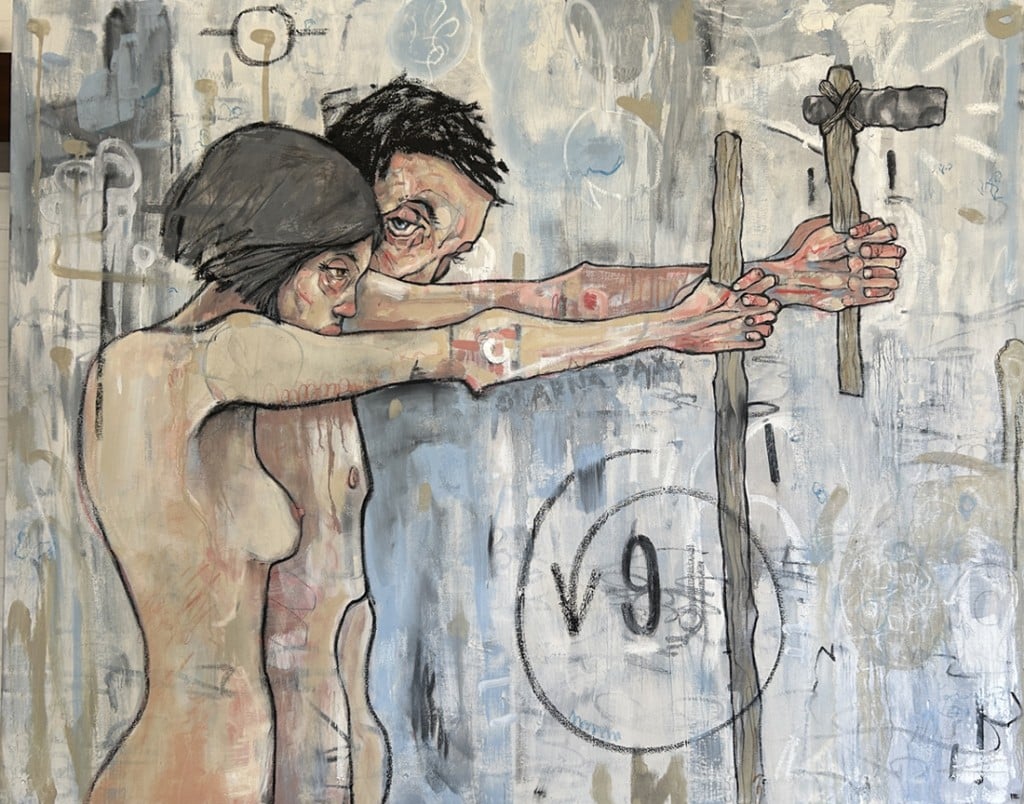
In the 15 years that have followed Joey Monsoon’s first show with Lindsay Gallery, the Columbus artist has maintained a fairly regular schedule, routinely hosting exhibitions of new work every 18 months or so. More recently, however, a confluence of factors led to a four-year gap between shows, including Lindsay Gallery owner Duff Lindsay’s near-fatal traumatic fall and his subsequent decision to relocate the gallery from its long-time home in the Short North to a newly built downtown arts district, where it will open alongside Brandt Gallery and Chaos Contemporary Craft on Saturday, April 12.
“A lot of things happened between my last show and now,” Monsoon said in early April from Lindsay Gallery, where “Arga Warga,” his first exhibition of new work in four years, will debut with an opening reception beginning at 5 p.m. on Saturday. “And in that time, self-doubt starts to creep in, and you start to ask if anybody even really cares, and if it even really matters to people if I’m still painting. And I think that led to moments of creative crisis where it was like, ‘Is this it? Am I done?”
Rather than throwing up his hands and retreating from the art world altogether, Monsoon opted to lean into the idea that his next show could be his last. “And if I’ve only got one more chance,” he said, “I need to do the show that I’ve wanted to do for years.”
A donation powers the future of local, independent news in Columbus.
Support Matter News
Monsoon said he hit upon the barest seed of the idea that reaches full flower in “Arga Warga” roughly a decade ago, initially intending to one day complete a series of paintings based on a work of art that had imprinted itself deeply on him. As this concept continued to circulate, Monsoon gradually homed in on a pair of formative works: Gustav Klimt’s painting “The Beethoven Frieze,” from 1902, and the Russell Hoban dystopian sci-fi novel Riddley Walker, released in 1980. Beginning a couple of years ago, the artist started to take a more considered view of how he could bring these somewhat competing ideas together in a single collection, investing nearly a year into brainstorming, a process he said involved filling notebooks with sketches and stream-of-conscious writings.
“I didn’t want to do a straight copy of the Klimt piece. And my work has never really been narrative, so I wanted each painting to stand on its own, where you didn’t need to see one painting to understand the one that follows,” said Monsoon, who then spent a year bringing these sketches to life on number of large canvases, which are accompanied in the show by a series of 16 smaller, hand-painted prints. “So, there was a lot of time just figuring things out, considering how I could use the symbolism and the mythology and a bit of the narrative from the Russell Hoban book, along with the visual composition of ‘The Beethoven Frieze.’ And it was a trick figuring out how to fit those things together and still make paintings that could be appreciated if someone had never seen the Klimt painting or read Riddley Walker.”
Monsoon said he first read Riddley Walker 12 or 13 years ago, initially struck by the book’s language (it’s written phonetically as a means of capturing the way even language has broken down in the wake of a nuclear holocaust that has sent humankind back to the Stone Age). On subsequent readings, he developed a deeper appreciation for the myriad complex themes layered throughout, with Hoban addressing everything from the development of religions to the way cycles of violence have a way of repeating. As the book unfolds, the people in power work to develop gunpowder, essentially restarting the clock on the act of war that had an apocalyptic outcome once before.
In many ways, these ideas stand in contrast with “The Beethoven Frieze,” which Monsoon described in his artist’s statement for “Arga Warga” as Klimt’s efforts to visually transcribe Beethoven’s music “into a heroic narrative of art as the fulfillment of humanity’s potential.”
“There’s always been this oppression, and there’s always been this boot on the throat of certain people across different societies and civilizations, and I think art has a role in how we survive that and how we keep going,” said Monsoon, who view the works by Klimt and Hoban working in tandem to suggest this continual loop of creation and destruction. “I think art is as powerful a survival mechanism as anything else.”
In spite of the more conceptual framework, certain hallmarks of Monsoon’s work remain, including his willingness to center human imperfection. “I’ve had people in the past tell me, ‘Oh, your figures look damaged,’ but I think it’s the opposite,” he said. “I think it’s important for the body to show the wear and tear of life. All of these scars, they tell the stories of what we’ve survived.”
The paintings on display in the exhibition do take unexpected new directions, which the artist attributed to certain conceptual parameters he adopted from the source materials. For instance, Monsoon utilized a limited, muted color palette heavy on blues, pinks and grays as a way to capture the resource deficits experienced by the humans inhabiting Hoban’s post-apocalyptic world. He also allowed myriad layers of paint to develop on the canvases in a way he hadn’t previously, intent on exploring the ways in which humankind continually builds atop the past.
“And that really became a vehicle to tell that story of time passed, with things being covered and scraped over,” Monsoon said. “In a way, I wanted it to have the feeling of writings in an alley, where people come through and write things, and someone has come and painted over it, and then someone else comes in and spray paints something else. … And so, these paintings have a lot of layers, some of which you can’t see anymore, and some of which bleed through and kind of reveal themselves.”
This idea of transformation over time has also taken place within the artist, who entered into the creation of “Arga Warga” struggling with self-doubt and unsure of what if anything might follow this body of work. Having completed this series, however, the artist said he now feels reinvigorated, and his future wider open than any time before. “Knowing I did this thing that I’ve wanted to do for a long time, it’s fulfilling,” he said. “But it’s also freeing to have done it and say, ‘Okay, I have a clean slate.’ And I have no idea now where the work will take me next.”
Author

Related Articles
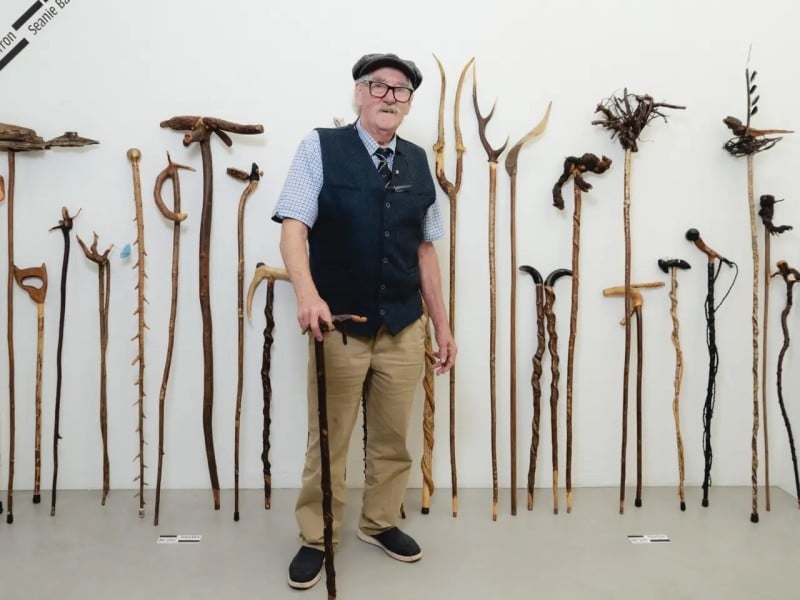
Take a leisurely stroll through the woods with Seanie Barron
The Irish artist’s new exhibition of hand-carved walking sticks kicks off at No Place Gallery with an opening reception today (Friday, Oct. 16).
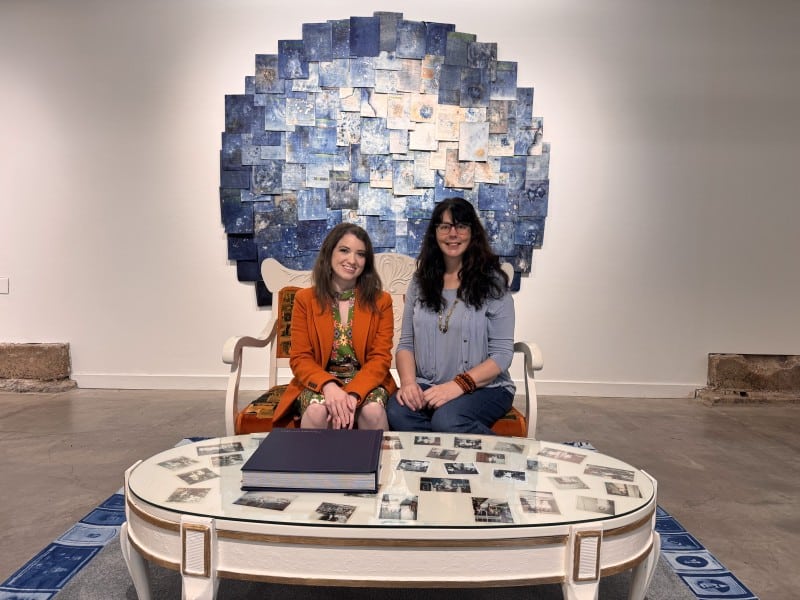
New Urban Arts Space exhibition opens up a conversation about death
‘Spirit & Dust,’ co-curated by Diane Callahan and Michelle Burdine, explores grief, loss, and the weight of mortality from a wealth of perspectives.
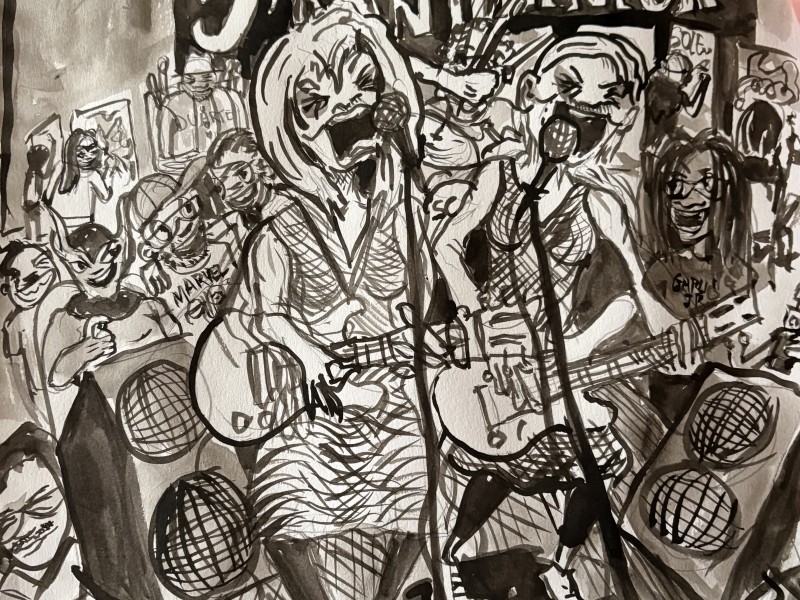
Scrawl meets Scrawl
Marcy Mays and Sue Harshe recently joined pioneering Urban Scrawl artist Dan Gerdeman for a conversation ahead of the band’s performance at the Franklinton art event that has been a longtime source of confusion for some of their fans.