
Danny Caine tackles questions both big and small in ‘Jewish American Dream’
Newly relocated to Columbus, the poet will celebrate the release of his most recent chapbook with a reading at Two Dollar Radio Headquarters tonight (Tuesday, Aug. 12).
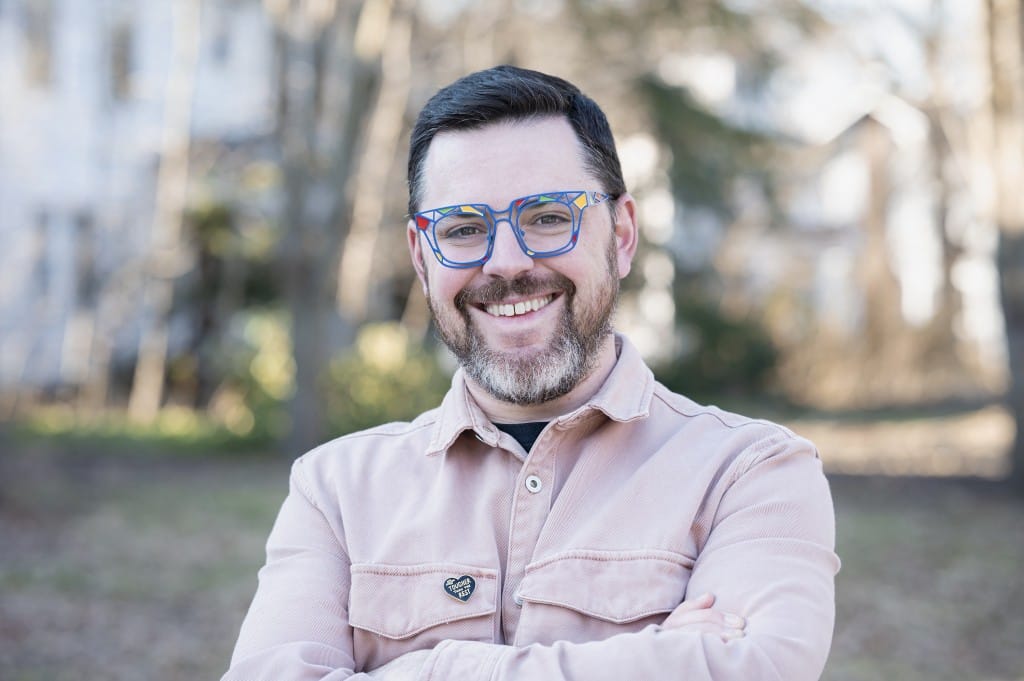
A few years back, Ohio writer and poet Danny Caine began to more intently interrogate his Jewish faith – an interest sparked by everything from the rich progressive faith community he said he discovered when he first settled in Cleveland to the continuing impact of fatherhood.
“My son, he’s now seven, and he’s old enough to come with me to worship and to do some Jewish education,” said Caine, who in June relocated with his family to Columbus. “And it led me to this really interesting question, asking not only what does it mean to be a father now, but what does it mean to be a Jewish father now?”
This is just one in a number of conundrums Caine confronts in his new chapbook, Jewish American Dream (Sarabande Books), which he will celebrate with a reading at Two Dollar Radio Headquarters tonight (Tuesday, Aug. 12), joined by Ruth Awad and Sara Abou Rashed. It’s also one that has become increasingly complicated for the poet since October 2023, when a Hamas terror attack led Israel to launch an ongoing war against Palestine that has killed more than 60,000 people, according to the Gaza Health Ministry. The number is likely to climb higher as Israel continues its assault and starvation spreads.
A donation powers the future of local, independent news in Columbus.
Support Matter News
“Even how we talk about this stuff has become a huge question. And I don’t claim to have any answers, but I try to be honest. And at the same time, I want [my son] to see the beauty of Judaism and the richness of the faith, which has such a long and interesting history,” said Caine, who expressed his anger that Israel, a country he described as being led by “a borderline fascist government,” continues to carry out a genocide under the false pretense of protecting Jewish safety. “And I’m far from alone in saying that. We have people who have built their careers on identifying what a genocide is and when one is happening, and they are saying, ‘This is a genocide.’ … If an occupying military force is deliberately starving a population, that’s genocide. That’s an accepted definition.”
These current realities bubble to the surface in “Love Poem in the Unfortunate,” in which Caine writes about the moral disconnect of a country using one tragedy as grounds for obliterating an entire region and its people. “Seems weird to turn the killing of us into killing whole cities,” he writes, “but what do I know?”
The challenge, Caine said, is that countless elected officials and various bad-faith political actors have repeatedly equated any criticism of the Israeli government and/or its policies with antisemitism, purposely blurring the line in a way designed to shield the country from condemnation. “Criticizing the right-wing government of Israel is not antisemitic,” said Caine, who volunteered his time organizing for groups such as Cleveland Jewish Collective and Jewish Voice for Peace while living in Northeast Ohio. “I don’t claim to have many answers. I have pain, I have grief, and I have questions. And I have tried to process it through a combination of writing and getting involved in organizing and activism, because … writing needs to be paired with meaningful action.”
The poet said that the “intellectual backflips” undertaken by those people who conflate legitimate criticisms of Israel with anti-Jewish sentiment only detract from the reality that antisemitism is a tangible, rising problem that demands to be confronted. Caine writes about this idea in the poem “Jewish American Dream 12: Away in a Manger,” recounting a vivid dream he had about a Fox News talking head who files a remote report from the passenger seat of a Toyota Prius while stuck in traffic. “Greg,” the reporter says, “it’s always important to consider both sides of the Holocaust story.”
Throughout the collection, Caine balances the weight of his subject matter with ample humor and a talent for uniquely descriptive language. In the poet’s pen, for instance, it’s not an oversized pickup truck but rather an “obscenity, all height and menace” staging “an occupation of six parking spots.”
He also settles the Coke v. Pepsi debate (“Diet Pepsi is never okay”), sits shiva in the wake of his favorite Cleveland deli closing, and describes his hairline as “slowly melting into in its own absence” in a poem that also find him briefly tailing a vape company truck with the word “apocalypse” written in raised metal across the tailgate and breathing a sigh of relief when “the apocalypse doesn’t turn down our street.”
While the Israel-Palestine conflict has recently occupied more space in Caine’s mind, a majority of the poems contained within Jewish American Dream began to take shape prior to October 2023, in the months after the poet moved from Kansas to Cleveland. So, while there are moments within where the genocide’s impact is felt in devastating terms – in “Total Weekly Screen Time 37H 57M” Caine writes how he wishes he could love anything “like Israeli bombs love Palestinian hospitals” – a majority of the poems here confront more internal ideas of faith and family, along with the poet’s struggle to accept his gradual slide into suburban dad life. In “A Labradoodle Sonnet,” for one, he envisions an attached garage calling out to him as alluringly as the Sirens from Homer’s “Odyssey.”
At its core, however, the chapbook is rooted in a sense of spiritual rediscovery that Caine attributed to a Cleveland Jewish community whose warm embrace led him to engage more fully with the Yiddish concept of doikayt, or hereness. “And it basically means that homeland is where you find community,” he said. “And the idea that a Jewish homeland can be where Jewish people gather and make meaning and worship together, that was really inspiring to me, and I think that really permeates a lot of what I’m writing.”
“Political Zionism, which eventually gave birth to the State of Israel as we know it today, used to be only one of several answers to that question: What do we do about a homeland? And there was a strong line of Jewish thought that found beauty in diaspora and community wherever Jews gathered,” Caine continued. “And that motivated me to write this, too. It was like, man, there’s a lot more to Judaism than this. And I think we need the poets to get in touch with that and explore it, and to remind people just how long and absolutely varied this history is. There’s not one story of Judaism. There are people who want to sell one story right now, and I disagree with that.”
Author
Related Articles
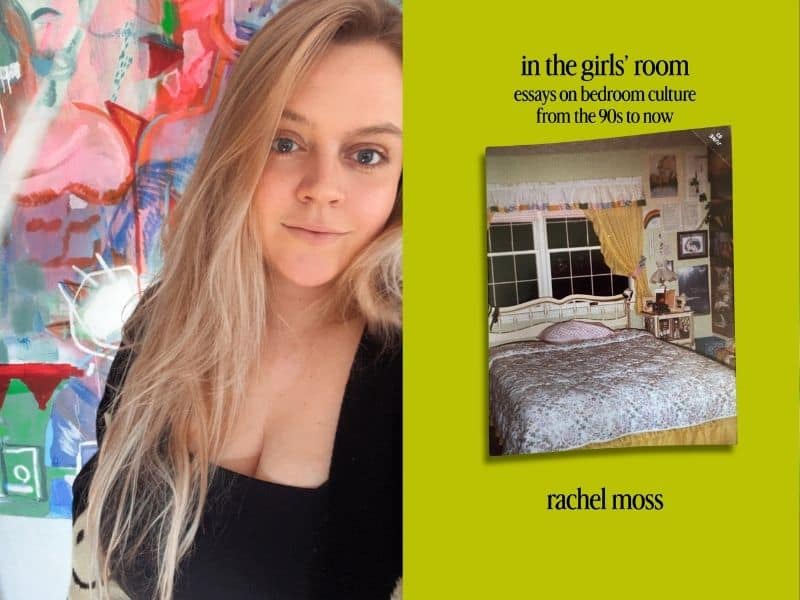
Rachel Moss finds deep cultural connection ‘In the Girls’ Room’
‘When I think of my bedroom now, it was almost this little incubator for what my life would become as a writer and researcher, getting to explore things I liked without anybody watching or commenting on it.’

‘The whole time we were chasing our dreams, we were actually living the dream’
Long-running Columbus power-pop band Watershed will celebrate the reissue of Joe Oestreich’s memoir ‘Hitless Wonder’ with a conversation at Used Kids Records and a sold-out concert at Natalie’s Grandview.
Read Rob Harvilla’s foreword to the 15th anniversary edition of ‘Hitless Wonder’
‘[This] is a book about how and why this wonderful and awe-inspiringly resilient band won’t ever stop.’