
Poets Diane Callahan and David Dixon take a conversational approach to ‘The Ship and the Storm’
The Columbus writers will celebrate the release of their new collection with a poetry collage party at Urban Arts Space on Saturday, Sept. 20.
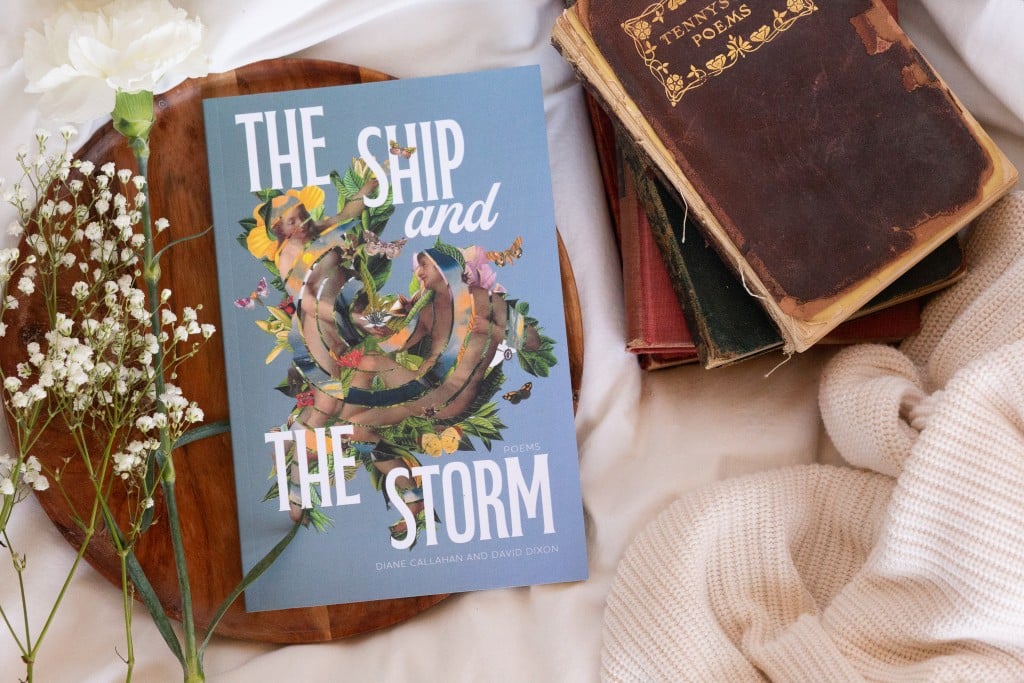
The Ship and the Storm, a new collection from Diane Callahan and David Dixon, doubles as a poetic conversation between the writing and romantic partners, their verses frequently offering varying shades on similar themes.
Ping-ponging between the two, the book delves into diverging masculine/feminine energies (Callahan’s “Makeup Palette” and Dixon’s “Reading Bukowski on the Bus”), recounts days from differing perspectives (“When the Power Goes Out” and “Office Christmas Party”), and unpacks universal mysteries both wondrous and horrific (“Things I Never Want to Understand” and “The Projects of Distracted Gods”).
Callahan attributed the ease with which the pair trades poems to having long served as critique partners, first in fiction writing and later expanding into poetry. “And so, we kind of started writing poetry in synch, where the poetry I was reading would inform my poems, which would in turn inspire Dave’s poems,” said Callahan, who will join Dixon at Urban Arts Space for a book release celebration and poetry collage party beginning at 2 p.m. on Saturday, Sept. 20. “So, we would be recommending poetry collections and poems to one another and sort of exchanging ideas in that way.”
A donation powers the future of local, independent news in Columbus.
Support Matter News
As the two worked, themes naturally began to emerge within the poems, which were then divided into four sections: Navigation, centered on formative experiences, many dating back to childhood; Storm, filled with poems of interpersonal or sociopolitical struggle; Discovery, heavy on themes of a spiritual nature; and Return, which lingers on concepts of death and renewal.
Even within these shared spaces, however, the two can tread markedly differing grounds, with Dixon being more apt to undercut religion and delve into social and political themes (“Look at This Thing We’ve Made” centers on a school shooting). Callahan, in turn, tends toward verses that often linger on the natural world, filling her lines with references to wriggling tadpoles, Mother Earth, and species of birds.
“I think part of that is born of the expectations I have for poetry, because a lot of my favorite poets are bound to the natural world,” she said. “But also, I’ve traveled so much that it’s given me a lot of insight into the different flora and fauna of the country. I’ve been to 49 states and half the national parks, and so there are a lot of poems written about my travels or inspired by them. … I think [in those spaces] I’m looking for transcendence. It’s seeing the bigger picture of how humanity fits into the larger natural world. I grew up an internet kid, but I find that travel is the thing that opens my mind, and national parks in particular. And being out in the world and feeling tangible things makes me want to put that tangible experience into words.”
The push and pull existent between the two writers helped Callahan continue to develop her voice as a poet, having come to the form around 2018 following a long stretch in which she wrote exclusively fiction. Initially, Callahan said she gravitated toward writers such as Maggie Smith and Mary Oliver, drawn in by what she described as the “sensitive warmth” inherent in their writing. Dixon, in contrast, absorbed the likes of Bukowski and Langston Hughes, his writing generally moving with a more focused sense of purpose when compared with Callahan’s prose. “He’s very great at having this strong through line in his work,” Callahan said. “And that’s something I struggle with. Sometimes I’ll be like, oh, here are all these pretty images. And then it’s like, well, what do they mean?”
While Dixon has helped Callahan to more clearly state her intent, she has encouraged him to experiment more within his verses. Dixon’s poem “9 Line,” for example, emerged in response to a challenge Callahan issued for him to attempt a hermit crab poem, a form in which a writer fits their verses to a known structure such as an instruction manual or a recipe.
Yet there’s more here that binds the two, who collectively share a talent for taking a specific moment in time and capturing its essence in verse, whether it’s Callahan writing about playing video games with her brother as an adolescent or Dixon lingering on old family Christmas photos.
“It’s like having poems serve as love letters, and not just in a romantic sense, but also in the sense of family and friends and places and feelings,” Callahan said. “It’s trying to capture some time of your life and put it in a poem, so it’s trapped in amber for me but also for other people to experience as well.”
Author

Related Articles
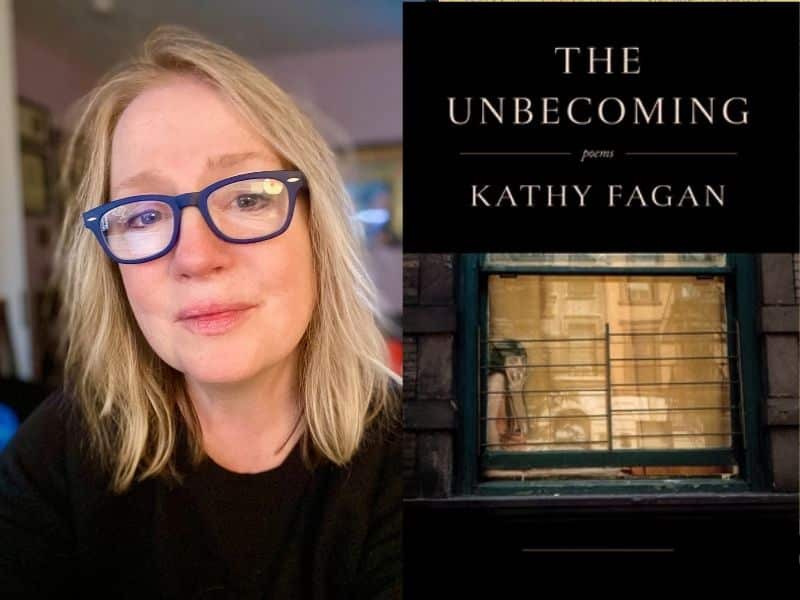
Kathy Fagan takes stock with ‘The Unbecoming’
The poet will celebrate the release of her new collection with a reading at Gramercy Books on Thursday, Sept. 24.
Derf Backderf delves into the past, finds lessons for the present with ‘The Dissidents’
The Cleveland cartoonist will celebrate the release of his sprawling, deeply engaging new book with an appearance at the Wexner Center for the Arts on Wednesday, Sept. 23.

Barbara Fant returns to Columbus ready to leave her mark on Thurber House
The poet and newly minted executive director of the literary nonprofit will take part in a community reception welcoming her to the role on Thursday, Sept. 17.