Local Politics: What the federal government has to do with your school board vote
With the U.S. Department of Education being stripped, local reinforcements to support students are more critical than ever.
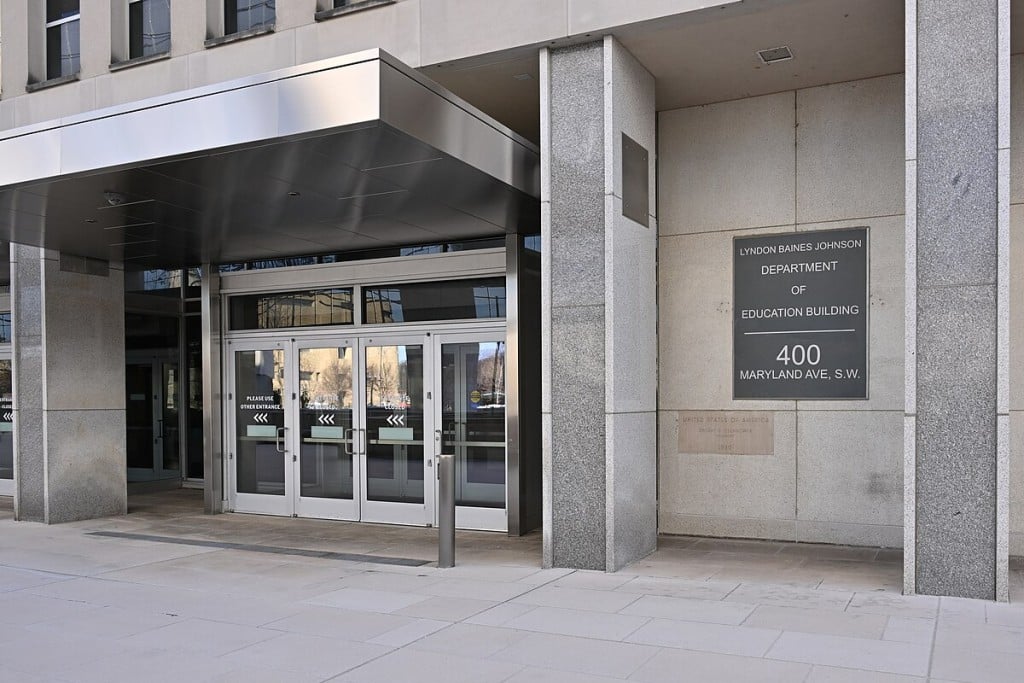
Education is in shambles. Here in Columbus, school board elections are less than a week away and Columbus City Schools is currently facing budget cuts of $50 million. Amid repeated state funding cuts, federal shortfalls and a rising inflation rate, the city currently estimates that its schools will be out of money by 2029. And that’s not even the half of it. The federal government is gutting the Department of Education, too.
Columbus City Schools (CCS) relies on the federal government for a number of things: Title I programs for low-income students at risk of failing; IDEA programs for students with special education needs; English learning programs; meal reimbursements; and filling general state funding gaps. (In theory, the Department of Education should also be overseeing civil rights issues in schools and making sure students are treated equitably and not discriminated against, though recent staff cuts suggest that might be coming to an end.) With the current state of CCS funding as it is, losing federal money looks really bad — and also increasingly likely.
So, I asked the six candidates currently running for the three open slots on the CCS Board of Education three questions: What is your stance on Donald Trump’s Department of Education? How will cuts there impact Columbus schools here? And, if you’re elected, what are you going to do about it?
A donation powers the future of local, independent news in Columbus.
Support Matter News
Here are abridged versions of what each had to say.
Patrick Katzenmeyer, a Franklin County Democratic Party-backed developer with three kids in CCS, said he thought any loss of federal funding would be “catastrophic” and that he was most concerned about the gutting of USDOE employees who handle civil rights and special education laws.
“If I’m elected, the district will find ways to meet the needs of our students, regardless of whether we have federal support (and assuming we won’t),” Katzenmeyer wrote. “If we lose federal funding, we will be in a really difficult position that requires significant structural changes to the district.”
Dr. Antoinette Miranda, former state Board of Education member and Ohio State University psych professor, said USDOE cuts had the potential to hit Columbus “particularly hard” because of its challenges with literacy, graduation rates, and high-need student populations. She is also endorsed by the Franklin County Democratic Party.
Miranda pointed specifically to those critical federally funded programs. “Cuts would mean CCS has to backfill those costs locally or cut services,” she wrote. “These cuts will be devastating for Columbus City Schools as they already are in deficit spending.” She also had some suggestions for how to help fill that gap: creating emergency funds, working with the Mayor and City Council for additional money, and reaching out to nonprofits and even local businesses.
Dr. Jermaine Kennedy, a program officer at an education-focused nonprofit, said he doesn’t think education should be based on politics and that the school board should focus on the children “no matter what happens nationally.” He is the third and final candidate in this race endorsed by Franklin County Democrats. If elected, Kennedy said he would “strengthen partnerships with the city, county, and community organizations to fill the gaps in resources and support services” if federal funding and programs were cut.
These three candidates wrote eloquently about politics and policy on a grand scale. The other three, non-Democrat-endorsed, comparatively grassroots candidates took more on-the-ground approaches.
Janeece Keyes, who describes herself in her candidate bio as a single mother of four CCS graduates, said she would advocate for policies that keep public funding in public schools, not private ones. “The Trump administration’s Department of Education prioritized privatization through expanded charter and voucher programs, which divert funding away from public schools, the very schools that serve the majority of our underrepresented students,” Keyes wrote. “This approach hurts communities like ours in Columbus, where public schools are often the anchor for students and families who rely on them not only for education but also for stability, meals, and support services. When we take resources away from public schools, we widen the gap between those who have and those who do not.”
Kimberley Mason, a CCS parent and former city Parent-Teacher Organization president, said her campaign was “simple” and workforce-focused. “My approach is about resilience,” she wrote. “If these cuts continue, districts like CCS will face greater inequity — where schools on the South and West sides, already stretched thin, are hit hardest. That’s why local leadership matters.” Mason said she would advocate for “smarter local investments” and stronger city, county and community partnerships, as well as better transparency about where money is going.
Mounir Lynch, a public health educator, said he was “deeply concerned” about both Trump’s Department of Education and how it might shake down CCS. If federal programs were cut, Lynch wrote, it would put “significant pressure on our state to fund schools at an even higher level. Which they don’t seem to be planning on doing. When they can’t even fund the basics in [the] present-day.”
Lynch said that he wanted to work with other school districts, unions, school staff, students and local government leaders, and improve transparency with “regular, data-driven impact reports that expose the state and federal government’s actions to dismantle our schools.”
“We need board leadership that can still look toward a positive future of growth and opportunity for CCS, rather than constantly complying in advance or leading from a mindset of liquidation,” he wrote.
If you have kids in Columbus public schools, or are in those schools yourself, this issue obviously affects you. Federal funding provides a lot of the support for programs that many people in CCS rely on, and if it’s cut, education leaders should have a plan in place for how to adjust without just cutting those programs. But if you or your loved ones aren’t in Columbus schools, or you otherwise think this issue doesn’t affect you, think again about pushing this vote away. There’s a surprising amount of symbolic significance to this election if you look a bit deeper.
First, as Taylor Dorrell wrote at Matter News earlier this month, this election is also about corporate power. Half of the candidates are funded by corporate donors and the Democratic Party; half rely on literal door-knocking. Second, as candidate Lynch wrote in an October op-ed, this election is about education as a concept. The people elected to the school board now will have a say in which parts of Columbus schools are funded and which programs are preserved.
Perhaps more subtly, though, this election is about a local response to a national policy. Each candidate has some idea of what to do if the Department of Education fails to fund (or more intentionally cuts funding for) programs that support students in public schools. Who you elect sets a benchmark for what resilience in the face of federal power can look like. The Columbus Board of Education can’t beat the federal government; but when the cuts come, it can either roll over or find a way around.
Keep that in mind this coming Tuesday.
Related Articles
Opinion: Get ICE out of the Franklin County Municipal Courthouse
Allowing federal agents to make arrests at the courthouse without judicial warrants or a court order is an affront to justice.
Local Politics: Show me the (weed) money
Under a new state law, Columbus will get payouts from a cannabis sales tax fund. We’ve been owed that money for two years.

There’s nothing passive about hope
They expect you to give up when they ‘flood the zone,’ marshalling chaos and outrage to divert your gaze. In the face of despair, we must continue to rise.