
‘There’s power when we come together’: Zora’s House adjusts to the political moment
The co-working and community space recently closed its cafe and laid off employees in response to a loss of philanthropic funding. Founder LC Johnson said the erosion of this equity infrastructure could have more devastating, widespread impacts on the city if Columbus doesn’t step up to support the people, places, and ideals it has claimed to hold dear.
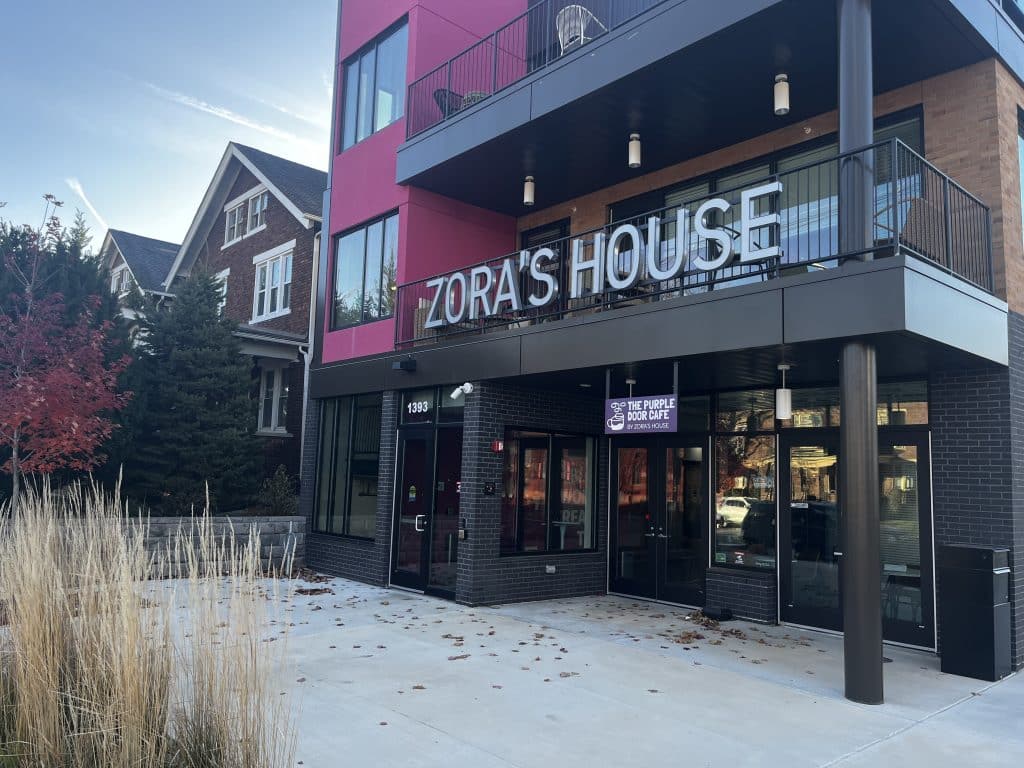
Equity funding has always operated on boom-or-bust cycles, said Zora’s House founder LC Johnson, who recalled the high tide that arrived in the wake of the racial justice protests of 2020, when even government entities began to step up in new ways to address the impacts of racism.
“I remember when Franklin County declared racism a public health crisis, alongside many other health and quasi-governmental agencies across the country,” Johnson said by phone in early November. “And that kind of specificity allows a different type of work to occur. That’s infrastructure, right? Actually being able to build policy around what we know to be true, and what we know to be causing some of the most drastic inequities we see.”
Five years later, the pendulum has swung wildly in the opposite direction, with the Trump administration weaponizing the pushback against corporatized diversity, equity, and inclusion initiatives as a means to advance segregationist policies while simultaneously wielding the power of the purse to compel universities and city and state governments to end any practices even tangentially related to DEI work. Locally, Columbus City Council held meetings in August to discuss changes to the City Code that would remove passages centered on workforce diversity less than two years after they were first adopted.
A donation powers the future of local, independent news in Columbus.
Support Matter News
The rapid erosion of this equity infrastructure has had an immediate impact on Zora’s House, a co-working and community space for women of color, which recently announced the closure of its Purple Door Cafe and staff layoffs in response to a drastic decrease in philanthropic support. In a Columbus Dispatch op-ed, Johnson wrote frankly about the difficulty of making these decisions but also about the gap that can exist between rhetoric and real-world impact.
“The policy decisions driving this contraction – at both the state and national level – often go unnoticed until a beloved program or community space disappears,” Johnson wrote. “What began as rhetorical attacks on inclusion are now shaping real budgets, real layoffs, and real lives. This is not accidental. It’s a strategy designed to weaken the infrastructure that sustains inclusive prosperity.”
Johnson described the speed of these changes as whiplash-inducing, saying that companies and organizations that might have donated $200,000 to Zora’s House in past years had completely cut off funding this year. “And it wasn’t like, ‘We’re only going to do $100[k],’ or ‘We can do $50[k] this year,’” she said. “It was like: ‘Don’t call us’; ‘That fund doesn’t exist anymore’; ‘Your work no longer fits within our priorities.’”
In founding Zora’s House, and especially in launching a successful $6 million capital campaign to fund the construction of its new Weinland Park building, Johnson said she has always moved with a deep awareness that philanthropical support of equity goes through cycles. Indeed, Zora’s House moved to raise money for a new building so early in its existence owing to this awareness, and in spite of the intensity of the workload the decision placed on leadership and staff, which caused widespread burnout and eventually necessitated a two-month sabbatical for Johnson. “When we decided to raise the money for the building, a lot of people were like, ‘Oh, your organization’s too young.’ And to be honest, I would have loved to have waited another year or two,” Johnson said. “However, I, like many leaders of color and other people who work within these spaces, knew that this level of interest and funding wasn’t going to be sustained.”
There are places where the compounding crises of this moment are more immediately visible, including the fallout from SNAP benefits being withheld during the prolonged shutdown of the federal government, which placed added stress on food pantries and community support networks. And then there are other spaces where this erosion is unfolding largely out of view, revealing itself only when a program or a business previously celebrated by the community announces its imminent closure.
“Part of it, for us, is for people to wake up and not assume that organizations are going to make it out of this okay,” Johnson said. “For a lot of people, there’s this vague, we’re gonna get through this. And everybody might not get through this, and I think it’s really important for people to recognize that. When you start starving people of resources, alienating allies, and making it damn near illegal to support their work, no, things start to fold. … People need to realize the impact this moment is having and not assume their favorite organizations are going to be okay, because there are things happening now, where if they’re allowed to continue, we’re talking about ramifications that will be echoing on for years and years to come.”
For Johnson, these pressures are further magnified by what Zora’s House represents – and even more specifically, how its failure could be framed by those whose agendas might run counter to the organization’s mission. “We can’t fail because we can’t allow people to use Zora’s House as a reason to not fund something else another Black woman wants to do five years from now, 10 years from now,” she said.
Johnson’s role frequently necessitates her to default to this more protective stance, the founder acknowledging that Zora’s House can serve as “a target for many people, a physical representation of everything they don’t believe in.”
This year, the organization installed more security at its building, and each cycle of press surrounding Zora’s House can yield a flood of hateful comments and threatening messages. “And in the same year we saw Nazis march down High Street, we’re looking at these messages and recognizing all of this is not just idle,” Johnson said. “This is a larger conversation about how we’re looking at the work that centers non-white people, and what we are thinking about people’s humanity and what they deserve and don’t deserve … and how that impacts everything from our funding to our safety.”
While the organization often finds itself a target, Johnson takes some solace in knowing it can also be a beacon, recalling one instance in which a Black woman stopped her car outside of a then-under construction Zora’s House and rolled down her window. “And she said, ‘Hey, is this your project?’ … And then she was like, ‘Thank you for building this for us,’” Johnson said. “And that’s something I have to keep in mind as a leader, because I think my mind tends to go more quickly to questions about how to keep us safe, and thinking about the pressure of what this represents and being like, we can’t fail.”
The changes undertaken in recent weeks by Zora’s House are meant to safeguard against this outcome, coinciding with a sharpening of the organization’s mission and a reassessment of the part it should play within the larger social justice ecosystem moving forward. More specifically, this has meant leaning into its long-developed role as a community gathering space for those whose lives are under more acute threat in this current environment. “At every point in history, people have tried to stop oppressed people from gathering,” Johnson said. “And it’s because they know there’s power when we come together.”
Author

Related Articles
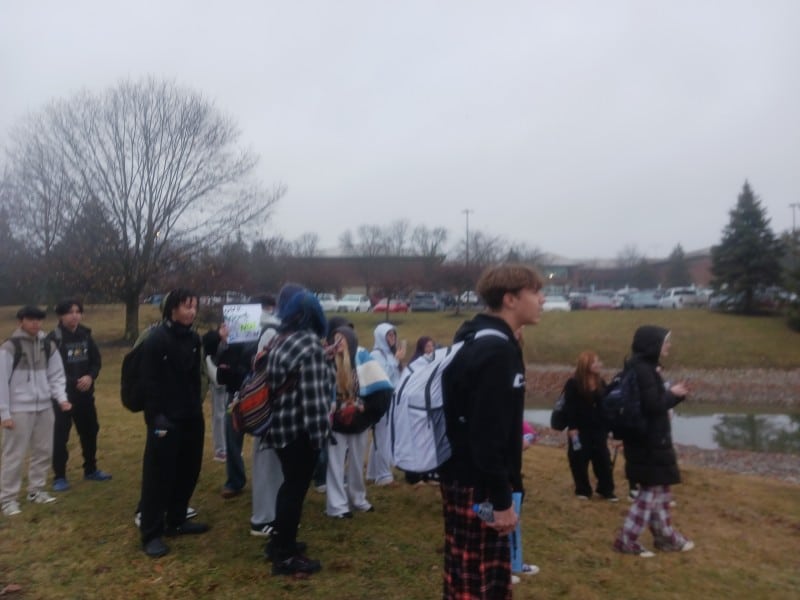
Dublin Scioto High School students conduct walkout in response to ICE
Following the mid-December detainment of Leonila González, the mother of a DSHS student whose arrest took place less than a half mile from the school, more than 100 students began to organize a walkout during which they planned to present administrators with a list of demands.
The 20 most-viewed Matter News stories of 2025
From the local refugee detained and threatened with deportation by ICE to the inside tale of the worker-led push to unionize the Columbus Metropolitan Library, here were the most-read features of the last year.
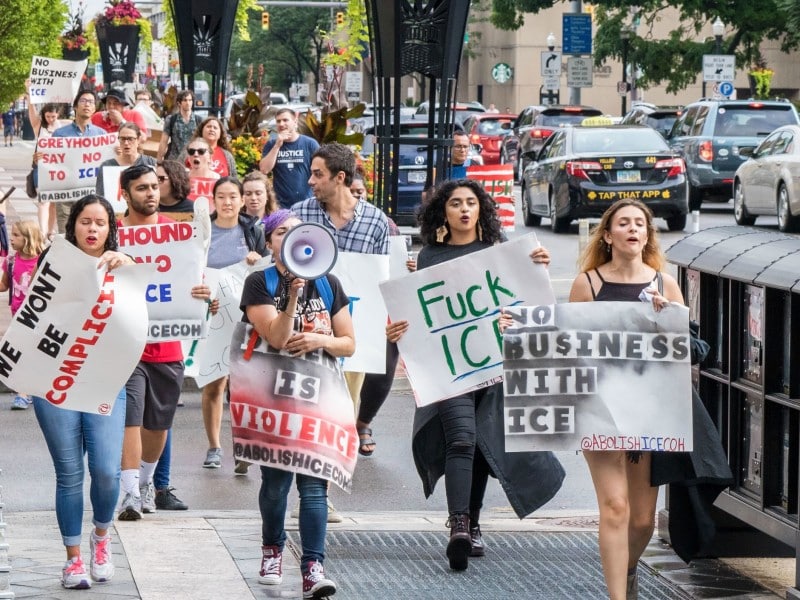
The aftermath of ICE
In the week since federal agents apprehended three staff members at one North Side hotel, employees and management have simultaneously navigated a mix of fear and grief while adjusting operations to better keep people safe at work.