
Columbus’ Afghan community is holding its breath
Soheila Noori’s life is defined by the immigration process. With the Trump administration’s halt on asylum, she and her community are currently overwhelmed by unknowns.

When Soheila Noori learned to float, she overdid it. She had been taking swimming lessons, but the swimming ended up being beside the point. True joy arrived from floating. She spent so long floating that she found her Hazara features dotted with freckles – she got a real sunburn. Not many Afghan girls know how to swim, and for a brief moment alongside other women refugees like herself, Soheila had time to soak up her freedom.
Soheila is one of the thousands of Afghans in Ohio now treading uncharted waters in the wake of the late November fatal attack on two National Guard service members from West Virginia.
The response to the shooting by the Trump administration has launched the Afghan community both in Columbus and across the United States into bureaucratic no man’s land. In addition to halting all ongoing immigration from the country (along with all “third world” nations), the administration is now subjecting all immigrants admitted under the Biden administration to a new review/vetting process. Almost everyone Soheila knows has been impacted by the halt on applications, and she’s been unable to escape the chaos resulting from the Trump administration’s order.
A donation powers the future of local, independent news in Columbus.
Support Matter News
As if it wasn’t enough to live in a constant stream of vetting appointments and interviews for herself and her husband, Soheila also works for Columbus’ Community Refugee and & Immigration Services (CRIS). One month after resettling in Columbus, she was hired as a programmatic data assistant, helping other refugees and asylum seekers settle into their homes and the workforce.
On paper, Soheila’s job consists of general data collection and report management, but this year her role has ballooned due to federal cuts and general bandwidth constraints plaguing the office. She now finds herself mediating and translating on behalf of the legal team in between generating her reports, and she’s become the office’s de facto expert on all Afghan immigration subjects for both clients and coworkers alike. She said she finds her newfound authority to be overwhelming, seeking answers for herself just as often as she seeks them for clients. For the last two weeks, she said, her clients have been extremely paranoid.
“The other day I had someone ask me whether or not they can travel across state lines with their green card,” Soheila said. “That’s the level of scared we are.”
Staying above water seems generally hard to do at a place like CRIS, which has been overwhelmed since the start of the Trump administration this year. Federal cuts starting in January forced the organization to cut its staff of 140 down to 70, completely eliminating its refugee relocation services team in the process. “There were also no more refugees to resettle,” said Vince Wells, one of the immigration attorneys at CRIS.
With fewer resources and more unknowns, Afghan refugees in Columbus, many with green cards, are scrambling for answers on what they can and cannot do with their various statuses, or the status of a loved one’s application. Soheila said sometimes there simply are no answers to give her clients.
“All 800 Afghan refugees on my client list are impacted by this in some manner,” Wells said. “The issue we’ve seen since the change in administration is that the processing times for these applications have been so extended.”
Historically, it takes about a year to officially receive a green card after initially relocating to the United States as a refugee. Now all applications have been paused, and all are subject to new review regardless of where they were in the approval process. That’s going to create a significant backlog in processing times; All 185,000 refugees admitted under the Biden administration are to be reviewed in the next 90 days. Then the Trump administration will determine which applications need new interviews. The director of the U.S. Citizenship and Immigration Services, Joseph Edlow, said last week the pause would be in place until “we can ensure that every alien is vetted and screened to the maximum degree possible.”
Soheila has already waited 14 months for her green card and for her husband’s visa application to be processed. She’s already been vetted and interviewed five times, but she says she’d go through any amount of vetting to be here legally. The question is, will the vetting ever happen?
“I always tell them I have nothing to worry about. If you want to vet me a thousand times, just do it,” Soheila said. “So, I accept that part. … But do something. When you pause all the immigration completely, it’s so unstable. I would be glad to go through any amount of vetting. But what else can we do? They won’t actually do anything. We just want them to do it.”
She said she sometimes thinks of giving up, but the process of leaving America to join her husband in Canada feels just as overwhelming and risky as staying put. This was their life, their plan. Now they feel hostage to the whims of the current administration.
“I don’t know what rights I have,” Soheila said. “I don’t know what I can do next.”
“The mental turmoil people are facing is the administration’s ultimate goal,” Wells said. “People feel afraid, people feel alone, and they become afraid to speak out or share their stories.”
Soheila has begun noticing anti-Afghan blowback on social media as a result of the Trump administration’s blanket demonization of Afghans. “You get to a point where you don’t want to talk to people because you don’t want your story to be shared,“ Soheila said of the growing sense of fear the community is experiencing in this social and political moment.
The societal blowback in the aftermath of the shooting has been devastating to Soheila’s community. And she sees the president as blaming an entire population for one man’s actions.
“We have nothing to do with all these things, as I’ve made clear,” said Soheila, who joined members of her community in condemning the actions of the Afghan national who shot the two National Guard members, killing one and leaving the other in critical condition. “We object to this behavior, and we feel sorry for the National Guard members and their families. This [violence] is not right, and we don’t like it either. But it bothers us to see how this hate is spreading in social media and in circles and they frame the situation as everyone who is Afghan is a problem. How can you punish an entire population because of one person’s act?”
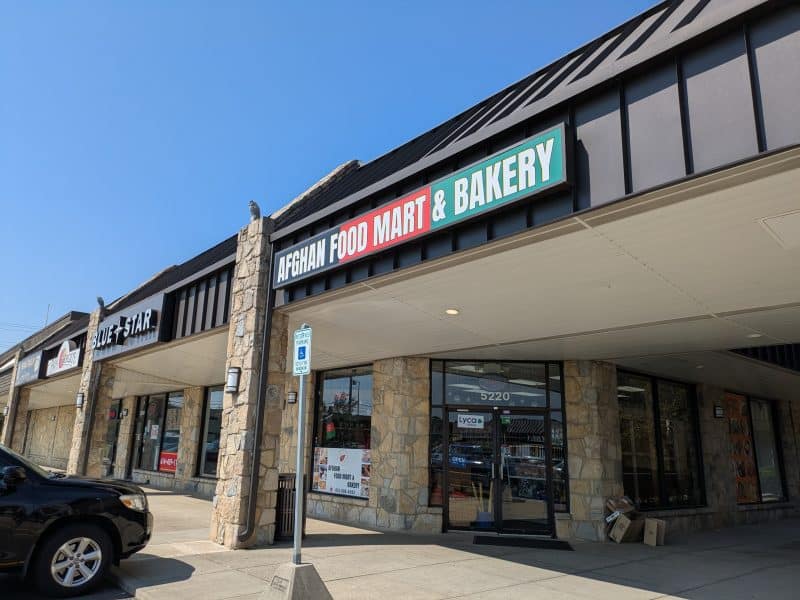
The Afghan community in Columbus is one of many expanding immigrant populations across Ohio, and the state has increasingly found itself in the Trump administration’s crosshairs for its immigration growth. The Columbus Dispatch recently reported that international immigration is responsible for 77 percent of Columbus’ total metropolitan population increase. Immigrant populations in Ohio have also gained unprecedented attention from the Trump administration beginning with Haitian immigrants in Springfield last year. More recently, City Council president Shannon Hardin released a rebuke to President Trump’s latest statements on Somali immigrants, as Columbus is home to one of the largest populations of Somali migrants in the country.
The anti-immigrant stance of the Trump administration at large has long been at odds with Ohio’s historic willingness to welcome immigrant groups. Indeed, one of Gov. Mike DeWine’s rare breaks with MAGA occurred when he published an op-ed in The New York Times last year defending Haitian immigrants in Springfield.
While she was assigned to live here randomly, Soheila said she now hopes to stay in Columbus. She has a stable job and new friends and even ran the Columbus half marathon in October. It certainly helps that the city is now home to one of the largest populations of Afghans in the Midwest, an initial wave of refugees arriving in 2021 after the Taliban again seized control of Afghanistan, with a second influx following the United States’ 2023 withdrawal from the country.
“I found Columbus to be a very nice place, especially as a newcomer, as a refugee,” said Soheila, who was at the Kabul airport with a newly shaved head when the Taliban attacked the American University in Afghanistan in August 2016. At that moment, she balanced her fear with a hope her flight would depart, enabling her to secure her visa in Islamabad and go on to earn her masters in economic policy from the University of Vienna.
In the tumultuous years that followed – Soheila arrived solo in Columbus in December 2023, just two weeks after she married her husband, a fellow academic and Fulbright scholar – there has been precious little time for floating. But when Soheila finally received her Ohio driver’s license, the weightless feeling that accompanied her on those buoyant summer days returned, if all too briefly.
Now, asked if she sees a future for herself here, Soheila’s eyes welled with tears, and she struggled to find her words. “Since I’m going to the U.S. as a refugee, I thought the situation would be easy for me,” she said. “The only thing that made me decide to come and resettle in the U.S. was the fact that I was sure I was doing so legally. I’ve heard a lot in my life about how difficult it is for illegal immigrants here.”
But being here legally under an administration willing to bend, suspend, and rewrite laws to further its aims provides little reassurance. And being exemplary holds no water when there’s an example to be made.
Related Articles
The rapid origination of Andy’s Law
Tensions between guards and the incarcerated at Ross Correctional Institution went from bad to worse following the 2024 murder of corrections officer Andy Lansing. Now, the prison could serve as a restrictive model of what’s to come under consequential House Bill 338.
The billionaire-backed think tank that wants to change harm reduction and homeless policy
Joe Lonsdale’s Cicero Institute contends that we can arrest our way out of the housing crisis, and that states must enforce laws ‘prohibiting open drug use, urban squatting, camping, and loitering.’
Opinion: You can’t talk about Issues 8 and 9 without race
A problem with the discourse around these issues is that it isn’t being completely honest when it comes to race. Not publicly, anyway.