
Election realities lend additional gravity to Transgender Day of Remembrance
In the wake of a Republican-dominated election in which transgender people were repeatedly used to stoke fear and anger among voters, members of the community have started to build out mutual aid networks and support systems in anticipation of future setbacks.
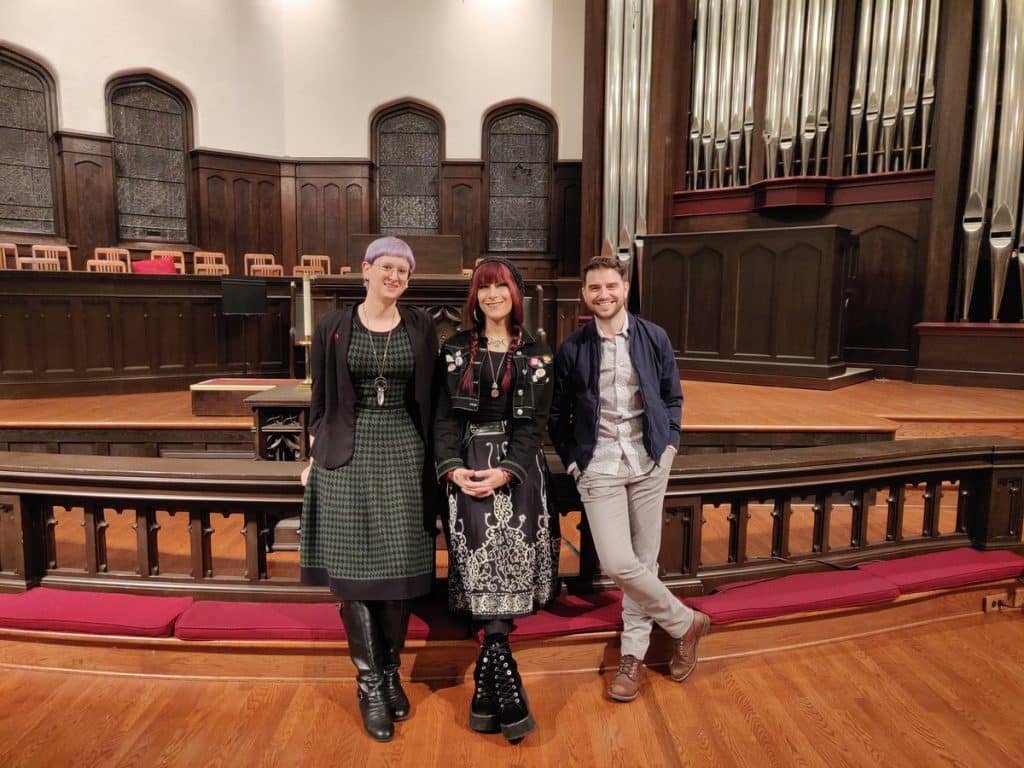
In the weeks since Election Day, artist Felicia DeRosa said she has been doing the emotional work of 15 people, engaging fellow members of the trans community who have struggled with thoughts of suicide, as well as those who have considered either relocating from Ohio or de-transitioning altogether in the wake of a vote that has left many of them feeling even more vulnerable to the whims of the state’s Republican supermajority.
“I’m talking to people like, ‘You fought too hard to be who you are. Don’t give it up voluntarily. And keep living your life the best you can,’” DeRosa said. “They’re trying to push us so we’re out of sight, out of mind. They want to make it where we’re invisible again, which no one is willing to do at this point, not after 25 years of being out and owning our identity as a community. There’s a deep unwillingness to be forced back into that closet. We’re not going back. Fuck that. I will fight until my last drop of blood, until my last breath.”
These growing concerns about what potential new restrictions might be on the horizon – Ohio’s Republican legislature recently passed a sweeping anti-trans bathroom bill now awaiting a signature from Gov. Mike DeWine – arrive at a point in time when the trans community is preparing to pause and remember those who have been lost. Taking place on Wednesday, Nov. 20, Transgender Day of Remembrance honors people targeted and killed in acts of anti-trans violence, with services taking place locally at King Avenue United Methodist Church.
A donation powers the future of local, independent news in Columbus.
Support Matter News
Dara Adkison, executive director of TransOhio, said current realities have lent additional gravity to planned memorials statewide, with members of the trans community grieving not only those who have been killed but also “things that haven’t happened yet.” “There’s a general community feeling of waiting for the next shoe to drop,” Adkison said, “and I think people are going to be processing some of that pain and grief during this year’s remembrance, too.”
Some of these feelings are related to legislative unknowns, with Adkison expressing uncertainty about any future bills Ohio Republicans might take up targeting the trans community. Others are driven by renewed fears of violence coming on the heels of an ugly political campaign season in which trans people were frequently used to stoke fear and anger among the electorate, such as in the grotesque (and unavoidable) “Sherrod Brown is for they/them” commercials run by a political action committee supporting Senator-elect Bernie Moreno.
“We’ve already had an increased number of people reporting threats and violence to us directly,” Adkison said. “Folks need to be vigilant, because there’s a lot of really awful people feeling emboldened right now.”
Many of TransOhio’s mobilization efforts began prior to the election, buoyed by additional resources generated in the wake of Ohio House Bill 68, which restricted access to gender-affirming care to minors. This financial influx has allowed the group to increase its mutual aid efforts, providing necessary assistance to members of the trans community struggling to make ends meet. “We’ve helped many families with trans children,” Adkison said, “and then we’ve also helped trans adults who found themselves in a pinch and had to choose between paying for their HRT (hormone replacement therapy) or their electric bill.”
In the weeks since the election, these resources have shifted toward TransOhio’s legal services as people have inundated the organization with calls about updating legal documents and state IDs to reflect their gender identities. “There have been any number of bills proposed, primarily in the South, that would roll back the ability to update your gender and name. And people are concerned that if they don’t update their documents now, they might never be able to,” said Adkison, who also recommended that queer people make efforts to legally record “what your family is” in the event the Supreme Court overturns Obergefell and returns the issue of gay marriage to the states. “Think about some of the worst-case scenarios and know what you would do in advance if those things happened, because you’re going to be safer having thought about it than making decisions on the fly.”
Trans activists and organizers have also reignited efforts to build outside of the system, with DeRosa pointing to a “rainbow railroad” currently in its formative stages and designed to help trans individuals find access to needed health care or in some cases to help ferry people to safer locales out of state, with places such as California, New York, Colorado and Maryland serving as potential points of refuge.
“Me and other activists are trying to set up systems to help people stay safe and to help people stay connected, so that at a bare minimum they can stay alive, continue to be who they are, and we can sort of weather this together,” DeRosa said. “I’m in a place now of controlled anger, and I have my sleeves rolled up. It’s time to get to work. It’s time to protect my kids. It’s time to take care of my siblings. And it’s time to wake up and activate our allies to get them more involved.”
This support from trans allies could take many forms, ranging from direct action to an embrace of civil disobedience. “If laws get passed … and you can just not see something, don’t see something,” Adkison said. “What we see at this stage of fascism in so many countries around the world is that everyday people doing mundane compliance is what allows them to scale up quickly, so we need our allies to be actively non-compliant in every way available to them.”
DeRosa also recommended allies become more visible and active, whether attending public events such as Transgender Day of Remembrance, making phone calls to urge representatives to vote against proposed anti-trans legislation, or finding occasions to take a more direct, hands-on role where possible.
“If somebody has lost their job because of their identity, make yourself available,” DeRosa said. “If somebody needs to get out of the state, help them. And if somebody needs access to medications, and you live in a state where you can still access them, send them over. This is crunch time. What are you going to do to help people?”
Author

Related Articles
New affordable housing investments may leave Columbus’ most vulnerable properties, and tenants, behind
Even as new bonds approved by voters hope to transform housing development for years to come, a desperate shortage of affordable units continues to push low-income renters into the lowest-quality homes.
Columbus City Council meeting debates the local impact of data centers
‘This is the beginning of a conversation,’ councilmember Christopher Wyche said of the four-hour meeting, during which reps from the data center industry, labor unions, and environmental groups joined residents to debate everything from data center water usage to the number of jobs these massive facilities actually create.
The problem with the CDC prohibiting ‘never use alone’
Officials from the Centers for Disease Control and Prevention reportedly told recipients of overdose prevention funding that they may no longer be allowed to promote the message that has become one of the pillars of harm reduction.