
The Worker’s View: Employees at Wexner Medical Center move toward first union contract
Staffers organized a mid-March informational picket to educate both their fellow workers and the public about the conditions they said necessitated the forming of a union.

As the number of unions across Columbus continues to rise, so do the number of unions connected with Ohio State University and its Wexner properties. Joined by its cousins, Wex Workers United – the union for the Wexner Center for the Arts – and the backstage workers at the Schottenstein Center, who recently joined the International Alliance of Theatrical Stage Employees (IATSE) Local 12, is the IAM Healthcare Union at OSU’s Wexner Medical Center.
The International Association of Machinists and Aerospace Workers (IAM) expanded to include healthcare workers, and in early January 2025, nearly 1,000 Patient Care Associates (PCAs) and Psychiatric Care Technicians (PCTs) at Wexner Medical Center voted to join the union. While working toward their first contract, the union members organized an informational picket to educate their fellow workers and the public about the work conditions that they said necessitated them forming a union.
“I’ve been working at OSU for 29 years, and I’ve been a senior PCA for three. I’m in it for the long haul. I love my patients, and I love what I do,” said Kelly Williams, who is on the bargaining committee and works at the physical rehab center, Dodd Hall, on the hospital campus. “We need safe staffing. It’s important because it’s hard to take care of patients and do the essentials for 12-14 people. I work with spinal cord injuries and traumatic brain injuries, and the patients notice when we don’t have safe staffing, and I feel bad. I feel bad when the patients call out and it takes me a while to get to them because I’m working with someone else.”
A donation powers the future of local, independent news in Columbus.
Support Matter News
With the variety of critical tasks these workers do, it’s hard to imagine how any hospital would function without them.
“A PCA is basically the nurse’s backbone,” Lyndsee Cody said. “We do blood draws, vital signs, EKGs, IVs, foleys (catheters), blood cultures, emptying drains, chest compressions when a patient codes (when a patient has either stopped breathing or the heart has stopped beating and requires immediate life-saving attention). … We do it all.”
These duties often extend beyond patient care and nurse assistance, Cody said, with PCAs assisting nutrition, removing trays from patient rooms, and housekeeping, stripping rooms before cleaning crews move in.
“We’re out here supporting. We couldn’t do our jobs without the PCAs,” said Amy Pompeii, President of The Ohio State University Nurses Organization (OSUNO), the nurse’s union. “They’re bathing, toileting, feeding, doing vitals, doing dressing changes. They’re an instrumental part of the healthcare team, and they need to be staffed just as much as the nurses do.”
Though the nurses, PCAs, and PCTs are in separate unions, they face several of the same challenges, including workplace violence.
“With all the workplace violence going on, sometimes they [the PCAs and PCTs] are the first ones to be assaulted. They’re the ones sitting in the rooms with patients who need one-on-one care. They’re the ones being hit and spit at and beat on and assaulted verbally. They need help,” said nurse January Belcher, who came out in solidarity as a part of the nurse’s union and because she has both a son and daughter who work as PCAs. “My son is a big guy, so he’s one of the main ones getting pulled to go sit with these patients who are violent, and he’s getting beat on. That’s concerning. I don’t always want him to be chosen because he’s the one big guy.”
The workers are concerned about patients hurting not only staff members but themselves. And dangers can arise not only from the patients being aggressive, but their families as well.
“We’re outnumbered. There are only nine of us on the floor, and there are 29 patients, so that’s 20 patients left unattended, which means 20 patients who are unsafe,” Belcher said. “There are weapons being brought into our hospital, and there’s only one area where people have to go through a metal detector. How is that protecting thousands of other patients and staff members who are walking these hallways? It’s not.”
In late January 2025, the nurses’ union filed an Ohio Bureau of Workers’ Compensation complaint, citing a history of hospital executives’ failing to adequately address these concerns, which came to a head in December 2024 when a patient brought a loaded gun into the hospital and made death threats.
Despite these and other mounting concerns, the vital work of PCAs and PCTs didn’t stop during the mid-March informational picket on the hospital campus. Because PCAs and PCTs all have high-needs patients, the picketers took time out of their 30-minute break to march and carry signs that read: “Safe Staffing Now!” and “Recruit, Respect, Retain.” Still, that dedication to patient well-being won’t keep a strike at bay if the workers’ demands aren’t met.
“OSU expects PCAs and PCTs to take on 10-12 patients, which is unacceptable. There’s no way it’s 100 percent guaranteed that our patients are getting all their care needs met. We have things that can’t be done on time because we’re so understaffed,” Cody said. “They claim we don’t have ratios, but on our floor, we can only have two PCAs because we’re a 23-bed unit, and we’re told we can’t have three PCAs because we don’t have 24 beds. And that won’t ever happen because there’s only room for 23 beds.”
“I hope they understand and realize what they’re putting us through. The patients know when we’re busy, overworked, and overloaded,” Cody added. “They ask us, ‘Why are you rushing?’ Or they’ll say, ‘You must be really busy; you’re sweating.’ … And I apologize and tell them we’re all doing the best we can. I have 12 patients, and I also have a lot of fresh surgeries coming in and have to strip rooms. I have a lot of work to do.”
Because OSU Wexner Medical Center accepts Medicare, data on patient satisfaction collected by Medicare is available online. As of the last data collection, which included 2,109 completed surveys, the OSU hospital system was rated at 57 percent for the item “Patients who reported that they ‘Always’ received help as soon as they wanted.” The statewide average is 66 percent, with the national average being only 1 percent higher. The star rating is three out of five.
There’s nary a union that doesn’t have issues regarding pay, and that, too, is a problem for PCAs and PCTs, according to organizers.
“It’s degrading knowing that as frontline healthcare workers, we’re only making as much or barely more than people at Starbucks making coffee. No disrespect to their jobs, but we’re saving people’s lives, and we’re getting lowball numbers,” Cody said. “It takes a special person to do our job. Not just anybody could do our jobs with a kind heart. … It’s really defeating knowing that we can’t have livable wages and we’re struggling while working multiple jobs.”
As contract negotiations for the union continue, the PCAs and PCTs hope that hospital executives were able to hear their cries from the picket line: “What do we want? Staffing. When do we want it? Now. If we don’t get it? Shut it down. Whose hospital? Our hospital! Safe staffing now!”
For more information, check the IAM Union – Healthcare division’s updates.
Update: A spokesperson for Ohio State Wexner Medical Center emailed a statement in response to this column, which we’ve included in full below.
We respect our team members’ right to demonstrate peacefully on their own time, and they may do so if it does not unreasonably interfere with patients, visitors and fellow colleagues who are doing their work to serve the community.
In response to the union’s concerns, we staff our hospital units to maintain high standards of care and according to the level of care our patients need, as some areas have more critically ill patients than others. These decisions are made through collaborative discussions with unit leaders, the charge nurse, the PCAs/PCTs and nurses on the unit.
The medical center has taken many steps to retain, recruit and support our patient care associates (PCAs) and psychiatric care technicians (PCTs). This fiscal year we have hired more than 300 of these positions with another 50 set to join us soon. We’ve adopted technology to improve patient monitoring, which allows PCAs and PCTs to fully use their skill set and improves job satisfaction. We have a market-competitive wage and benefits package that prioritizes employee well-being and our long-standing commitment to patient safety.
We look forward to working with the union to reach a fair contract that aligns with our shared goals and best serves our patients.
Related Articles

‘I am not going to stand before God and say, well, I chickened out’: Reflections on building caring coalitions
More than three years after the City of Columbus bulldozed Camp Shameless, one of the founders of the encampment offers their perspective on the housing crisis and the people working at the grassroots to give aid to those routinely left behind.

New affordable housing investments may leave Columbus’ most vulnerable properties, and tenants, behind
Even as new bonds approved by voters hope to transform housing development for years to come, a desperate shortage of affordable units continues to push low-income renters into the lowest-quality homes.
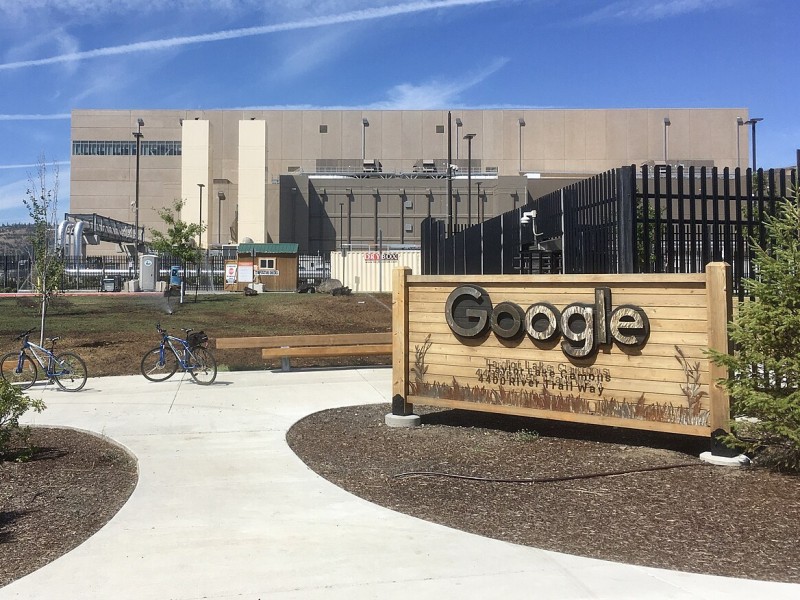
Columbus City Council meeting debates the local impact of data centers
‘This is the beginning of a conversation,’ councilmember Christopher Wyche said of the four-hour meeting, during which reps from the data center industry, labor unions, and environmental groups joined residents to debate everything from data center water usage to the number of jobs these massive facilities actually create.