
Three years after the Dobbs decision, the fight to protect abortion access in Ohio continues
While Planned Parenthood helms the continuing battle for reproductive rights on the legal front, grassroots organizations across the state are working to ensure that financial and logistical barriers don’t prevent people from accessing abortion.
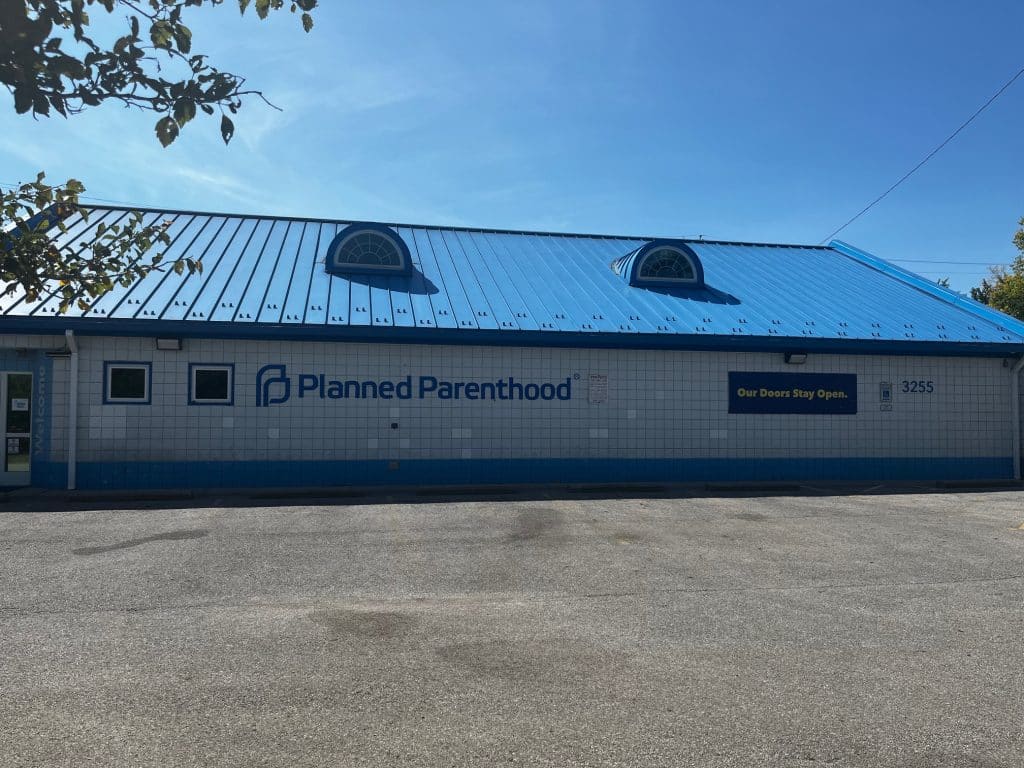
When Taren Holliman found out she was pregnant toward the end of her junior year in college, one thing was certain: She did not want to have a baby.
“I was working three jobs at the time, and I was going into my senior year,” Holliman said. “I immediately knew I had to have an abortion.”
But getting what she wanted proved to be difficult. Then a student at Ohio University in Athens, Holliman was far from her support network back home in Cincinnati. And when she searched for Planned Parenthood locations online, she discovered that the closest clinic providing abortion services at that time was 90 minutes away in Columbus.
A donation powers the future of local, independent news in Columbus.
Support Matter News
“I didn’t have a car on campus,” Holliman said. “Luckily, my best friend and roommate did, and she was willing to drive me to Cincinnati so I could get care.”
At the appointment, Holliman’s medical providers confirmed her pregnancy; they also advised that due to Ohio’s 24-hour waiting period, she wasn’t able to get an abortion that day. Instead, she’d have to schedule a second appointment to return.
“There are so few clinics and so much need that 24 hours turned into a month,” Holliman said. “I was about eight weeks along when I found out I was pregnant, and I was over twelve weeks by the time I could return. That’s a long time to be pregnant when you don’t want to be.”
The waiting period caused significant complications for Holliman. “I couldn’t just stay there for a month – I had to go back to Athens and hope that I could logistically get back down to the next appointment,” she said. “Finding travel meant having to rely on folks, which meant telling them circumstances that I might not have wanted to [share]. It opened me up to a whole bunch of stigma.”
And the abortion itself cost $1,000, an astronomical amount to Holliman at the time. “Luckily I was able to get a ride back to Cincinnati and to get financial assistance through the Justice Fund at Planned Parenthood, but between the money, the travel, and the stigma, it was just so much more difficult than it needed to be to access abortion care.”
Holliman’s abortion took place in 2019. Since then, the landscape of abortion access has shifted significantly. The Supreme Court issued a decision in Dobbs v. Jackson Women’s Health Organization that overturned Roe v. Wade in June 2022, ending the constitutional right to abortion and turning the decision over to individual states. Three years later, the fight to keep abortion both legal and accessible in Ohio continues.
In the aftermath of the Dobbs decision, Ohio’s six-week abortion ban went into effect immediately. Since most people don’t know they’re pregnant that early, providers like Planned Parenthood were essentially barred from providing abortion services for the next 11 weeks. Even after Planned Parenthood’s lawyers successfully challenged the six-week ban and abortion access resumed in Ohio in September 2022, a number of threats remained. So Planned Parenthood banded together with other organizations, including Ohio Women’s Alliance, Abortion Forward, and the ACLU, to pass a ballot initiative.
“The protection that Roe v. Wade provid[ed] was really the floor and not the ceiling as far as the protections that patients and providers deserved,” said Lauren Blauvelt, the executive director of Planned Parenthood Advocates of Ohio.
In November 2023, more than half of Ohioans voted to permanently enshrine the right to abortion access in the state constitution under the Ohio Reproductive Freedom Amendment (which also protects Ohioans’ rights to make their own choices about other aspects of reproductive health, such as birth control and fertility treatments). Less than a year later, a Hamilton County judge was able to permanently block the six-week abortion ban as a direct result of that amendment. The 24-hour waiting period has also been blocked, meaning Ohio patients can now schedule one appointment instead of two, saving both time and money.
“We changed the Constitution – we absolutely had a majority of Ohio voters – but once you change the Constitution, the laws that are already in place stay in place,” said Blauvelt, who added that 31 abortion bans and restrictions had passed in Ohio while Roe v. Wade was active. “We have a very Republican supermajority in Ohio, so they’re not going to overturn the legislation.”
Instead, Planned Parenthood has been challenging these restrictions through litigation.
In addition to blocking the six-week ban, Planned Parenthood has successfully gotten a ban on telemedicine enjoined and overturned a restriction that prevented nurse practitioners from being able to provide medication abortion. These measures, in combination, have allowed the organization to expand abortion access within the state, which has been particularly impactful for rural communities.
Despite these wins, however, lawmakers continue pushing for more restrictions. Among the proposed house bills awaiting action are HB 87, which would grant constitutional rights to an embryo at the moment of conception; HB 327, which restricts access to the abortion medication mifepristone; HB 347, which would reinstate the 24-hour waiting period; and HB 370, a total abortion ban with no exceptions for rape or incest. Because HB 370 would classify abortion as homicide, patients and providers could both be charged with murder if it’s signed into law. The bill also threatens both in vitro fertilization procedures and IUDs, meaning people trying to conceive or trying to avoid pregnancy could suddenly find their choices limited as well.
And in an echo of the “Big, Beautiful Bill” that was passed at the federal level, HB 410 proposes to defund Planned Parenthood at the state level. “Ohio doesn’t allow Medicaid to be used to pay for abortion except in the most limited of circumstances – really, almost never,” Blauvelt said. “So, it’s not abortion services that are impacted – it’s family planning, birth control, and cancer screenings.”
To Blauvelt, the fact that Republicans continue trying to roll back rights is yet another example of Ohio’s elected officials not listening to their voters: “Those bills are unconstitutional under the Ohio Reproductive Freedom Amendment, but it does show that the fight continues,” she said.
Although some of these measures may seem unlikely to pass, Blauvelt warned against getting complacent. With more than 16 years’ worth of experience at Planned Parenthood, she’s seen it happen before. “When the six-week ban was first introduced in the Ohio House, it was also not taken seriously – people thought it was too extreme and it would just never happen – and then Governor DeWine signed it into law in 2019,” she said, noting that Republicans are well-funded, persistent, and committed.
While Planned Parenthood helms the continuing battle for reproductive rights on the legal front, grassroots organizations across the state are working to ensure that financial and logistical barriers don’t prevent people from accessing those rights. For pregnant people who want an abortion but can’t afford the cost, groups such as Abortion Fund of Ohio provide financial support and other direct assistance. Other organizations such as Faith Choice Ohio, an interfaith advocacy nonprofit, connect clients with resources that include transportation, lodging, childcare, language interpretation services, and non-judgmental spiritual counseling that reinforces abortion as a positive choice. These organizations bridge the gap, making reproductive choices accessible to a wider range of people regardless of their circumstances.
Holliman’s own abortion experience back in 2019 ignited a desire to work in the field of reproductive justice. Now an engagement and community care manager for Abortion Fund of Ohio, she’s witnessed firsthand the challenges Ohioans can face when seeking abortions. Even now, she encounters people who still aren’t sure about the legality of abortion access in the state: who can get one, when, and how.
“It’s understandable, and it’s also intentional,” she said. “There’s all of this misinformation, and it’s a stigmatized subject. How can you find resources if you can’t talk about it? So it breeds a situation where people aren’t able to know all of their options.”
Other issues are related to the larger fight for reproductive rights that continues across the country. Abortion has been fully banned in 12 states since the Dobbs decision and partially banned or restricted in many others, meaning that people are increasingly forced to travel to Ohio for care, especially those in bordering states with bans. This can get tricky: although nearly 12 million people live in Ohio, there are only 11 in-person clinics providing abortions and nine telehealth providers serving the entire state – and now those providers are also being inundated by patients from elsewhere. (Meanwhile, 124 crisis pregnancy centers – religious organizations that actively work to deter patients from choosing abortion using scare tactics and misinformation – currently operate within Ohio, with some benefiting from the type of state funding that Republicans are working to slash for Ohio Planned Parenthood locations.)
“With Ohio being the nearest access point for many residents in West Virginia, Kentucky and Indiana, we receive out-of-state requests almost daily,” said Holliman, who noted that AFO’s total client volume increased 270 percent between 2022 and 2023. “Unfortunately, due to funding constraints, we have had to pause out-of-state funding, though we do hope to un-pause it at some point.”
Blauvelt has noticed similar increases in demand at Planned Parenthood. “We saw an almost tenfold increase in overall out of state patients in 2024,” she said. “We do see that trend continuing, especially as patients from other states learn that we don’t have a 24-hour waiting period.” Abortion is currently legal in Ohio until just after 21 weeks’ gestation, which Blauvelt said allows for more access: “Sometimes the number one reason someone has waited longer is that they’re saving up and have to travel.”
Though abortion remains legal throughout the state, not everyone finds the care they’re seeking here. After Kara, an Ohio resident whose name has been changed to protect her identity, discovered that she was pregnant in 2025, she reached out to Faith Choice Ohio. Like the majority of people who terminate their pregnancies, Kara was already a mother. After weighing her options, she decided not to continue her pregnancy for personal reasons.
“Not qualifying for financial assistance made it hard to seek abortion care,” she said. “Finding childcare and missing work were also barriers.” Faith Choice Ohio stepped in to help, connecting Kara with resources for transportation and childcare through the Jubilee Fund program.
Kara wishes more people would try to understand what it’s like to have an abortion. “You are mentally and physically drained, so it’s really helpful to have more support than those who are against it,” she said. “It’s easy for someone looking in from the outside to say what should or shouldn’t have been done, but speaking for myself, it was not a decision made with ease.”
In some ways, abortion laws in Ohio have improved in recent years thanks to the determination of reproductive rights groups and the voters who back them. But there’s still work to be done. And despite lowered legal restrictions, Kara ultimately left the state for her procedure: “I found it easier to seek care outside of Ohio,” she said. “It seemed like there was more support.”
Related Articles

‘I am not going to stand before God and say, well, I chickened out’: Reflections on building caring coalitions
More than three years after the City of Columbus bulldozed Camp Shameless, one of the founders of the encampment offers their perspective on the housing crisis and the people working at the grassroots to give aid to those routinely left behind.
New affordable housing investments may leave Columbus’ most vulnerable properties, and tenants, behind
Even as new bonds approved by voters hope to transform housing development for years to come, a desperate shortage of affordable units continues to push low-income renters into the lowest-quality homes.
Columbus City Council meeting debates the local impact of data centers
‘This is the beginning of a conversation,’ councilmember Christopher Wyche said of the four-hour meeting, during which reps from the data center industry, labor unions, and environmental groups joined residents to debate everything from data center water usage to the number of jobs these massive facilities actually create.