
Akeylah Wellington explores ‘soft power’ in a world grown hard
The Columbus artist’s new exhibition, co-curated by Reg Zehner, kicks off with an opening reception at Pecha Projects today (Friday, Jan. 16).
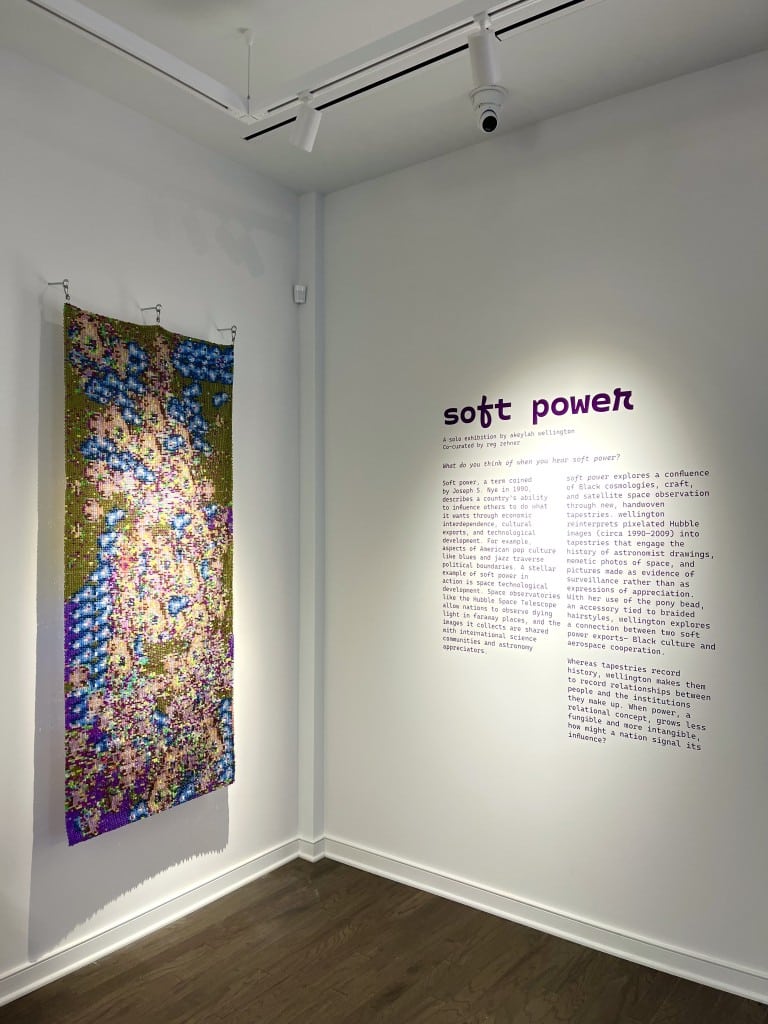
A few years back, Akeylah Wellington began experimenting with pony beads, weaving hundreds of the hair accessories together into a series of elaborate tapestries.
At the time, the decision was at least in part circumstantial, with the artist having recently relocated from a larger studio to a smaller in-home space, which she said required her to pivot to forms and materials that could be more easily folded and stored. It helped, of course, that for Wellington the beads already carried a deeper significance.
“I think they reference a time and an era,” Wellington said in early January at Pecha Projects, where her new exhibition, “soft power,” co-curated by friend and fellow artist Reg Zehner, kicks off with an opening reception from 5-7:30 p.m. today (Friday, Jan. 16). “I also think culturally they are a signifier for love and intention and care.”
A donation powers the future of local, independent news in Columbus.
Support Matter News
This idea impacted the tapestries created early on by Wellington, the bulk of which were text based and usually incorporated lines culled from the poems she had written. Looking back, the artist said that leaning on language felt like the best way to convey the more inward-driven concepts to which she then felt innately drawn. “There’s no image of what it feels like to get your hair done by your cousin, so text was the only solution I could see,” Wellington said. “Maybe somebody else could make that happen, but for me, there is no image, there is no photo, there is no anything that could ever get to impressing that sensation on a viewer.”
Over the last year, however, Wellington has begun to adopt a different view of the pony beads, coming to see them more as individual pixels, and pixels that can nod to history. This evolution bleeds into the work on display in “soft power,” which eschews words in favor of more colorfully amorphous, galactically inspired images rooted in the earliest photographs returned to Earth by the Hubble Space Telescope, launched in April 1990.
“And when I started looking at those images, specifically the ones from when Hubble first launched, they were really grainy and pixelated, and I learned that Hubble launched with a couple things that had to be corrected during its first service mission,” said Wellington, who embraced these images as a launch point to consider a wide range of big-picture concepts, including space exploration, the American psyche, the nature of collaboration, Blackness and how Black people might best position themselves for the future, the ways history can repeat itself, the veracity of the media, how Black femme people tend to be viewed, and more. “And some of it is not really up to me. I’m kind of in the soup of time. … But I think there’s something I’m seeking, some sensory feeling I want to impart on folks who are looking at my work. And I don’t know if I have the language or the vocabulary to explain what that feeling is, but it’s a sense of appreciation, but also confusion, but also frustration and melancholy or even impotence – all of those things are acceptable to me.”
Wellington and Zehner conceived of the exhibition about a year ago, its development tracing an arc of time in which the idea of how the United States wields its soft power shifted radically, first with DOGE making deep, widespread cuts to global humanitarian programs that long served as a source of national influence, and more recently with the administration leading with an increasingly lawless use of force, whether staging international coups, bombing civilian watercraft, or sending federal agents into U.S. cities to terrorize the populace in the name of immigration enforcement. “We live in a world in which you can talk all you want about international niceties and everything else,” homeland security advisor Stephen Miller recently said on CNN, “but we live in a world … that is governed by strength, that is governed by force, that is governed by power.”
“With everything that’s happening in the world, [the exhibition is] timely, and we didn’t plan for that,” said Zehner, the senior social media coordinator at the Studio Museum in Harlem, reached at home in New Jersey earlier this week. “But I think that’s why art is so important, because sometimes it creates certain conversations that need to happen. … And hopefully through [the exhibition], we can begin to unpack some of these important points of state violence and influence, of media consumption and algorithms, and then also how we show up in our communities and connect with one another.”
Wellington described her work as existing in seasons, where stretches of more internalized inspiration might be followed by a collection deeper rooted in the outside world – a place in which the majority of the concepts shaping “soft power” were forged. “I think there’s a psychological thing that comes with being [in the United States], as for somebody who lives anywhere,” said the artist, who recalled how growing up in Florida in the early 2000s amid the fallout of “hanging chads” and talk of stolen elections impacted her worldview from a young age. “There’s something where you see the best of people, and you see the worst of people, and you see amazing kindness and great beauty, and then acts that are ugly and nasty all at once. And it becomes, for me, at least part of the issue that I am bringing to this body of work.”
Author

Related Articles
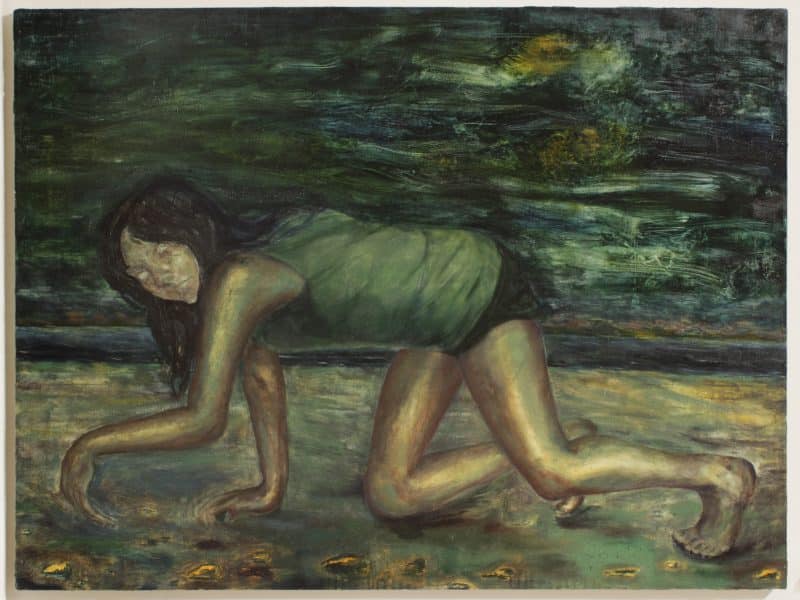
Kasmira Snyder reclaims the night in ‘Untethered’
The new exhibition from the Columbus artist kicks off with an opening reception at Wild Goose tonight (Friday, March 13).
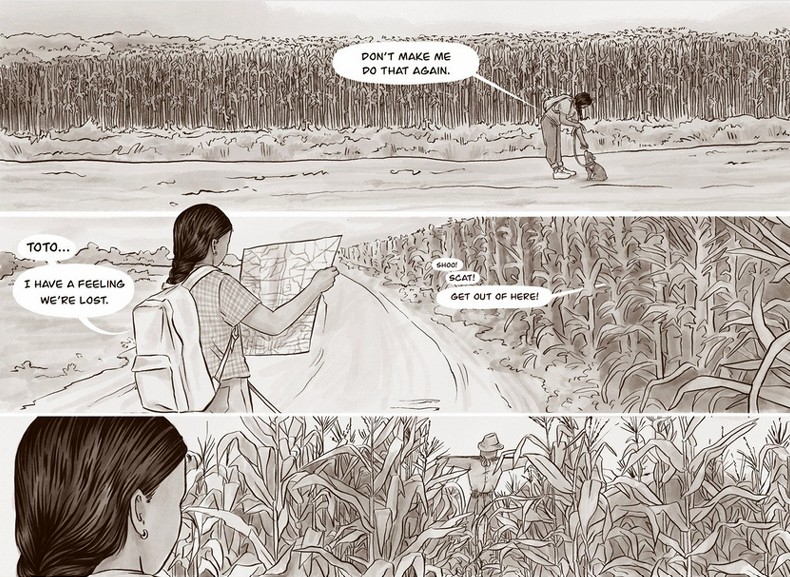
Angelo Thomas finds blue skies on the other end of the rainbow in ‘Somewhere…’
The filmmaker will join artist Rebecca Butterworth in celebrating the release of their new ‘Wizard of Oz’-inspired comic at Laughing Ogre from noon-2 p.m. on Saturday, March 14.
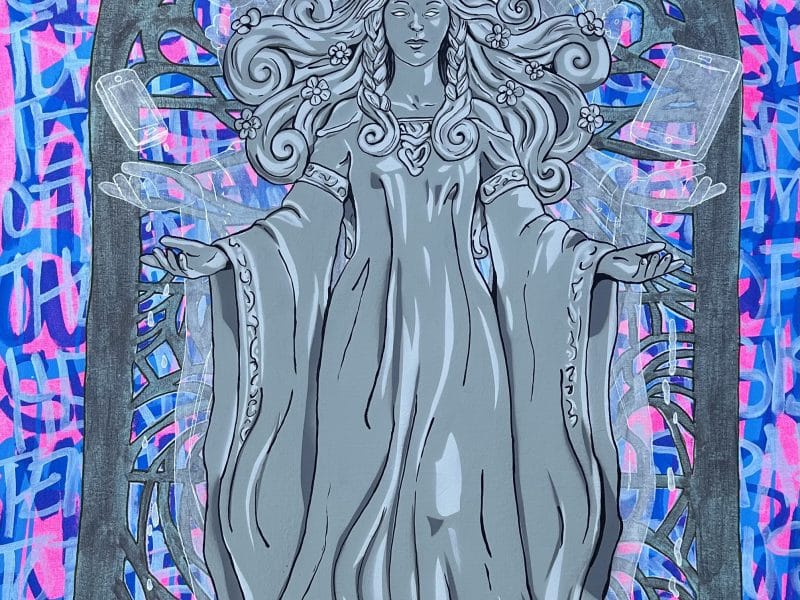
Stephanie Rond hopes to kickstart a larger conversation on AI with ‘Pink Waves’
The Columbus artist wants her new exhibition at Chaos Contemporary Craft to be the start of a bigger discussion regarding the divisive technology.