Anne Spurgeon explores transformation in ‘Drawings in Space’
Spanning ceramic sculptures and painted works, the Columbus artist’s new exhibition kicks off at Secret Studio with an opening reception on Friday, Oct. 10.

Throughout her career in the arts, Anne Spurgeon said she has always been fascinated with the concept of transformation.
These explorations initially took the form of video work and centered on the idea of personal evolution, shifting in meaning as Spurgeon moved into sculptural work that incorporated the found objects she discovered navigating the streets in her former home of New York City. “And then it was becoming more about the transformation of materials,” said Spurgeon, who was raised in Columbus and returned to the city in 2018 in part because she wanted better access to green spaces.
As a result, the artist’s ceramic sculptures and especially her paintings have been increasingly shaped by the transformative, life and death cycle she has witnessed in visiting the city’s Metro Parks and traversing trails in nearby places such as Hocking Hills.
A donation powers the future of local, independent news in Columbus.
Support Matter News
“There are these systems you see in the natural world, where things decay and other things are born, creation from destruction,” said Spurgeon, who also credited the influence of writer Robin Wall Kimmerer, a Potawatomi botanist and writer whom the artist said “talks a lot about lived reciprocity and thinking about our planet and the gifts we’ve been given.”
The paintings on display in Spurgeon’s new Secret Studio exhibit, “Drawings in Space,” center on oval shapes that she described as “pods or seeds,” and which often appear in clusters toward the bottom of the canvas, as if drifting upward from below. Spurgeon said these works developed intuitively, the first patches of color applied via the Japanese suminagashi technique, which involves dropping ink onto the surface of a water bath and then pressing the paper to the liquid, creating a marbling effect.
“I compare it a little bit to [darkroom] photography, where any subtle movement will change the image,” said Spurgeon, whose exhibition kicks off with an opening reception from 6-9 p.m. on Friday, Oct. 10. “And that initial experimentation often informs the overall composition.”
From there, the artist often moves into collage, cutting oval shapes from tissue paper and applying them to the page, their placement and frequency dictated in part by the established ink patterns. Some images also incorporate block printing, with solidly colored half circles presenting additional layers of interest. All of the paintings on display are vividly colored, balancing crowded sections that gradually give way to ample white space in which viewers are able to unclench and breathe.
“I love that they’re super colorful. Last night I was actually thinking about this, but there’s this idea of play and they feel very light. I even intentionally hung them this way, where they’re kind of floating,” Spurgeon said. “When I first saw [Secret Studio co-owner] Keith [Hanlon] last night, he was like, ‘How are you doing?’ And I’m like, ‘Good… except for everything else.’ … And this moment does feel so heavy. I’m hoping this work will give others a moment to pause and maybe find some reprieve.”
The paintings are paired with ceramic sculptures and interspersed with a series of “fried egg” wall hangings that Spurgeon created in homage to British artist Sarah Lucas and that serve as something of a bridge between the two. In these ceramic pieces, the transformations explored are more literal (from soft to hardened clay), though similarities exist with the paintings in the way Spurgeon at some point releases her grip from the steering wheel. “With the clay, there’s a lot of control in the beginning of the process, but you don’t know what’s going to happen in the kiln,” she said. “And so, there’s a certain amount of letting go.”
Spurgeon began to make ceramic sculptures for the first time since college a few years back, creating stacked, looped rolls that maintain a sense of kinetic energy even in their stillness. The earliest efforts have a slightly more malleable appearance, as though existing somewhere between that soft/solid state, while more recent pieces have a more solid presence – a development the artist attributed to firing the works at a slightly lower temperature, allowing them to better maintain their shape.
“I’m learning how to keep the forms more structured, where these newer ones have a little bit more freedom to them,” she said. “It’s learning, getting familiarized with the clay bodies and what they can and can’t do.”
Though Spurgeon generally splits her time between two studios – firing her clay pieces in the kiln room at the Fort and painting in her Linden home – her artwork tends to emerge from a similar creative place, informed by intuition and centering the natural world in a way the artist hopes will inspire viewers to better appreciate the wonders that surround.
“These works aren’t intended to be political, though they do come out of a concern for the natural world,” Spurgeon said. “I’m hoping these give us the first step in rebuilding that relationship with our environment, because that’s really the only way we’ll change.”
Author

Related Articles
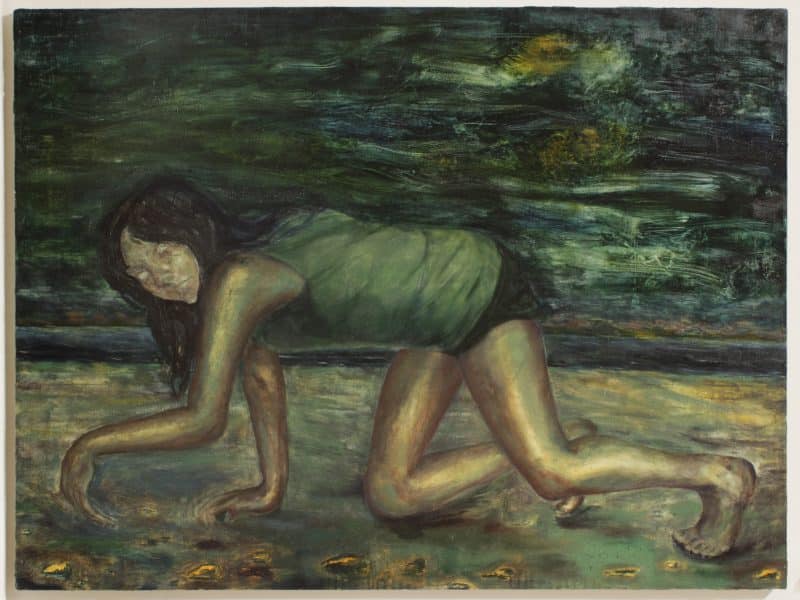
Kasmira Snyder reclaims the night in ‘Untethered’
The new exhibition from the Columbus artist kicks off with an opening reception at Wild Goose tonight (Friday, March 13).
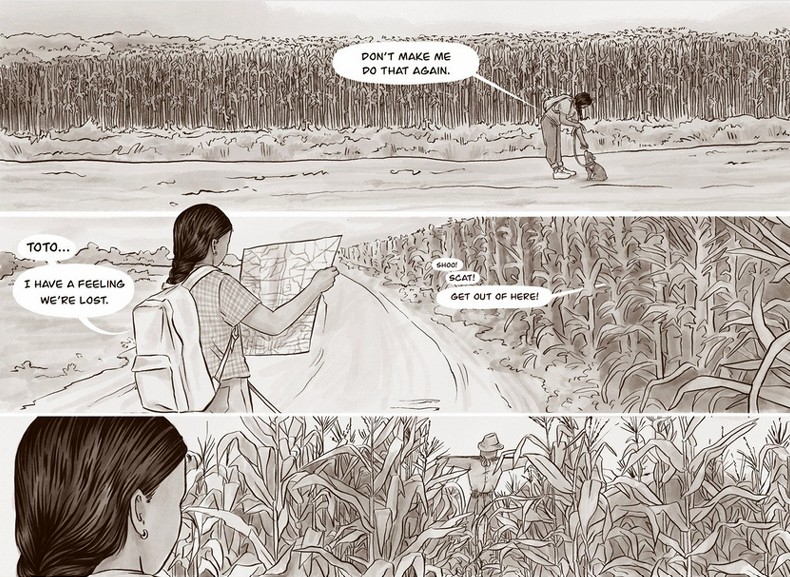
Angelo Thomas finds blue skies on the other end of the rainbow in ‘Somewhere…’
The filmmaker will join artist Rebecca Butterworth in celebrating the release of their new ‘Wizard of Oz’-inspired comic at Laughing Ogre from noon-2 p.m. on Saturday, March 14.
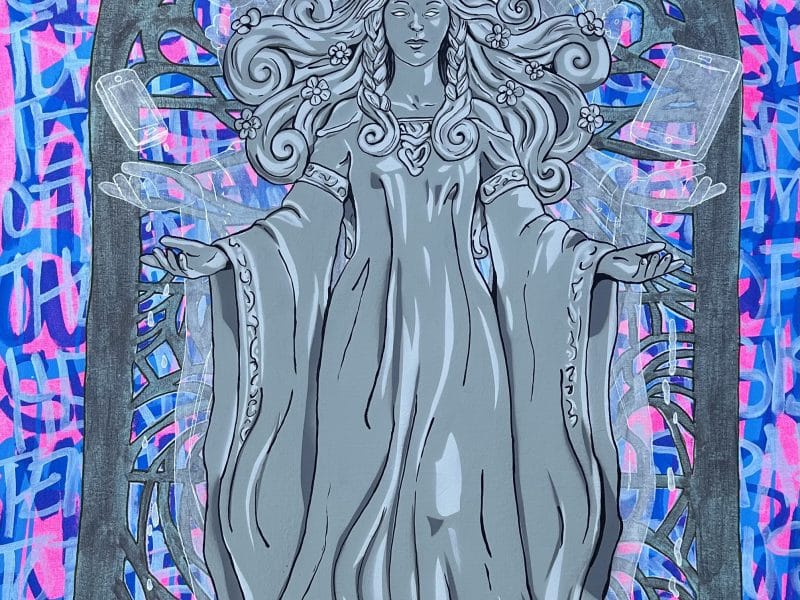
Stephanie Rond hopes to kickstart a larger conversation on AI with ‘Pink Waves’
The Columbus artist wants her new exhibition at Chaos Contemporary Craft to be the start of a bigger discussion regarding the divisive technology.