
Comics artist Carol Tyler still feels compelled to tell her story
The iconic writer and illustrator is the subject of a new retrospective show, ‘Write It Down, Draw It Out: The Comics Art of Carol Tyler,’ currently on view at the Billy Ireland Cartoon Library and Museum.

Decades ago, when Carol Tyler was a young girl at a Catholic elementary school, one of her teachers, a nun, told her that if something mattered, then it should be written down.
Though the sister dispensed this advice in regard to a handwriting journal she asked the students to keep documenting the Second Vatican Council, Tyler internalized the lesson, adopting a lifelong journaling practice in which she has detailed everything from her first Beatles concert through the 2022 death of her husband, the cartoonist Justin Green.
“I remember she said, ‘If it matters, write it down.’ … So, I wrote down everything from being in eighth grade. And then when I saw the Beatles, I wrote down everything that happened in that concert,” said Tyler, whose journals would eventually form the backbone of an ongoing series of autobiographical comics, work from which is currently on display at the Billy Ireland Cartoon Library and Museum in the career-spanning exhibition “Write It Down, Draw It Out: The Comics Art of Carol Tyler,” an opening reception for which takes place at 6 p.m. on Friday, May 30.
A donation powers the future of local, independent news in Columbus.
Support Matter News
In coordinating the exhibition, Tyler collected work and then divided it into eras, allowing visitors to age with her as they circle the space, moving from journals and cartoons done in the 1970s and ’80s through more recent materials that form the basis for the artist and writer’s forthcoming graphic novel, The Ephemerata: Shaping the Exquisite Nature of Grief, due for release in September and born of Tyler’s desire to wrangle with the depressive feelings that accompanied a series of deaths, including her parents and her longtime editor.
“Suddenly, there was a cluster where everyone died, and I said, ‘I’ve got to do something about that,’” said Tyler, who around this time acquired along with her husband a fixer-upper farmhouse on 10 acres in rural Kentucky. “And I needed the farm to help me express what had happened. The farm was going to lead me to the story that I needed to tell, because the farm was bigger than my grief.”
Not long after the couple settled into the space, Tyler said she found herself unable to sleep, struggling with temporary feelings of estrangement that had developed between she and her daughter, who had recently departed for graduate school. As Tyler stumbled into the bathroom, she said she experienced the sensation of her head being split in two and briefly considered that she might be having a stroke.
“But then suddenly I realized I was in Griefville, and I had never heard that word before. And I could see the people who populated it, and they were called the Clorins, and they were the workers who helped people process the dead,” said Tyler, who then recalled how a year later she found herself hunched over her kitchen table, drawing a massive, six-foot map that illustrated the bounds of Griefville, which would become a central element in The Ephemerata and can now be viewed at the Billy Ireland. “And this feeling that my head split open brought forth all of these details, and it helped me to understand death and loss. I knew this was the book I had to articulate, and I wasn’t going to be going back to the tropes of the Grim Reaper and all of that, because none of that worked for me, and it wasn’t a part of my reality. … So, I realized what I was given was the gift of insight with this calving, as I called it, this head shearing off. That’s why when you walk into the gallery, on the right my head is split in two, and you’ll see it.”
As Tyler finally began to take control of this grief, her husband died, leading her to reinvent The Ephemerata as a two-part epic, the second half of which she plans to begin next year, and which will center her experiences regaining a sense of footing in the wake of this world-altering loss. “Losing him is bigger than the farm,” said the cartoonist.
Tyler’s ability to preserve her most unguarded moments in her art runs counter to her experiences with her parents, both of whom closely guarded personal tragedies for decades, sharing them with their daughter only after they reached old age – a secrecy the artist attributed in part to generational differences. Tyler’s father, for instance, opened up in his 80s about a traumatic brain injury he suffered as a young man fighting in World War II, which resulted from a German anti-aircraft gun exploding near his head and is recounted in Tyler’s graphic novel Soldier’s Heart. The cartoonist’s mother, meanwhile, carried with her the grief of having her first child die before age 3, the details of which she finally shared only after Tyler began to do some detective work of her own.
“So, here I am in my 50s finally figuring out the truth, and still nobody wants to talk about it,” she said. “And when my mom finally told me, I did something called The Hannah Story, about her losing her child, and she couldn’t even read it. She got about halfway through and set it on the bed, and it was never mentioned again. So, I’ve never shied away from talking about anything, because why? Are you just going to leave it to fester?”
And yet, Tyler said, there’s a common misconception that these deeply personal comics exist as a necessary means for her to process and make peace with life’s various hurts, indignities and traumas. “And people will say, ‘Oh, it must be great therapy,’ but that’s not why I do it,” she said. “No. I get a vibe that says, ‘You need to talk about this story. This would be a good story to tell.’ And if it turns out that it’s insightful or helpful to me or others, that’s a bonus, but mostly it’s because I feel compelled to say something. … If I wanted therapy, I’d go with a therapist. And I don’t want to put that on my comics. That’s not the job of my cartooning and writing and drawing. The job of that is to find the joy. And I love to draw. I love to work with ink. I love to fool around with words. … But at the same time, my life is not separate from my art making. I live the comics. And there’s no self-aggrandizement or anything like that. It’s just that this is the life, and from here we make the comics.”
Author

Related Articles
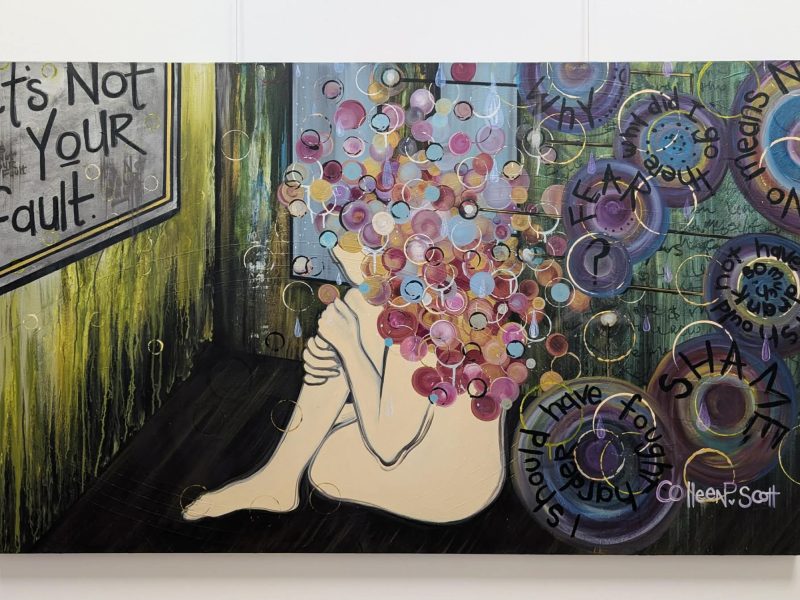
Columbus artist Colleen Scott learns how to love herself again
‘Redirected Pathways,’ which kicks off with an opening reception at the Franklin County Coroner’s Office on Thursday, April 2, centers on work created both pre- and post-sobriety, capturing a personal evolution that speaks to a range of universal concepts.
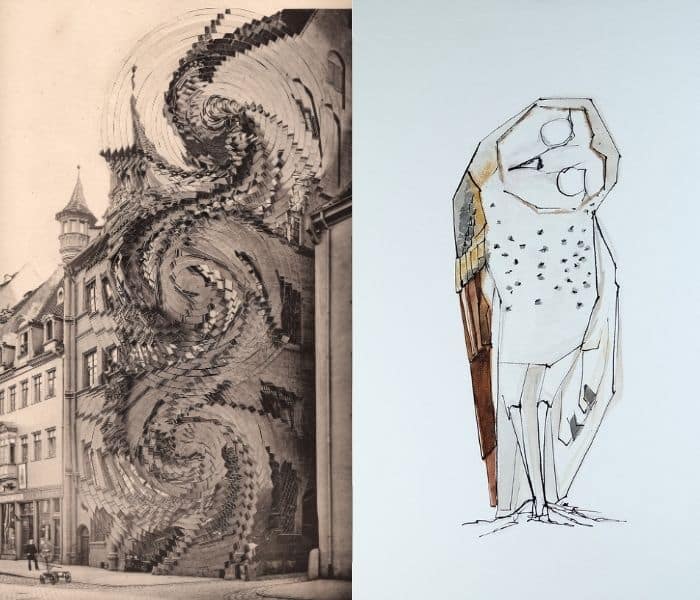
Emily Morgan and Hannah Maltry rely on instinct for ‘We Did It Wrong’
The two artists will host an opening reception for their exhibition at High Road Gallery & Studios from 6-8 p.m. on Saturday, March 28.
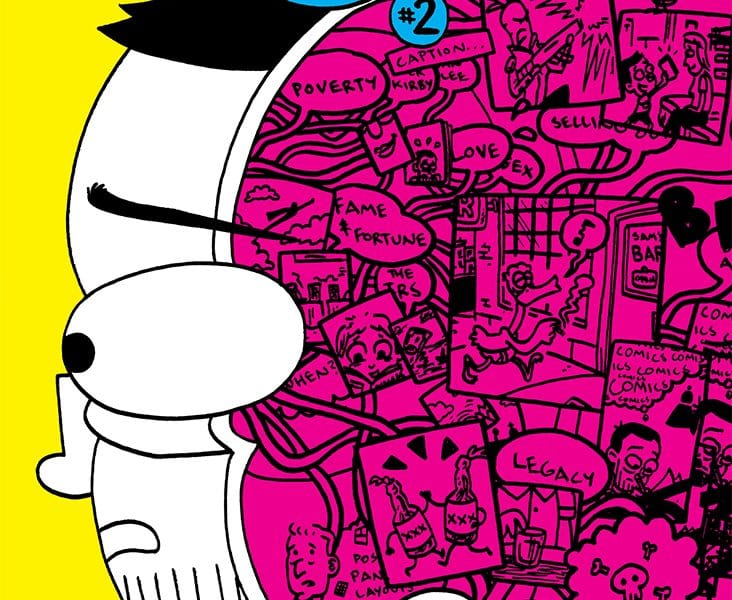
Brian Canini takes stock of 25 years in self-publishing
The Columbus comics artist will unpack lessons learned over the last quarter-century in a weekend talk at SPACE.