
Florian Meisenberg explores the human condition within ‘Der Ekel’
The New York-based artist’s new exhibition, on display at No Place Gallery through late December, includes a massive, Gay Street-facing painting that covers two of the gallery’s windows and reads at night as a glowing x-ray of two giant figures in recline.
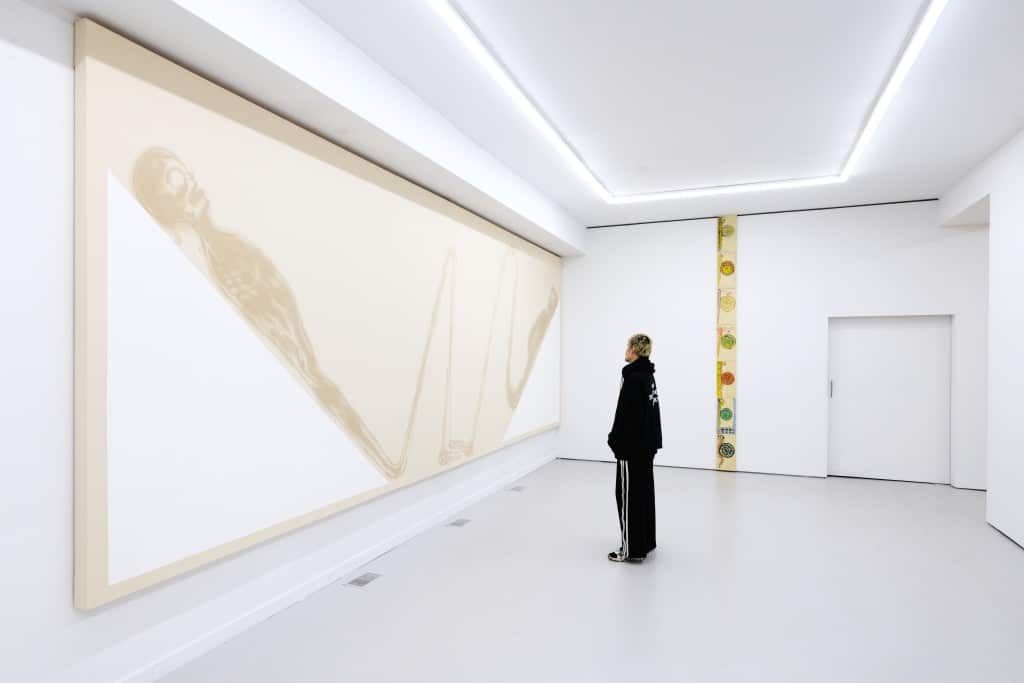
Florian Meisenberg said the title of his new show, “Der Ekel,” roughly translates to “the disgust,” equating the German term with the sensation of being within range of a spraying skunk, in that it evokes an almost physical response that forces the body to recoil.
“Nausea is more abstract and soft than the idea of being disgusted,” the New York-based artist said in mid-November from No Place Gallery, where his exhibition will remain on display through Dec. 27. “And I don’t think that’s a contemporary condition; it’s just the human condition. … It’s about the awkwardness of being alive somehow, and I feel like the show is reflecting that in many ways.”
“Der Ekel,” and Meisenberg’s work more in general, arrives steeped in the myriad discomforting moments that challenge people to develop and grow – an idea captured in the repeated paintings of snail-like creatures extended throughout the gallery, some of which show signs of evolution, such as flipper-like appendages. “Almost like a tadpole,” the artist said.
A donation powers the future of local, independent news in Columbus.
Support Matter News
Meisenberg completed these canvases in what he described as “an additive, almost classical way,” mixing marble dust with liquid oil paint to create a thick, textured surface. These stand in contrast to a pair of comparatively transparent, large-scale canvases the artist stretched over two of the downtown gallery’s Gay Street-facing windows, and which he described as living in tension with the more interior works.
“It’s bringing in this whole conversation about how we create things, and how things are made, and come to life, and then evolve,” he said. “Or they just leave, and they decompose and disappear. And that’s a never-ending process we are part of, as individuals, as humans, as a race.”
The window installation, which is activated by the gallery lighting and reads from the nighttime street as a glowing x-ray of two massive figures in recline, draws forth a number of these ideas, serving as a reflection on the finite nature of existence, the fallibility of the human body, and how little control we have over how our time here will ultimately end. “With me, becoming an artist was about posing these existential questions: Why are we here? What are we doing?” Meisenberg said. “Art is the exploration of that. And you may find answers along the way, but also maybe you never find answers.”
While the snail paintings crawling throughout the gallery were created in advance, Meisenberg painted the skeletal figures on site in the days before the exhibition’s mid-November opening, first priming the fabric’s surface with a transparent gesso and then using brushes to stain the canvas with oil, allowing the image to bloom over the course of a couple days as it dried in a way that challenged his ability to maintain control.
“It has its own independence and autonomy,” Meisenberg said of the approach, which he first experimented with in art school at the Düsseldorf Academy in the mid-2000s, and which he has learned to harness more fully in recent years. “I dilute the gesso with water, and the more I dilute it, the more blooming appears. So, that’s my filter, my leverage on the process. Then there are many other variables that define that final staining that I cannot control. … But that’s what I like about painting in general. It’s not about controlling everything, but setting things up so that they can come together.”
The artist’s earliest “bloom” experiments tended to serve as the complete abandonment of control, with Meisenberg applying heavy applications of pigment-colored linseed oils. In gradually dialing back, however, the artist has begun to uncover new potentials in the medium. “I’ve really put an emphasis on [refinement], which has opened up this Pandora’s Box, in a way,” he said of the site-specific works he has created over the last three years, the majority of which center the human form. “Even if it was just an abstract stain, I feel like it would have a reference to the human body, because it is oil. It’s kind of like the Shroud of Turin, the print of Christ, which in a way is also just a stain.”
The interplay of styles and approaches on display within “Der Ekel” all have tendrils that extend back to the years Meisenberg studied in Düsseldorf – a stretch that he compared to existing within “an amazing, open playground”
“There’s no grades. There’s no assignments. No one tells you what to do,” he said. “So, you’re just thrown entirely back onto yourself. And a lot of people cannot deal with this openness, this freedom. … But that’s the only place where this growth, this becoming, can happen.”
From childhood, Meisenberg knew that he wanted to be an artist, recalling how he felt “inappropriate in language” from an early age, and how his discovery of painting at age 7 helped him to discover a space in which he could more capably express himself. “It was this thing where I somehow suddenly slotted into myself, and I felt like myself for the first time,” he said. “And I realized I wouldn’t be able to explain it to anyone, but it was just the feeling, me sitting in front of a piece of paper. And I was just drawing all of my childhood for hours and days and years. And the fascination, the beauty of it never left me.”
Author

Related Articles
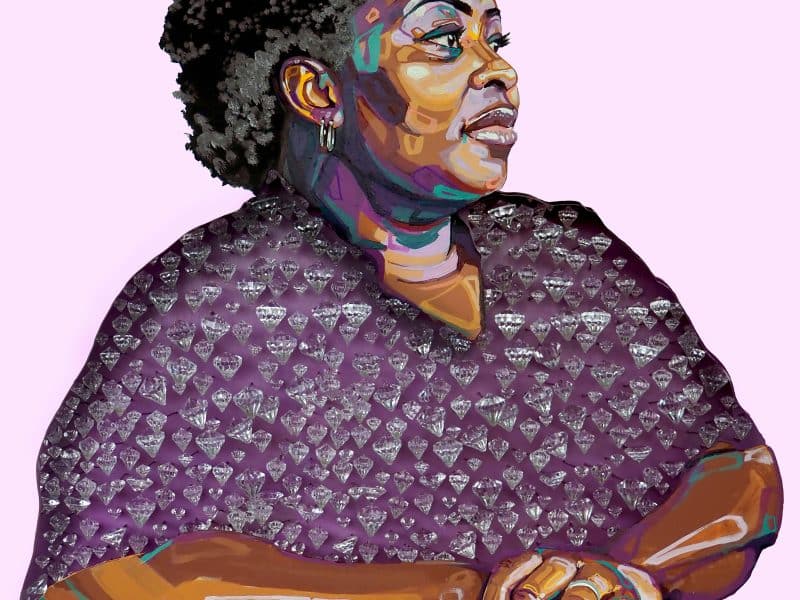
Kirsta Niemie Benedetti wants you to know you’re worth it
The Columbus artist’s new exhibition, which kicks off at 934 Gallery with an opening reception on Friday, Dec. 19, empowers incarcerated women to take a different view of themselves.
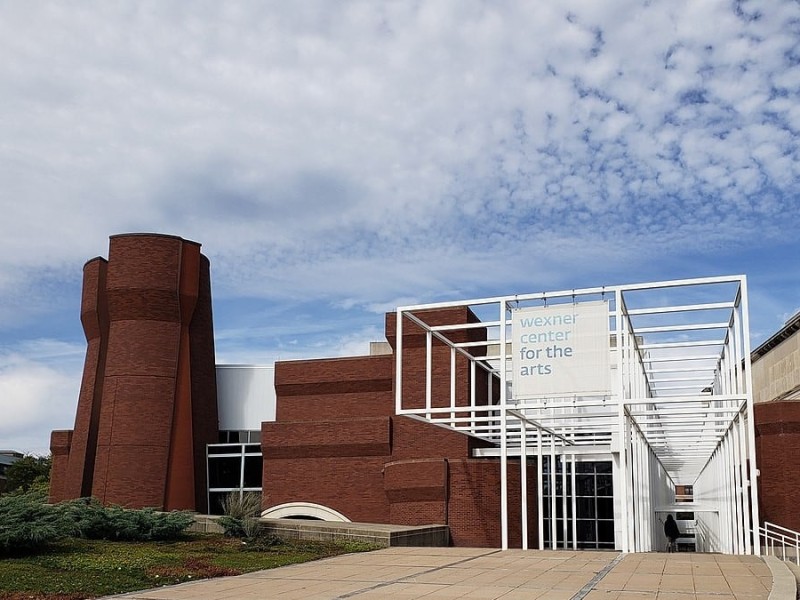
Internal review highlights fracture between former leadership and staff at Wexner Center for the Arts
The review, conducted by Ohio State Employee and Labor Relations a month before Gaëtane Verna’s resignation from the museum, paints a picture of the growing disconnect that led staff members to send a letter to university officials expressing a vote of no confidence in the former executive director.
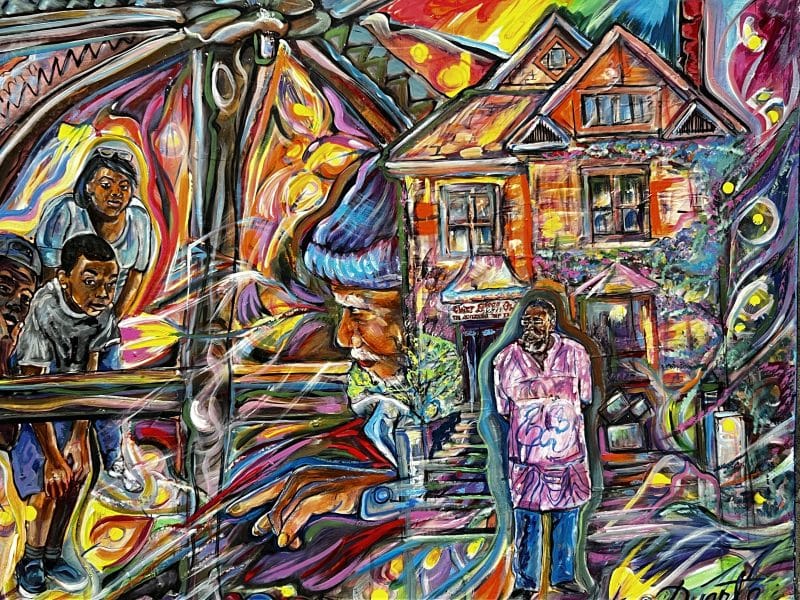
Community takes center stage in ‘Time…with Baba Shongo’
A new exhibition opening at William H. Thomas Gallery on Sunday, Dec. 21, pays tribute to gallery founder Baba Shongo Obadina and the larger community that has come up around the vital East Side arts space.