
Music photographer Lynn Goldsmith continues to embrace the moment
Despite being drawn into a years-long legal case settled by the Supreme Court in 2023, Goldsmith’s passion for the form remains undimmed. The veteran photographer will visit the Lincoln Theatre to speak about her remarkable career on Thursday, Oct. 10.
When Lynn Goldsmith spent an hour or two photographing a young Prince for Newsweek in 1981, she had no idea the resulting image would decades later become the center of a case argued in front of the Supreme Court. And yet, that’s precisely what happened, with Goldsmith engaging in a costly, years-long copyright battle with the Andy Warhol Foundation related to silk-screen prints the late pop artist created based on Goldsmith’s portrait.
“I knew it would be a very costly battle, because [the Warhol Foundation] made it very clear that if I didn’t accept the paltry amount they were offering me to settle the lawsuit, they would take it all the way to the Supreme Court,” said Goldsmith, who estimated that she sunk nearly $3 million into the suit, which the Supreme Court finally decided in her favor in 2023. (The photographer launched a GoFundMe in an attempt to defray her spiraling legal costs, raising $74,400 to this point.) “With the talk of AI and what could happen … I felt it was even more urgent to stand up for copyright law, so artists and innovators could be [protected] and hopefully earn a living from their work.”
The issue first arose when Vanity Fair, using a license it obtained from Goldsmith, commissioned Warhol to create a single image based on her photograph for the November 1984 issue. Unbeknownst to Goldsmith, however, Warhol also created other, unlicensed images, one of which Vanity Fair publisher Condé Nast used as part of a tribute in the aftermath of Prince’s 2016 death. Goldsmith was not credited in the publication, and the next year the issue ended up in court, with the Warhol Foundation and Goldsmith suing each other to determine if Warhol’s image constituted fair use.
A donation powers the future of local, independent news in Columbus.
Support Matter News
Goldsmith said she felt better equipped than most for the legal battle owing to her experiences – “I’m a Baby Boomer, and Baby Boomer women have always had to stand up for their rights and I think work harder to be considered valuable in the workforce,” she said – though she acknowledged there were times when she felt abandoned by her peers.
“And that, to me, really was disappointing,” said Goldsmith, who no longer views the photographic world as a community, citing what she described as a lack of support from others working in the field. “There are actors who try to help each other get parts, and musicians who write songs together. … But for the most part photographers don’t see themselves that way. They compete.”
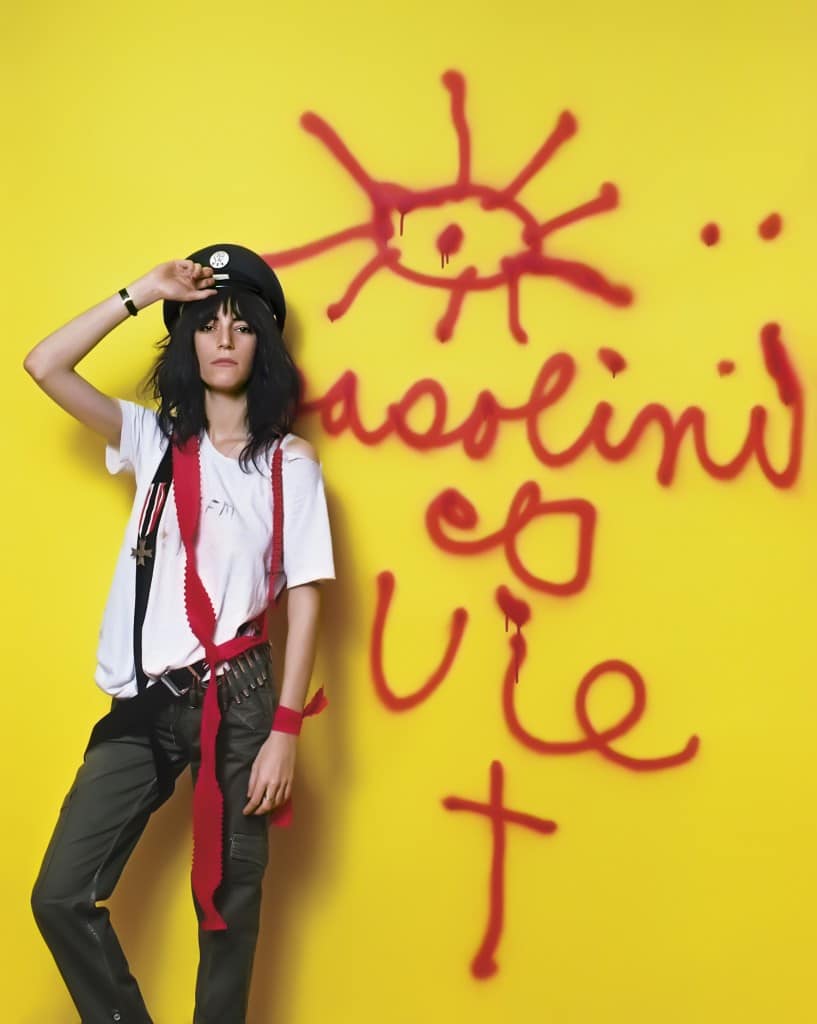
The legal battles have done little to slow Goldsmith’s output, though. In November 2023, she released a book of images that capture Bruce Springsteen & the E Street Band in the Darkness at the Edge of Town era, and she’s currently prepping for the Oct. 22 release of Before Easter After, which features hundreds of career-spanning photos taken by Goldsmith of longtime friend and creative muse Patti Smith.
“Patti and I had a commonality in terms of our interest in various writers and books, and particularly our interest in spirituality and consciousness,” said Goldsmith, who will speak about her decades-spanning career as a music photographer at the Lincoln Theatre on Thursday, Oct. 10, an event to benefit Music Columbus. “And then as a subject, she just knew how to be in front of a camera. I didn’t have to do any work to bring it out. She just created the character that she wanted to appear on film.”
Goldsmith credited part of her success as a photographer to the years she spent studying psychology, which included a stint working in a psychiatric hospital. “And then I also had a father who was pretty strange, so I was naturally more accepting of certain behaviors,” said Goldsmith, whose tricks for creating a relaxed environment included researching the songs that were popular on the music charts when a subject was 14 years old. “So, for example, there was this newsperson who has since passed on, Cokie Roberts, and I was warned she hates photoshoots and would only stay for five minutes. And so, even though I don’t like Lesley Gore’s ‘It’s My Party,’ I had it on when she walked in. And she started dancing around and didn’t leave for almost six hours. … So, there’s research that goes into creating an environment where someone feels not only comfortable, but like they’re with somebody who gets them.”
Growing up in inner-city Detroit, Goldsmith instinctively gravitated to the camera – her father was a devoted amateur photographer, and she followed in his footsteps, taking her first pictures at age 6. Early on, her images centered on nature, but as she progressed into her late teenage years, she moved from shooting trees and flowers to musicians, with Goldsmith tracing this evolution to the importance the artform took in the aftermath of her parents’ split.
“My parents got divorced when I was 4, and I remember being sent to overnight camp at that time, which is a very young age. And when I was there, I would cry at night. And Angie, the counselor, would take me out on a swing and hold me and sing to me, and I would stop crying,” Goldsmith said. “And then when I was older, probably about 12, my mother and I would dance to Xavier Cugat records, and then my dad got me a turquoise transistor radio, and I would fall asleep with it on my ear. And so, I just always connected both taking photographs and music to love.”
It also helped that live concerts proved to be ideal settings for Goldsmith to develop and sharpen her camera skills, owing to the challenges brought about by everything from the lighting to the speed of the action unfolding onstage. Deep into her career, Goldsmith said she continued to book and shoot concerts whenever she got a new camera, sharing that the experience helped her to build needed comfort level with the equipment, allowing it to virtually disappear in portrait sessions and shrinking the physical space between her and a subject. “All of my shooting is with equipment I don’t really feel is there,” she said.
Though Goldsmith has amassed a deep portfolio featuring images of culture-defining figures, she initially laughed off the question when asked if there were times when she felt an awareness of the historical moment, such as the months she spent documenting Springsteen and Co. in the late 1970s.
“There’s a photographer who’s no longer alive, Chuck Pulin, and in the early ’70s … we were at the [photo] lab together and he was writing dates on the back of all of his photos, writing where he shot it. And I was like, ‘Why are you doing that?’” Goldsmith said. “And he said, ‘Because, Lynn, I’m documenting history.’ And I burst out laughing and said, ‘Chuck, are you out of your mind? This is history?’ So, no, I had no idea. I live in the present. I was only making work of people that I either loved or people I was interested in, and the camera provided a reason for me to be there. But there was no sense of history. I have a longer determination of what is history. And really, this is such a short blip in time.”
Author

Related Articles
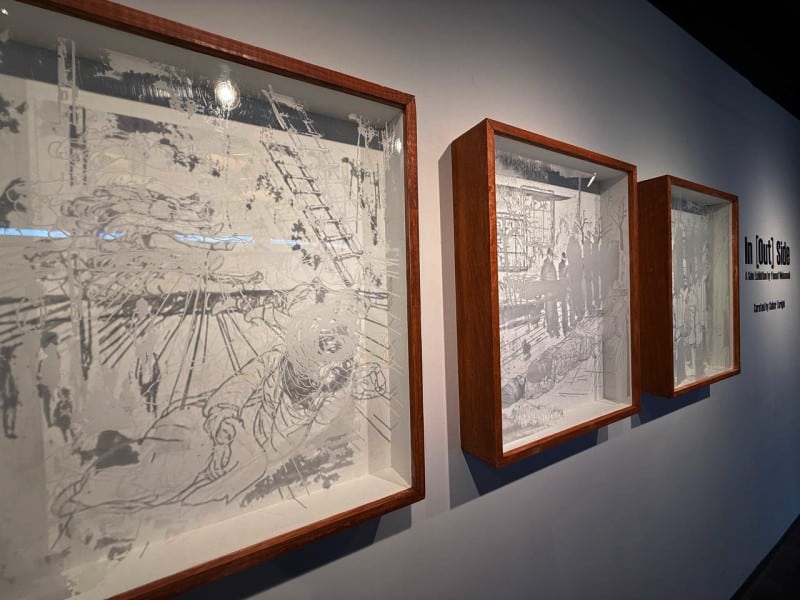
Yoosef Mohamadi preserves a collective memory at Blockfort Gallery
The Kurdish artist’s staggering new exhibition, ‘In(Out)Side,’ will remain on display at the downtown gallery through Feb. 21.
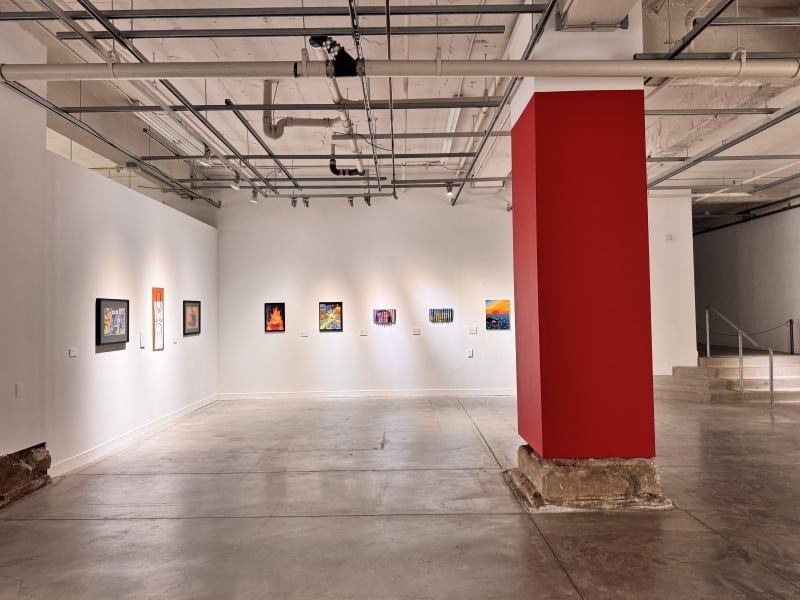
‘I wanted the kids to … understand this could be a possibility for their future’
In curating the ‘Young Artists of Columbus’ exhibition now on display at Urban Arts Space, Imara January wanted to open the eyes of young creators to the potential of life in the arts.
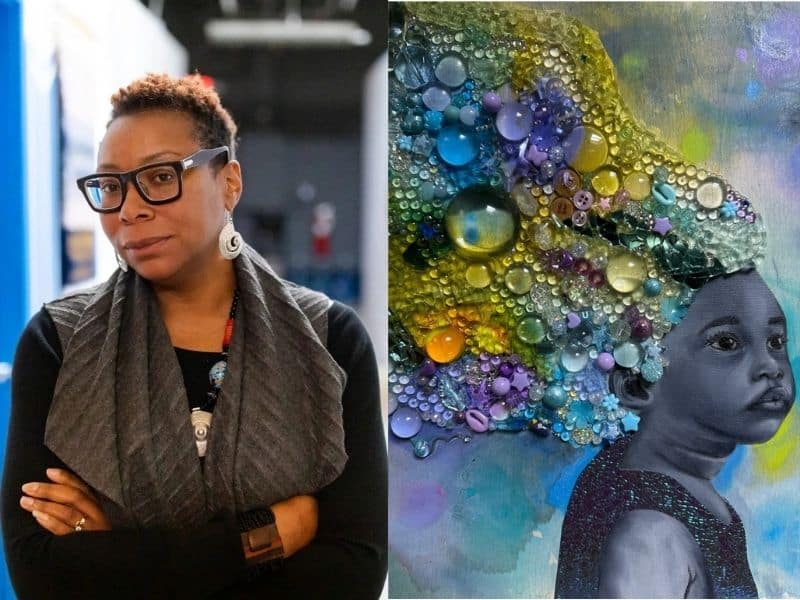
April Sunami finds a sacred space
The Columbus artist and recipient of the 2026 Aminah Robinson Fellowship plans to embrace the residency as an opportunity to take her work in bold new directions.