
Experiences of ’90s high schoolers in ‘Teenage Wasteland’ find new resonance in this moment
The latest from filmmakers Amanda McBaine and Jesse Moss will screen this Thursday as part of the Unorthodocs documentary film festival at the Wexner Center for the Arts.
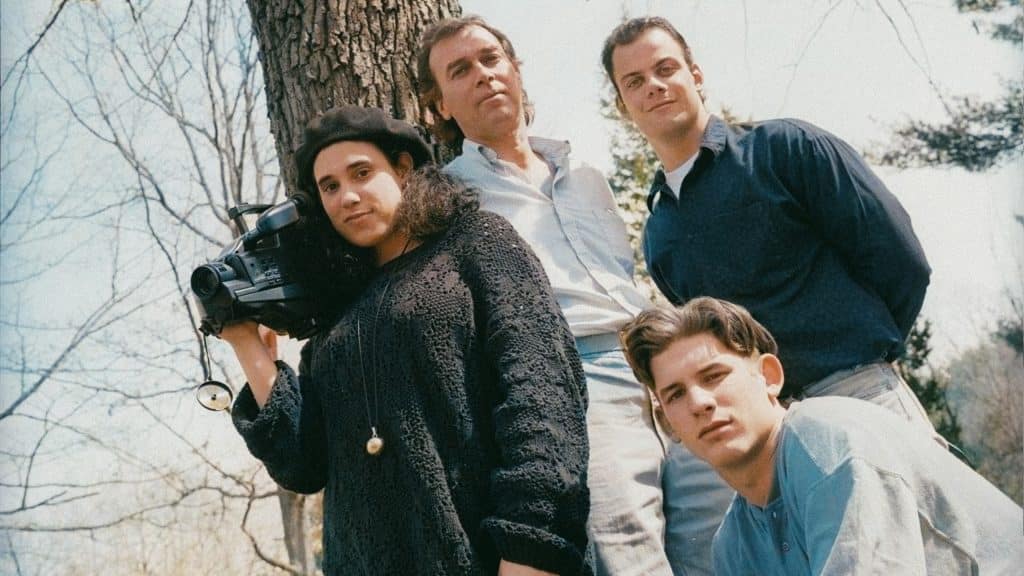
“Teenage Wasteland,” the new documentary from filmmakers Amanda McBaine and Jesse Moss, follows the students at Middletown High School in upstate New York as they pursued a community journalism project over a half-dozen years beginning in 1991.
Working under the guidance of teacher Fred Isseks, teenagers in the elective “Electronic English” class produced four films, culminating in the hour-long “Garbage, Gangsters, and Greed,” which documented the illegal dumping of toxic waste at a public landfill and exposed the roles played by local politicians, the Ford Motor Company, and the Genovese crime family, among others.
But while the actions that unfold in the movie might stretch back decades, the issues to which it speaks have gained new resonance in this particular social and political moment.
A donation powers the future of local, independent news in Columbus.
Support Matter News
“It’s amazing that the film has come out now for a lot of reasons, because all the trajectories are going in the wrong direction,” said Isseks, now retired, reached at home in Middleton. “Journalism is becoming harder and harder to find – especially good local journalism. The paper that we had back then, The Times Herald-Record, is essentially gone. It’s now one of these shell things run by USA Today that has no local news in it. And the education system is getting more and more restrictions put on it in terms of what students are allowed to do and what they can be taught. … So, all those things that we were dealing with at that point in the ’90s have become more pronounced.”
Yet, Isseks said he never doubted the value of the work done by the students, which led the longtime teacher to organize and preserve an extensive archive, including more than 400 hours of video footage. Even in the earliest days of the project, Isseks said he was aware of the David versus Goliath aspects of the student-driven investigation and the way different archetypes were represented in the footage, from salt-of-the-Earth landfill operators to the corporate suits who emerged as more stereotypical villains. “It felt like what we had then was pretty important, so when it came time to retire and I had to decide what to do with all the tapes, I couldn’t bear to throw them away,” said Isseks, who eventually had all the footage digitized. “I figured they were worth keeping and that somebody would be interested in them someday.”
This interest first arrived via a reporter who became aware of the story when he stumbled onto Isseks’ blog, which led to a 2020 feature in The Guardian. The article then caught the eye of filmmakers Amanda McBaine and Jesse Moss, who saw a throughline extending from those ’90s-era teenage journalists through the youths they focused on in earlier documentaries such as “Boys State” and “Girls State.”
“I think we have really been drawn to making films about kids at that age … because you’re capable of so much but you’re often underestimated,” said Moss, who will appear in person at the Wexner Center for the Arts when “Teenage Wasteland” screens as part of Unorthodocs on Thursday, Nov. 6. (The annual documentary film festival opens Thursday and runs through Monday, Nov. 10; a full listing of films and showtimes can be viewed by clicking here.) “I think coming of age means sort of recognizing your own mortality, the fallibility of the people around you, and the problems of the world you might not have noticed before, but then also seeing your own power, too. And that tension is really interesting.”
Following an introductory phone call, Moss and McBaine traveled to Middleton to meet with Isseks, where the filmmakers were quickly overwhelmed by the breadth of material still in the former teacher’s possession. “As a longtime documentary filmmaker, it’s rare you encounter both the archive and the organization he had,” Moss said.
These initial meetings were essential to building trust between the filmmakers and Isseks, who acknowledged his guard was initially up owing to the experiences he had navigating the national media in the 1990s, when shows such as “60 Minutes” filmed never-aired segments on the class. “So, there was a little hesitation in, well, we can do it, but like so many other times nothing is going to happen,” said Isseks, who also struggled with the idea that in handing over the raw materials he would also be ceding control of the narrative that might one day take shape on screen. “Even when we did get early media attention, it kind of became repetitive in that they were all saying, ‘Look at these kids. They’ve got this cute project. They’re concerned with the environment.’ But they wouldn’t talk about the things we uncovered, like the mafia presence, or the way the county politicians were comfortable with what was taking place.”
Moss, for his part, said the filmmakers entered into the project with a deep awareness of these concerns, intent on expanding on the work done previously by Isseks and his students. “I felt like this was a 30-year project, and we were building on their work, and that was the tradition and the spirit of the project that Fred established,” Moss said. “We needed to represent the rigor of their work and see that it wasn’t just about kids goofing around or coming of age. It was all of those things.”
In combing through the hundreds of hours of footage, there were a handful of moments to which Moss and McBaine immediately gravitated, including a contentious meeting between the students and the editor of the local newspaper, and another in which the teenagers are threatened with arrest for trespassing during a guided visit to the dump. “And I think that was shocking to the kids, to see kind of baldly as the corruption or the coverup happens right in front of them,” Moss said. “And for the town itself to say: ‘Don’t snoop around’; ‘Don’t test the water’; ‘Don’t take samples here.’ Something had to be wrong for that to happen.”
Like Isseks, Moss also expressed a degree of wonder with how many of the ideas explored in the film have dovetailed in this cultural moment. “You don’t know the times your movie will meet when you begin to make it,” he said. “But politics are very fraught. People are afraid of expressing their opinions, and there’s a lot of punishment being meted out to administrators and students for saying the wrong thing or doing the wrong thing. And I fear the stifling of speech, of expression, of risk taking. And I love that Fred climbed fences, that he hopped fences. And I’m not saying you have to trespass, but I think symbolically we need to encourage a certain amount of creative trespassing. We need to lean into what’s uncomfortable.”
Author

Related Articles
‘If we value the sacrifice they made, it should not be theirs alone.’
When in late December jazz musicians began canceling concerts at the Kennedy Center in the wake of President Trump’s name being added to the famed performance venue, Columbus musician Gerard Cox launched a crowdfunding campaign in the hopes of easing their financial burden.
The musical alchemy of 3rd Pyramid
Columbus music vets find new life with their heavy hitting debut.
The top 20 Columbus albums of 2025
Here are the albums this writer found himself returning to the most often over this last calendar year.