
Awareness of mortality breathes life into Rat Dreams’ new double album
The Columbus roots-rock band will celebrate the release of ‘In the Summer You Dream of God’ in concert at Rumba Cafe on Friday, Oct. 17.
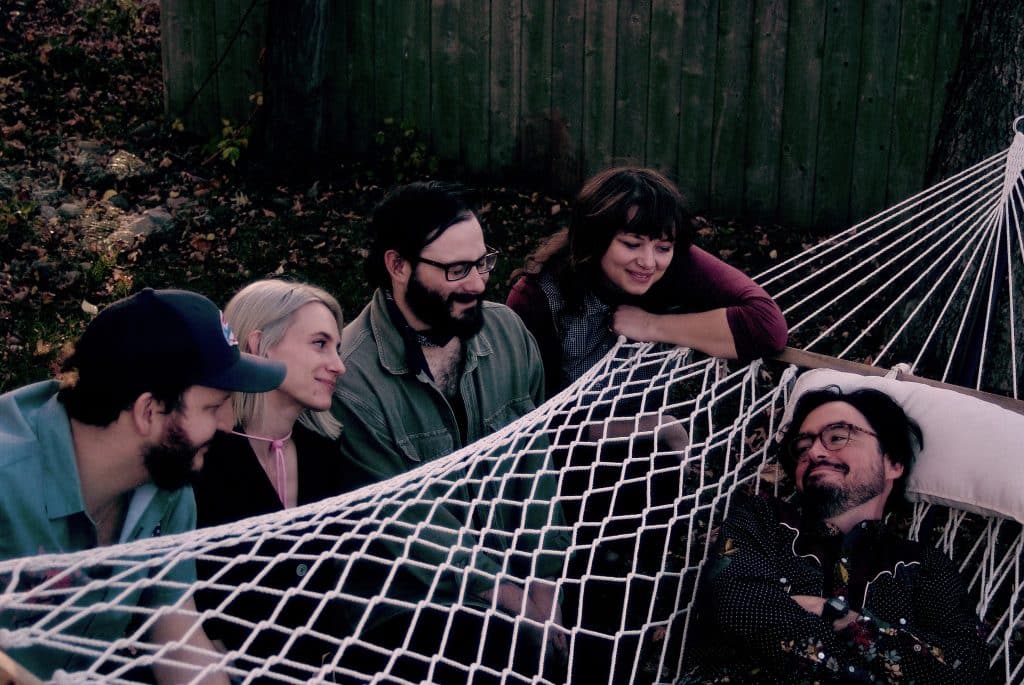
There’s a deep awareness of mortality threaded throughout new Rat Dreams double album In the Summer You Dream of God, frontman Will Myers singing: “The other side is close, closer than a whisper”; “The body’s a fragile thing”; “Is this how this ends?”
Then there’s “Ghost,” a spectral acoustic ballad in which the narrator makes plans to reconvene with his love at some distant point after their bodies have given out and decayed. “This is our meeting place,” Myers sings, “across all time and space.”
“I think life really is what it is in contrast to death, and at least for me it’s hard to feel present and appreciative of what’s happening around me if I don’t remember that I’m very much mortal and I’m not going to be here to experience the world and love and other people for very long,” said Myers, who will join his Rat Dreams bandmates for a record release show at Rumba Cafe on Friday, Oct. 17. “And I think that’s an underlying theme, where there’s death in basically every single song here.”
A donation powers the future of local, independent news in Columbus.
Support Matter News
There’s also love and beauty and sentimentality and even humor. Witness “Saved,” which follows the journey into the afterlife that is “Ghost” and includes a line that plays like a purposeful, playful lyrical wink at what came before (“I am not some ghost who haunts you in your dreams”). As “Saved” progresses, however, it surfaces one of the record’s central themes, Myers presenting characters who have been gifted eternal life only to find their experiences muted absent the weight granted them by the presence death.
These heavier ideas were steeled further by the times from which these songs emerged, many of them dating back to the early months of the pandemic when Myers was employed as a community health worker – a role that afforded him little distance from the deadly toll enacted by the virus.
“There were just so many things going on at once, because it was Covid, and then George Floyd was murdered, and then people were out in the streets trying to seek some kind of justice,” he said. “And that was the baseline I was writing from. And I think a lot of people felt this, but there was maybe something about those first couple of Covid years that was so intense, both politically and in the way there was this constant fear of the disease, and where it felt like death was so fucking close. But it was also this revelatory moment where we could see the ways society could potentially be going. You could see this potential for community and people coming together to really care for one another. And then you could also see the potential for this wanton disregard for human life.”
Much of In the Summer You Dream of God exists on this knife’s edge, Myers describing his characters as having grown from this murky social and political environment. “[The album] is really situated at this point when you don’t know which way things are breaking, told through all these misadventures,” he said. “All of these characters are dealing with their own mistakes and breakdowns on this micro level, not knowing which way things are going to go.”
The album also serves as an examination of place, an idea that surfaces most explicitly in “Oh, Hi,” a track on which Myers dwells on the sense of detachment he felt living in rural Ohio, having then recently relocated to Athens with his partner. “Even if I never leave,” he sings, “I’ll never belong here.”
“I was living in a pretty rural place for the first time in my life,” said Myers, who was born and raised in suburban Cleveland and now resides in Columbus. “And at the same time, I was reading Indigenous Peoples’ History of the United States by Roxanne Dunbar-Ortiz and Braiding Sweetgrass by Robin Wall Kimmerer, while simultaneously living in Appalachia but maybe more broadly living in a place where I didn’t understand the cultural norms. … It was like, I don’t actually know this place. I don’t know the things you need to know to call this home. I don’t belong here.”
It’s a push-and-pull that bleeds into Myers’ lyrical depictions of the surrounding environment, with nature serving as a source of escape but also as a place in which his narrators frequently find themselves ensnared. “Almost like they’re unexpectedly twisted up in the land,” he said.
“And there’s something about that that feels true,” Myers continued. “And yet, I can’t help but have this deep adoration and awe and wonder when I look outside or take a walk through the woods. And if the album is doing something with that conversation, that’s where it’s doing it, in that tension.”
Though aspects of In the Summer You Dream of God are rooted in Myers’ life and experiences, he said the songs only began to arrive once he let go of the idea that he needed to center his own perspective. “When I was writing, there was almost this feeling that if it was my own voice, I wasn’t interested,” Myers said. “And in doing that, it felt like the songs were sort of coming from the ether, where it was something that wasn’t me. … And I think that gave me permission to be weird. I wasn’t confined to seeking out any accurate representation of my experience. It was more about seeking emotional honesty.”
Author

Related Articles

PeaceofMND brings listeners to the ‘LIGHT!’
The Columbus rapper views his new album, released in late December, as a needed antidote to dark times.
‘If we value the sacrifice they made, it should not be theirs alone.’
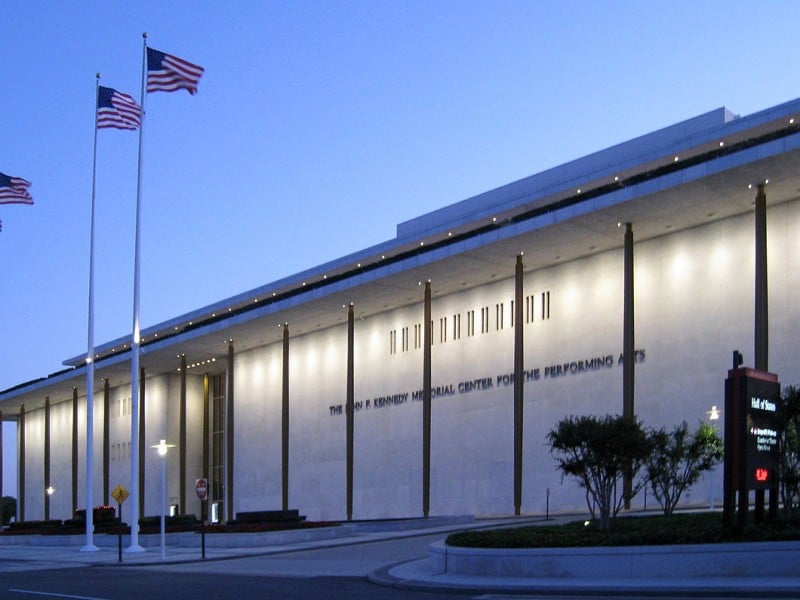
When in late December jazz musicians began canceling concerts at the Kennedy Center in the wake of President Trump’s name being added to the famed performance venue, Columbus musician Gerard Cox launched a crowdfunding campaign in the hopes of easing their financial burden.
The musical alchemy of 3rd Pyramid
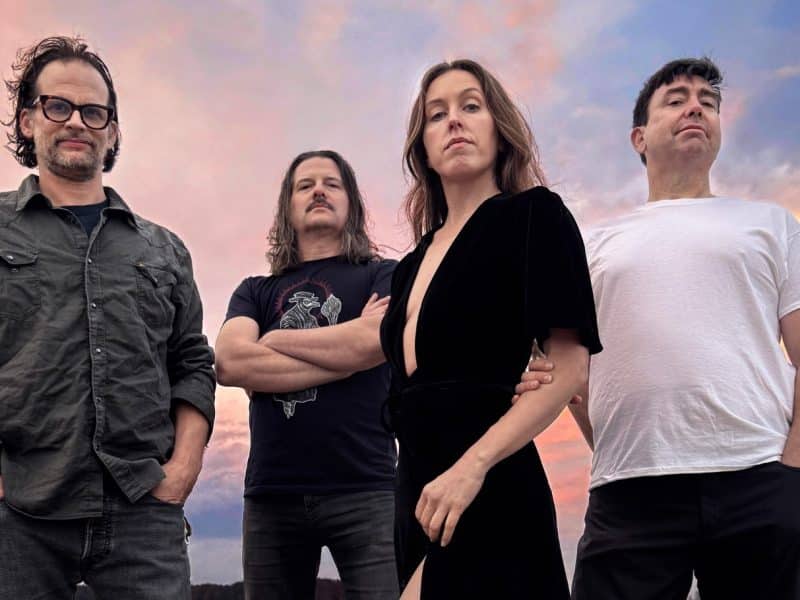
Columbus music vets find new life with their heavy hitting debut.