
Catherine Willis reflects on nearly two decades with Urban Strings as she prepares to step down
Willis founded the youth orchestra in 2007 and has helped to shepherd it for nearly two decades, creating a growing network of musicians indebted to her efforts – even if she wants to keep the spotlight on their triumphs.
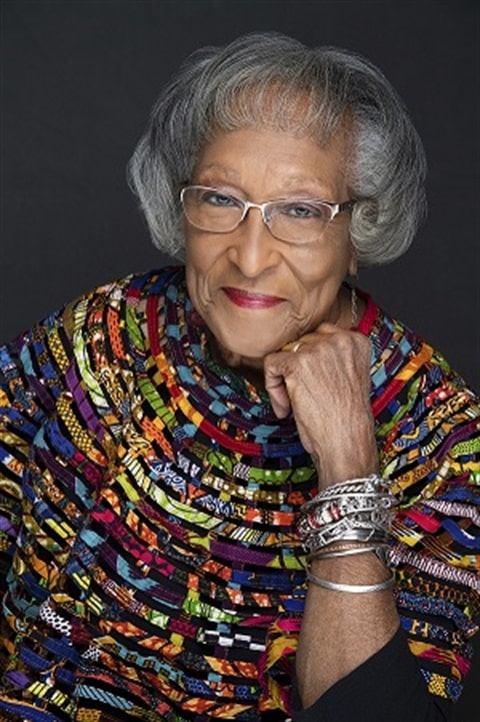
Even in discussing her pending retirement as the executive director of Urban Strings, the youth orchestra she founded in 2007 to help introduce the form to minority children, Catherine Willis couldn’t help but focus on others, discussing in rich detail the many kids impacted by the nonprofit, a number of whom have continued to pursue the arts into college and beyond.
There’s Drew Collins, who graduated from the Cleveland School of Music on a scholarship for bass performance and is now in his first year in the master’s program at Carnegie Mellon University, studying double bass performance while holding down a spot in the Pittsburgh Symphony Orchestra. And Redd Coltrane Ingram, who played in both the Cleveland and Columbus Symphony youth orchestras and graduated from both Columbia College and the Julliard School before pivoting into film. He now lives in Los Angeles where he works as a film producer, writer, and director.
Countless similar success stories exist within the ranks that have passed through the program in the nearly two decades it has been in existence. Willis recalled one group photo taken some years back of the 20 middle school students who were then part of Urban Strings, 16 of whom are either in college or have since graduated, in addition to one who joined the military. “We only had three who didn’t pursue a higher education, which is exciting,” said Willis, who at age 94 can still recall the individual paths taken by every student in the photo. “We’ve got two young people that are now scholarship recipients who attend Berklee [College of Music]. And we have one young man who just graduated from Baldwin Wallace in violin performance and got a scholarship to go to the University of Toronto for his master’s. And we have one young lady who’s at [Ohio State University] working on a double major. She’s in jazz performance, and she’s also a chemical engineer.”
A donation powers the future of local, independent news in Columbus.
Support Matter News
Willis traced her passion for helping young people, and in particular young people of color, to having grown up in the Outhwaite Homes housing projects in Cleveland, where her parents landed after moving north from Georgia to escape the segregation that she said they described as inescapable in the South. As a youngster, Willis said she was mentored by a number of professional Black women who lived in the surrounding neighborhoods and would routinely visit with the children living in Outhwaite. “And they would take us on field trips, and they would talk to us and give us information, and it was wonderful,” she said. “And they were truly role models for us. I wanted to be like them. I wanted to dress like them. I wanted to walk like them. I wanted to smell like them.”
Urban Strings originated in 2007 shortly after Willis retired as a teacher for Columbus City Schools. At the time, Willis served as a volunteer at Champion Middle School, where her daughter then worked as a teacher, and she said the idea sparked when she was approached by an employee with the Martin Luther King branch of the Columbus Metropolitan Library who was looking to establish fresh programming for Black History Month.
“So, I went to the teacher at Champion, because they had just started, I think, a fourth grade strings program there, and I asked her if she had some students who could perform as part of the celebration of Dr. King’s holiday, and she said yes,” said Willis, whose love for classical music was established during an elementary school field trip to see the Cleveland Symphony Orchestra at Severance Music Center, where she heard the “William Tell Overture” and immediately recognized it from the Lone Ranger films she had seen in the movie theater. “And she identified two girls who were string musicians, and they went, kicking and screaming, but they did go. And the reception was so great that I thought, wow, there must be other young people in our community who can do this.”
Historically, Black musicians have been grossly underrepresented within the orchestral world. A 2023 report by the League of American Orchestras found that Black musicians represent just 2.4 percent or orchestra players, a statistic that Willis attributed to everything from the scarcity of resources in predominantly Black school districts, which can limit access to music education for young people and hold them at a disadvantage, to the racist perception that “minority and African American musicians are not capable.” “And I think that base, racist perception is probably in the thinking of symphony or orchestra leadership,” she said, “and probably in the thinking of audiences, too.”
In the years since its founding, Urban Strings has worked to obliterate this school of thought, its progress documented both in its growing network of alumni and the speed with which it outgrew its earliest practice space in the basement of Willis’ church, St. Philip Evangelical Lutheran Church on Long Street. The orchestra, which currently numbers north of 30 youths, now rehearses at Columbus State Community College on the first, second and third Saturdays of each month – a change in facility that means practices are no longer called off on days when funerals arise out of the blue.
Growing up, Willis said her parents instilled her with an awareness of how race could impact her daily existence, though these lessons resonated most deeply in those times she experienced them firsthand, such as when she first took the train from Cleveland to visit her grandparents in Griffin, Georgia, a small town roughly 40 miles south of Atlanta, a journey that required her to stop in Cincinnati and transfer to an all-Black train car.
“And my generation of people, we still laugh and tease each other about the fact we used to put our lunches in the shoe box when we were getting ready to travel south, because we knew that if we were on the train we could not go to the dining car,” Willis said. “And if we were going by car, we could only stop at certain gas stations. Or if we had to use the restroom, we could only stop at certain places that would serve us, and even then it was only in the back of the restaurant. … Those are just some of the types of things that are indelible in my mind about how we had to live and adjust in that time.”
Indeed, much of Willis’ work has been shaped by wanting more for the generations coming up behind her – a drive that can be traced through her work as an educator in the city’s public school system to her earliest days recruiting middle schoolers to Urban Strings with the idea of wanting to open more of the world to them. It’s this mission to which Willis continues to hold as she prepares to step down from the orchestra – a decision she said her body largely made for her (“Your mind can say one thing, and then your body says, ‘Nuh-uh’”) – with Dr. Tony Anderson, vice principal at Fort Hayes Metropolitan Education Center, stepping in to carry her duties forward as incoming executive director.
“It’s time for me to back out, and it’s a very good feeling,” Willis said. “It’s that same kind of feeling like you got them to the point where they can stand up on their own in the nest.”
Author

Related Articles

Dug offers a glimpse of the light with ‘The Cat EP’
Following a tumultuous stretch marked by a global pandemic, a mental health crisis, and a career pivot, the Columbus rapper returns with a new EP and a slightly sunnier self-perception.
Vada Azeem comes to the other side with ‘The Difficulty Crossing a Field’
The Columbus rapper’s remarkable new album finds him making peace with the road taken.
Desespera elbows out space with the ferocious ‘Bracero’
The Columbus four-piece will celebrate the release of its bracing new album in concert at Rumba Cafe on Friday, March 13.