
Corey Landis and the Finer Things find new meaning in ‘Dog Signs’
The five-piece will celebrate the release of its long-in-the-works new album in concert at Rambling House on Friday, Jan. 24, joined by Good Shade and Mukiss.
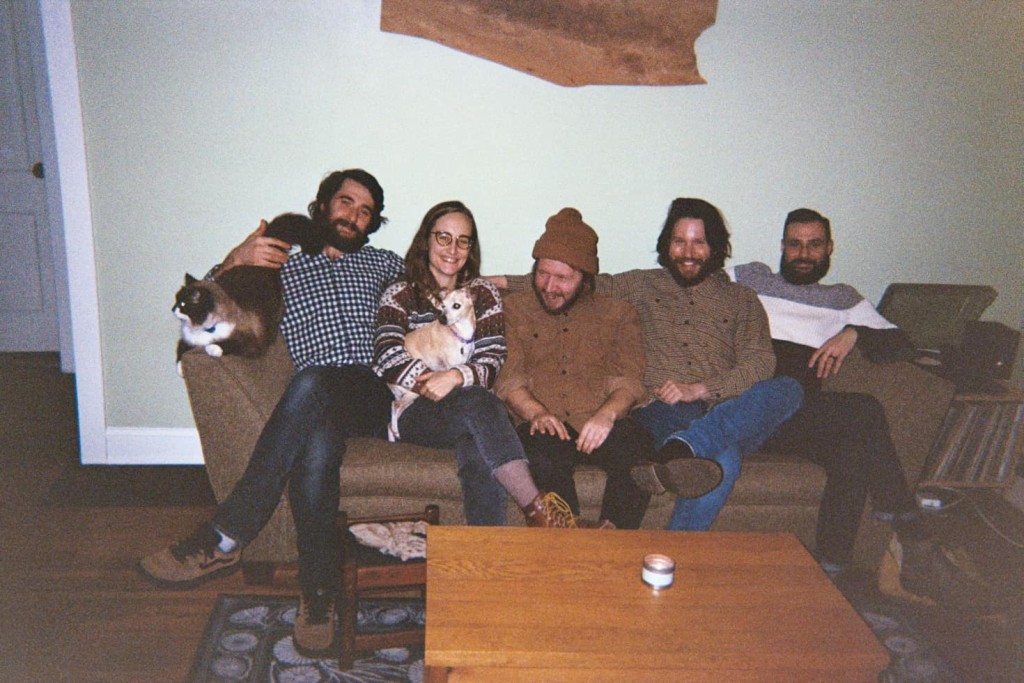
Corey Landis wrote the song “Halfway There” after his previous group, Sleep Fleet, disbanded more than 10 years ago. And looking back now, he can still recall the acute sense of loss he felt in that moment.
“It was a very important band to me, so there was a lot of sadness around it, and I think that probably influenced the lyrics,” Landis said of opening track off the new Corey Landis and the Finer Things album, Dog Signs, which the quintet will celebrate with a release concert at Rambling House on Friday, Jan. 24, joined by Good Shade and Mukiss.
The crew recorded basic tracks for the album alongside engineer Shane Natalie in a matter of weeks beginning in February 2023. Then doctors diagnosed Landis’ mother with cancer and everything got shoved to the side as the musician spent the months that followed shuffling between Columbus and her home in Springfield, helping to provide care. As a result, when the band eventually regrouped to continue the mixing and mastering processes, the recordings began to take on unexpected dimensions for Landis.
A donation powers the future of local, independent news in Columbus.
Support Matter News
“And now that song I wrote a decade ago applies to other things in my life, like my mom’s cancer diagnosis, and her passing away a couple of months ago,” Landis said. “I think there’s a piece in [‘Halfway There’] where somebody is battling something heavy. We actually got the vinyl a few weeks ago, and I was spinning it and it was like, ‘Wow, I’m in this period of grief, and this song I wrote so long ago is like this gift and this balm to me, because I’m relating to it in these ways that I had never really considered.’”
Similar transformations have taken place throughout the record, with Landis coming to understand that songs he once believed were rooted in a romantic breakup are actually more reflective of his lifelong struggles with anxiety, his fears of being alone, and concerns that he wasn’t evolving as a person in the ways in which he expected he would.
The languid roots-rock number “Head on Fire,” for one, initially plays like an ode to a partner – “I’ll love you through your frayin’ ends,” Landis sings – but has recently taken on deeper, more personal connotations.
“When I listen to it now, it’s almost like a song where I’m reminding myself that it’s okay to go through those dark periods. … I can be a pretty negative person and listening back now I can hear those words of affirmation,” said Landis, who’s joined in the Finer Things by Austin Wyckoff, Lee Brokaw, Nick Shope and Jeremy Skeen. “This album really does feel like a reckoning with my own inner self in terms of wanting to grow and just be the best version of myself possible.”
This growth is evident throughout, the record opening amid intense grief (“Halfway There”) and then progressing fitfully onward. Earlier songs, in turn, tend to reveal deeper bruising, Landis singing about the crushing weight of past missteps, the restless thoughts that tend to play on repeat in his mind, and those emotional wounds that never fully healed over.
Gradually, however, Landis learns not just to live with these accumulated aches – “You never really lose grief; you just grow around it,” he said – but how to fumble his way forward. It’s a musical upswing felt most fully as the band transitions from “Head of Fire,” a song that finds Landis relaying his desire to ride out the darkness, to “Be Yours,” which opens awash in light. “Sunrise, Sunday morning,” he sings.
“Be Yours” is also the airiest, most musically buoyant track on the album, sounding as though it were somehow recorded in a room less impacted by the force of gravity, Brokaw’s guitar mimicking the feel of a wobbly, woozy organ.
“It’s definitely a song that feels like you’re floating through it, which is a trick I learned from an old, outdated book that I read where you kind of let the anxiety come over you, and then you float over it and let it carry you through your day,” Landis said.
The more aerial view the musician has learned to take of the record is in part a byproduct of time, Landis said, allowing that when he first wrote and recorded the bulk of the songs, he had yet to fully process aspects of what he was working through. He also acknowledged that the experience of first caring for and later mourning his mother had an unavoidable way of coloring everything that came before.
“The time that I spent [in Springfield] with her, that was a heavy thing to go through, and looking back now, it makes the album feel more important to me,” Landis said. “The album wasn’t written about that, but I feel like you can hear it happening within the music – in terms of my performances, at least. … When I listen to the album, I can hear myself dealing with the uncertainty of it. And I think it changed how I felt about the lyrics to all of the songs, which made me perform them a little bit differently. And when you’re in it, these are things you don’t realize. But when you’re trying to perform emotional material, every emotion you have is going to go into it, whether consciously or subconsciously.”
Author

Related Articles
The top 20 Columbus albums of 2025
Here are the albums this writer found himself returning to the most often over this last calendar year.
Jay Swifa just wants to make his teenage self proud
The rapper and producer will celebrate the release of new album ‘Palo Santo’ with a listening party at Rehab Tavern on Saturday, Dec. 20.
The paradox of Big Fat Head
The Columbus band, which released the excellent ‘Mind Your Head’ EP in late November, will perform as part of the Matter News benefit show at Cafe Bourbon Street this weekend, joined by Van Dale and Corey Landis & the Finer Things.