
Desespera elbows out space with the ferocious ‘Bracero’
The Columbus four-piece will celebrate the release of its bracing new album in concert at Rumba Cafe on Friday, March 13.
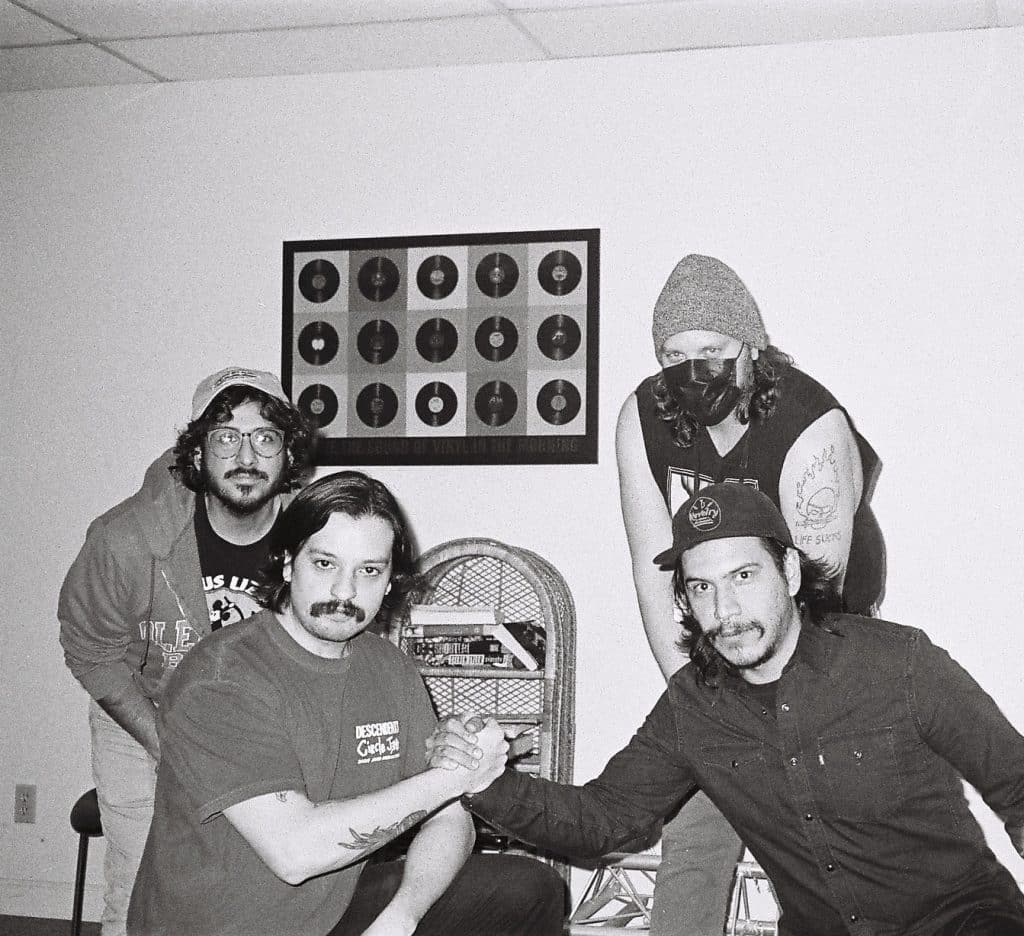
Two years ago, when Desespera began working on the songs that would become the punk quartet’s new album, Bracero, singer/drummer Sandro Zambrano-Villa said he was motivated in part by a desire to stake out space.
“I think the initial message, for me, was I’m allowed to do this. I’m allowed to scream in this room,” said Zambrano-Villa, who joined singer/guitarist Nico Aguirre for an early March interview. “As a Brown-bodied person, it’s hard to be in a band sometimes, and to go into a venue and look at this sea of white faces, like, am I even allowed to be here? … And to me, this band is a really fun way to be like, ‘I am allowed to be here. I am allowed to do this.’ And I think the nuances that have built around that have now led us to putting cumbia songs into a hardcore setlist. It’s one of those things where the culture I have behind me is not going to stay at the door. It’s coming in with me.”
These motivations have deepened and expanded in the time since, with the musicians responding to the political violence currently being enacted on heavily Black and Brown immigrant communities by acknowledging that weight while continuing to move in such a way that these outside forces can’t constrict or crush those things that give dimension to humanity.
A donation powers the future of local, independent news in Columbus.
Support Matter News
“I don’t think things have ever been more tense,” said Aguirre, who will join Desespera bandmates Zambrano-Villa, Ricardo Renta (guitar), and Nathan Gepper (bass) in celebrating the release of Bracero at Rumba Cafe on Friday, March 13, supported by Swage and Gun Leash. “But if anything, that’s been a reminder to me and the band, like, hey, we’re still human. There are still things we need to enjoy. There are still things we need to experience. And I think that’s coming to the fore even more now in the music.”
The album also serves as a statement of purpose, its title taken from the Bracero Program, a labor initiative originated between the United States and Mexico in 1942 that for more than 20 years allowed Mexican immigrants to be hired in the U.S. agricultural and railroad industries, and which first brought Aguirre’s family to the country in the person of his grandfather. “I see [Bracero] as a metaphorical reminder we are here to stay and fight,” Aguirre said.
Still, both band members acknowledged this is a particularly fraught time, requiring them to move through their day-to-day existence with even more awareness than asked of them in the past. “Comparing it to every other year of my life where I’ve had to look over my shoulder, it has never been more apparent that I can’t fuck up,” Zambrano-Villa said. “If I get picked up for anything, it’s a very real case for me to get deported. It’s fucking wild out here.”
And yet, the musicians have countered this splintering outside world by allowing Desespera to serve as a place of connection. “I don’t know how to explain it … but there’s definitely an energy to a group of musicians who are all on the same page,” Zambrano-Villa said. “It creates this atmosphere where you can be vulnerable, you can be excited, and you can be real with the people around you.”
This bond ripples throughout Bracero, which emerges as a diverse, destructive whirlwind swept along by frenetic instrumentation and breathless, sing-shout vocals, the bulk of which are delivered in Spanish. Drawing upon everything from At the Drive In and Circle Jerks to Los Crudos and the skate-rock band Cardiel, the album finds the players whipping from punk rippers (“Petty Roosevelt”) to split-personality cuts such as “Queremos La Luta Libertad,” a turn torn between heavier, doom-laden passages and sections that echo a tumbling rockslide of drums, riffs, and limbs.
Most of the songs on Bracero track at around a minute to 90 seconds, with the album-closing “Rabia” qualifying as an epic at two minutes and 30 seconds. Aspects of this brevity reflect what Aguirre described as the cathartic nature of the band, where wild knots of emotion can be untangled in a furious musical purge. But the directness also stems from the players having come of age at a point in time when the flow of information can be relentless, making it a challenge for anyone’s voice to be heard over the din.
“I was playing in a band years ago … that made a point of making sure every song was under a minute, because being on the road, playing a warehouse in Philly or a dive bar in Texas, you don’t have much time and you want to grab people’s attention as fast as possible,” Zambrano-Villa said. “You want to grab that attention, look them in the eyes, and say, ‘Here are the things we believe. And we hope that you’re on the same page.’”
Author

Related Articles
Vada Azeem comes to the other side with ‘The Difficulty Crossing a Field’
The Columbus rapper’s remarkable new album finds him making peace with the road taken.
Lily Seabird feels slightly less like an impostor now
The Vermont musician, who visits Rumba Cafe for a concert on Thursday, March 12, has a new record coming this fall that finds her emerging from a tough couple of years with at least a shred more confidence.

Rashad Thomas looks God in the eyes with ‘I Was Told There’d Be Gold’
Written over a 10-year stretch, the latest record from the Columbus producer, singer, and rapper finds him expounding on spirituality, the nature of love, and the need to find heaven here on Earth.