
Divide and Dissolve engages heavy conversations on ‘Systemic’
Takiaya Reed brings her instrumental doom band to Rumba Cafe for a concert on Thursday, Oct. 3.
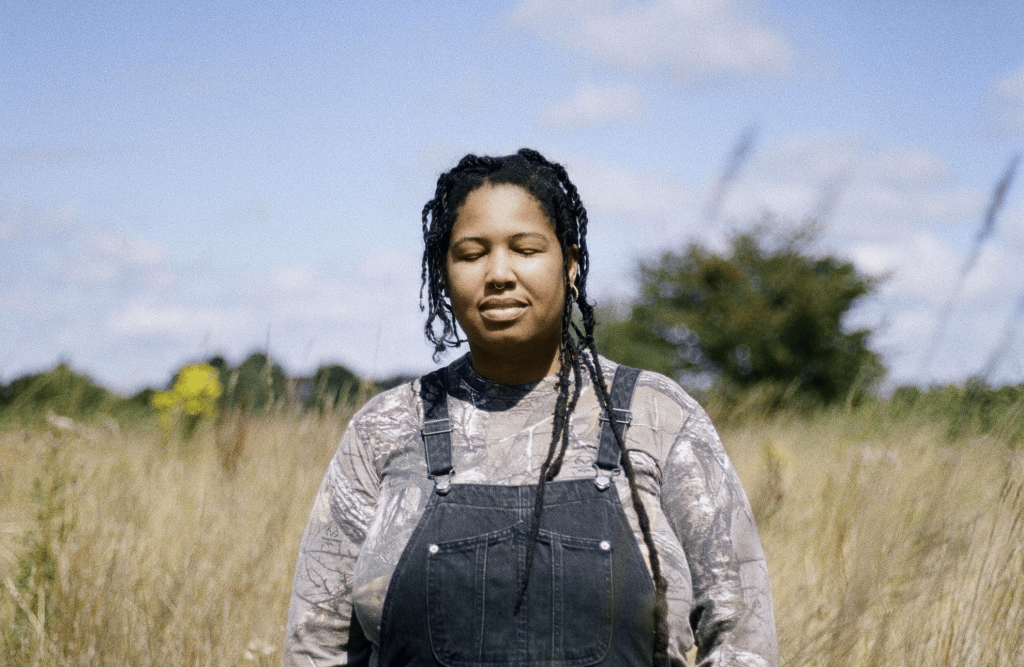
It’s not about volume for Takiaya Reed of Divide and Dissolve. Rather, it’s about the innards-quaking vibrations created when the Melbourne-based doom band locks in, with Reed playing through a pair of guitar stacks and two bass stacks meant to rattle foundations.
“You can really push people’s experience and what they’re feeling, but it doesn’t have to be loud, per se,” Reed said by phone in late September. “I mean, the music is really loud, but that’s not the most important element to creating the feeling I’m trying to evoke.”
Reed traced her fascination with these physical vibrations to the deep importance she places in accessibility, recalling how her deaf friends responded to the experience of seeing Divide and Dissolve in concert, later sharing with the musician the ways the sound waves stirred a uniquely physical response deep within them. “And it felt really cool to me that the music could be experienced with different senses,” said Reed, who will lead the instrumental band in concert at Rumba Cafe on Thursday, Oct. 3.
A donation powers the future of local, independent news in Columbus.
Support Matter News
Reed’s effortlessly heavy outpouring is on full display throughout 2023 full-length Systemic, which layers dense thickets of guitar, synths, piano and saxophone alongside the drumming of founding member Sylvie Nehill, who exited the band following the recording. The album draws musical and thematic inspiration from New Orleans, where Reed and Nehill lived while writing the songs, with Reed recalling how she would often party past dawn only to find herself in the studio by 8 a.m.
“I’m not sure I would do that again, but I was just having a moment in my life where that was going on, and it felt really good,” said Reed, who pointed to the influence wielded both by the city’s beauty and its more “complicated” nature, evident in everything from its jarring racial wage disparity to the prevalence of well-manicured former plantation homes available for visitors to tour. “The colonial project is really violent, and the way it impacts people can be violent at times, and that was definitely a feeling I had while living there.”
Growing up Black and Cherokee, Reed said she has always carried within her the reality that our social and political systems can and do perpetuate these cycles of violence. And yet, this reality hasn’t overwhelmed the love and beauty that can go hand-in-hand with existence – an idea that surfaces most cleanly in the album-closing “Desire,” which serves as a point of sonic hope, Reed and Co. conjuring the sound of sunlight finally breaking through the clouds at the tail end of a long, ferocious storm.
Over the course of four albums, Divide and Dissolve has amassed a catalog that stands in opposition to these corrosive forces – white supremacy, capitalism and the patriarchy included – its pro-Black, pro-Indigenous stance evident in the song titles that dotted its 2017 debut album, Basic: “Black Supremacy,” “Black Power,” “Black Resistance,” “Black Love.”
The music on Systemic consistently engages these complex ideas, the songs often taking a conversational tact as Reed and former drummer Nehill move in careful concert, responding and reacting to one another in the moment. These more organic elements remain in the wake of Nehill’s departure, with Reed allowing that the recorded versions of the songs serve as a snapshot of a moment in time, leaving each free to evolve on the stage. As a result, songs are able to shift dependent on everything from the feel of the room and the engagement level of the audience to how the musicians might be feeling on a given day.
“The music is alive and it’s organic and it’s able to expand and just be in the room that it’s in with the people it’s with,” Reed said. “So, there’s lots of room for that [evolution].”
Though the band’s sound is inherently doomy, Reed has never listened to metal, instead drawing inspiration from literary heavyweights such as James Baldwin and Octavia Butler, among numerous others. And she described the sludgy, searching tone she conjures with her guitar as the sound that instinctively came out when she first picked up the instrument shortly before the band’s 2017 founding.
“Guitar is just an instrument where I feel really relaxed playing it,” said Reed, a classically trained saxophonist who attributed her natural musical acumen in part to growing up with a musician father who encouraged her pursuits. “And I play heavy music because it feels good.”
Author

Related Articles
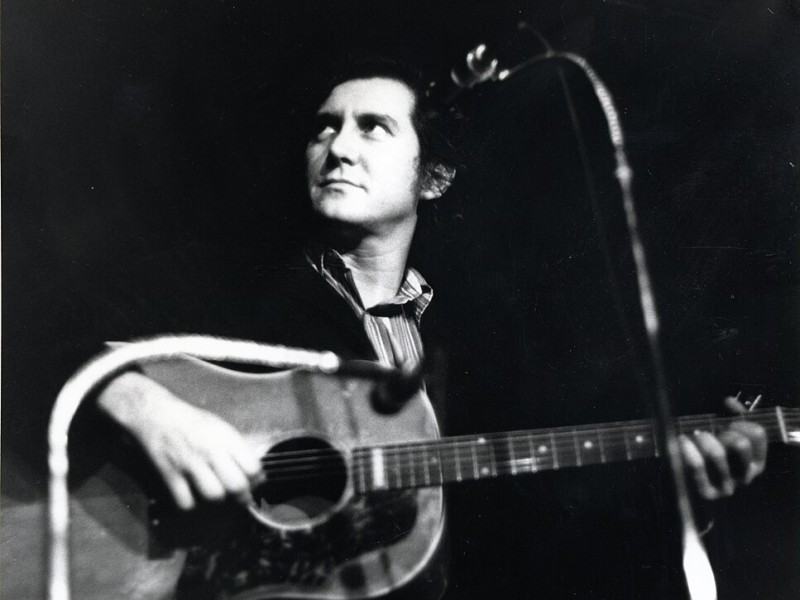
How Columbus shaped protest singer Phil Ochs
During his time at Ohio State University, Ochs became somewhat of an authority on the Cuban Revolution and its gunslinging protagonists – in addition to causing a stir in the school’s journalism department and in the bars on campus.
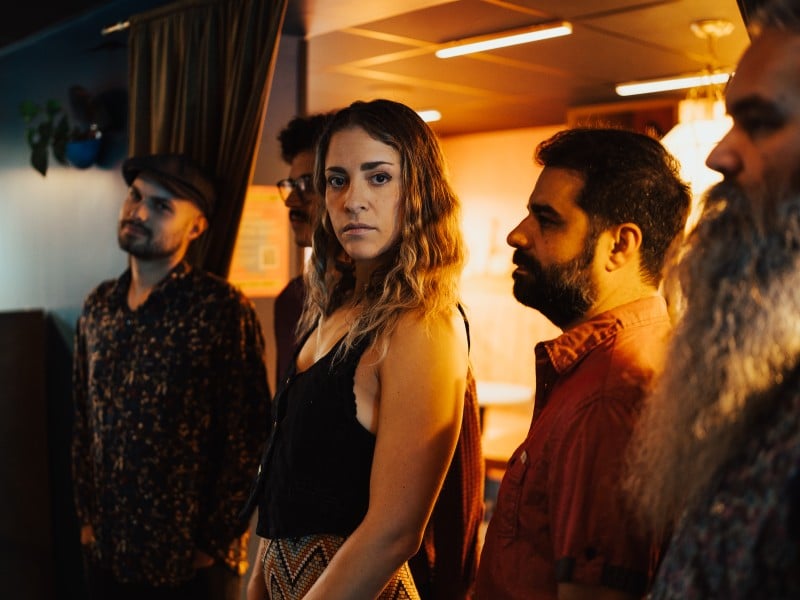
Lily Bloom takes control on ‘Spirits’
The Columbus musician will join her band in celebrating the release of her debut album at Ace of Cups on Sunday, Nov. 30, supported by opener Straw & the Scarecrow.
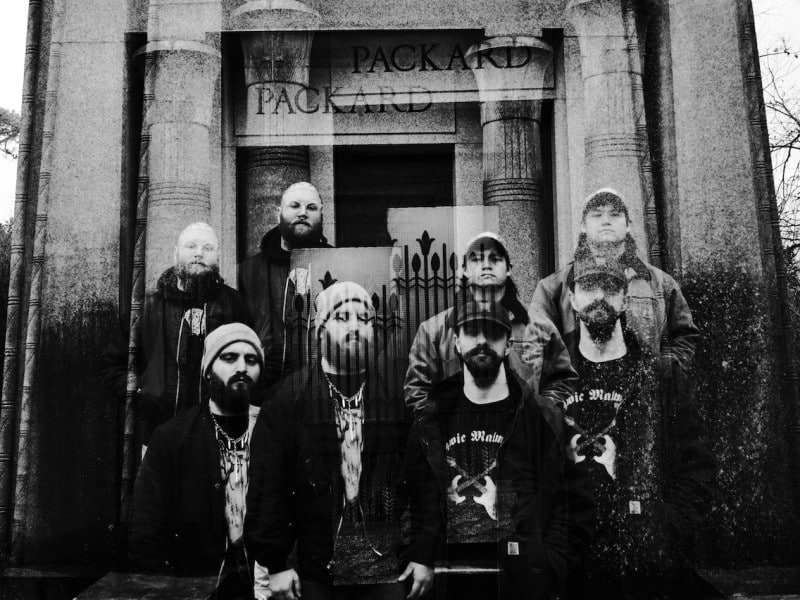
Sanguisugabogg uncovers a horrifying reality
On its brutal new album ‘Hideous Aftermath,’ the Columbus death metal band finds that these modern times can be more harrowing than the imagined scenarios it presented on past records.