
Ebri Yahloe comes to terms with ‘Candid’
The Columbus rapper released her five-track EP last summer and then immediately shied from it, afraid she had revealed too much and inadvertently stung the people she loved most. A year later, she’s finally ready to embrace the music.
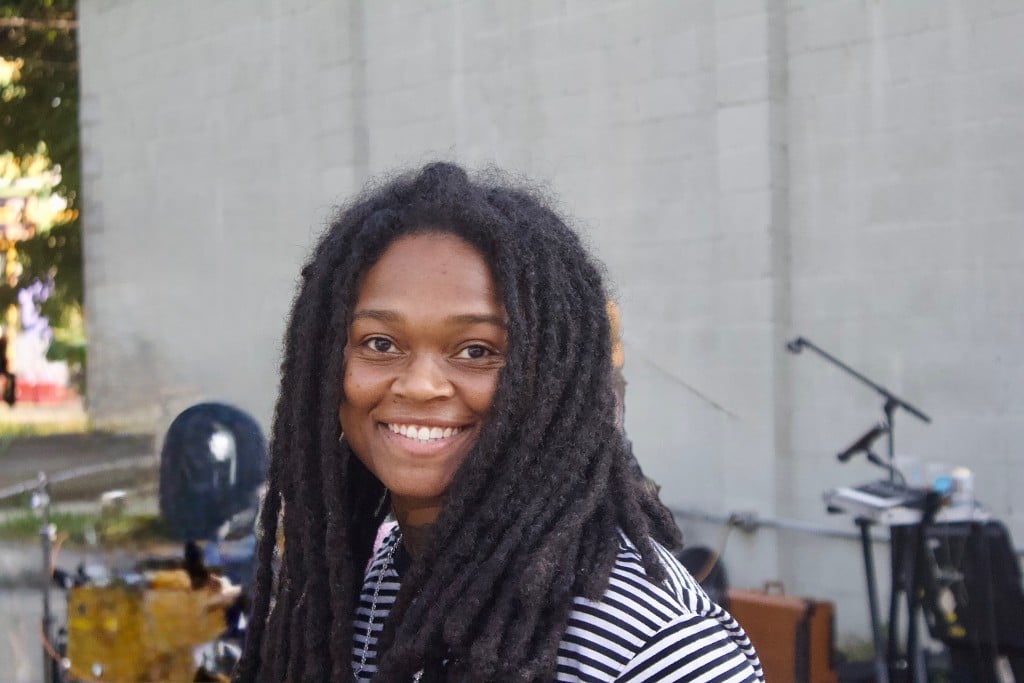
When Columbus rapper Ebri Yahloe released her Candid EP in July 2024, she only did one interview around it and then shied from performing any of its songs in concert, preferring to treat the album as though it didn’t exist.
“When I released it, I felt sick immediately, like, oh God, what have I done?” said Yahloe, who within the album unpacked the various traumas that had festered within her for decades, including the sexual abuse she experienced at multiple hands as a child. “I was like, this is touchy. These are secrets. These are the kinds of things that people sweep under the rug. That they never talk about. That they take to the grave.”
Even worse, Yahloe felt as though the album had deeply wounded the people closest to her, and in particular her mother. “I fucking hate you so much I’m starting to hate me,” Yahloe raps on on the EP, linking her deep-seated insecurities, trust issues and cratered feelings of self-worth to the traits she observed as a child within her mother, who gave birth to the rapper at age 15 and turned to alcohol as one means of coping with being a teenage parent. “And when I look in the mirror, it’s only you I see.”
A donation powers the future of local, independent news in Columbus.
Support Matter News
“I really felt like I did a gut punch to my mom,” said Yahloe, who in the aftermath of the release spent days alone at home, crying. “I was like, did this thing even do what I thought it was going to do? Did it do more damage than good? What am I even doing? Why did I do this? Why? At the end of the day, it felt like I just hurt the feelings of the people I loved most – the people I’m going to have when nobody else is there, when nobody is listening to my music. If no one ever looks at me again, I’m going to have my mom, and I hurt her.”
In recent months, however, Yahloe has learned to wrap both of her arms around Candid, an overdue embrace fueled by everything from her work with young people in We Amplify Voices (WAV) to the restorative steps taken by both mother and daughter that have deepened and strengthened their bond.
“My mom, she’s great with taking accountability, and she can really lock in and see things from a different point of view,” Yahloe said. “After she licked her wounds, she was able to step outside of that [hurt] and be like, ‘Okay, I can see where you’re coming from, even if the way you said it was a bit brash. But I get it, and I do take accountability, and I am sorry. I apologize and I love you dearly, and I hope you and everyone who heard this, or will hear it, gets what they need.’”
It helped, of course, that Yahloe didn’t shirk her own responsibility in the matter, taking time to reflect on the many hardships her mother experienced both as a young woman and in the teenage years she spent as a parent, and then extending a greater degree of grace toward the elder. “It was like, this is not just my mom. She’s also a lady, and before that she was a young girl,” said the rapper, who began to similarly reevaluate others in her life of whom she’d been critical. “They’re just people put into these circumstances, a lot of which were way worse than mine.”
In the process, Yahloe also learned to better appreciate those various flawed childhood and teenaged versions of herself whose experiences motivated the anger, resentment, and fragility underpinning the album’s most damaged tracks. Part of this, Yahloe said, extended from her work with WAV, a nonprofit that partners with students in more than two dozen schools across central Ohio, utilizing music as a means to help empower kids in underserved communities.
“And seeing all of the things these kids are going through – the joy and the laughter – but also reading their writings and realizing these kids have something to say. … I could see myself at that age, reflecting back at me,” Yahloe said. “And each version of myself that appeared on Candid, I could see her popping her head out, and I had to be like, ‘I love you. You’re important. Your story is important. What you went through matters.’”
In July, Yahloe received another jolt of acceptance when she performed tracks off of Candid live for the first time at Ty Kalil’s Ghetto Fabulous Cookout, spitting two of the EP’s less vulnerable tracks (“03N” and “In a Minute”) for an audience that unexpectedly included a wide swath of the rapper’s extended family, including her deeply religious 87-year-old aunt, who was visiting Columbus from Denver and whose sensibilities Yahloe worried about offending with her expletive-laden verses.
“But when she left, she told my grandmother, ‘I really like those raps she was doing. And sometimes you gotta cuss a little to connect with the people,’” Yahloe said, and laughed. “But even that small token of love, that idea that sometimes you just have to say things, she doesn’t even know what that gave to me. … No matter how you might feel later, and no matter how other people feel, sometimes you have to say the uncomfortable thing in order to connect with people.”
Over the last few weeks, Yahloe has taken this idea increasingly to heart. This last month on social media, she began posting the videos she worked alongside collaborators to create for each track on Candid and then shelved for more than a year when she turned her back on the EP. These weekly posts are building to the Aug. 29 release of the video for “Holy,” a lyrical bloodletting in which the rapper recounts the childhood sexual abuse she experienced at the hands of a female cousin more than 20 years her elder. Following the final video, Yahloe intends to play an invite-only house show for a select audience of people who have some connection to the record, aware that performing all of these tracks live for an audience is necessary for her to finally bring the project full circle.
And while it hasn’t always been an easy journey, Yahloe said it has reshaped her for the better in ways that she is still unpacking, the intense storms that accompanied the initial release giving way to increasingly cloudless skies.
“The last year has been very transformational. I think something broke, or an umbilical cord to the hurt and the trauma and the pain was snipped,” she said. “And now I feel like a plant, I feel like a flower.”
Author

Related Articles
‘I want to make music like this’: Austin & the Syd Experience steps out with new live album
The Columbus rock quartet will celebrate the release of its debut album, ‘Live at Natalie’s,’ at Used Kids Records on Friday, Dec. 12.
Blowing up laboratories with Cellar Dwellar
The Columbus art-rock collective will premiere a new video for ‘Alecto’ during a mini short film festival taking place as part of its masquerade ball at WitchLab this weekend.
Confusions continues to evolve with ‘push / back’
With their sprawling new double album, out digitally today (Monday, Dec. 8), Columbus musician Benny Turner learned to embrace the spirit of play.