
‘If we value the sacrifice they made, it should not be theirs alone.’
When in late December jazz musicians began canceling concerts at the Kennedy Center in the wake of President Trump’s name being added to the famed performance venue, Columbus musician Gerard Cox launched a crowdfunding campaign in the hopes of easing their financial burden.
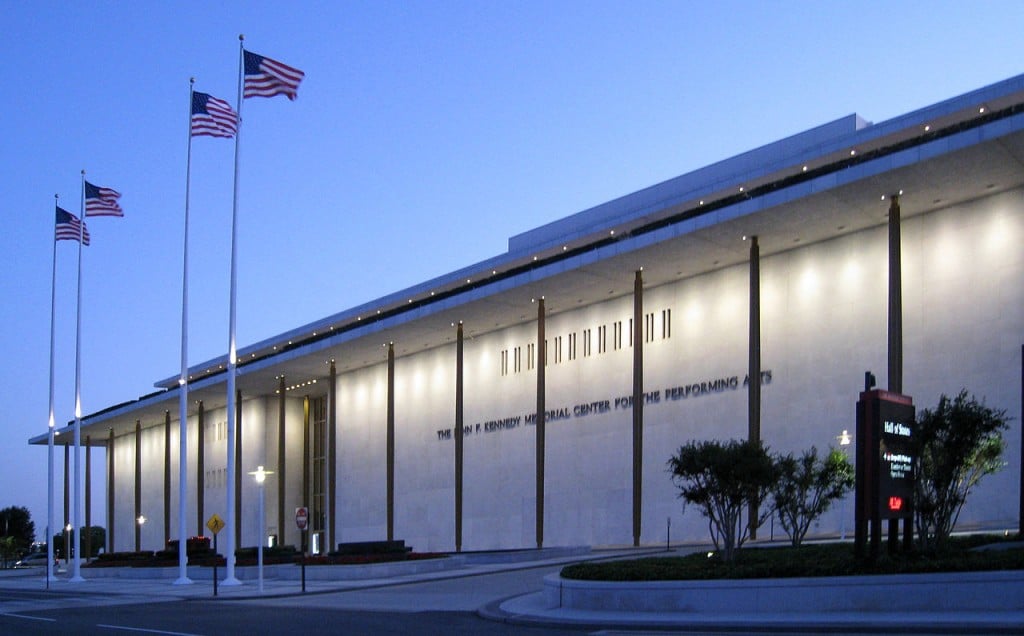
In late December, jazz musician Chuck Redd canceled his annual Christmas Eve concert at the Kennedy Center, the decision coming just days after President Trump’s name was added to the facade of the performance center in Washington, D.C.
“When I saw the name change on the Kennedy Center website and then hours later on the building, I chose to cancel our concert,” Redd told the Associated Press.
The fallout was immediate, with Kennedy Center president Richard Grenell issuing a letter to Redd in which he lambasted the drummer and vibraphonist, calling the cancellation a political stunt and threatening to seek $1 million in damages. And yet, other artists soon followed suit in canceling their shows at the venue, including baritone singer Gregory Porter and New York jazz group the Cookers, who called off a scheduled New Year’s Eve show two days before it was set to take place. Most recently, Béla Fleck announced yesterday on social media that he had withdrawn from a planned appearance with the National Symphony Orchestra, writing that performing at the Kennedy Center at this time had become “charged and political.”
A donation powers the future of local, independent news in Columbus.
Support Matter News
Following the wave of late-December cancellations, Columbus jazz musician Gerard Cox almost immediately began to wrangle with the economics of the situation, believing the financial impact of the decision shouldn’t fall solely on the shoulders of those who had the courage to act.
“I’ve also experienced music from the business end, and I’ve extended a lot of guarantees and lost a lot of money … so I kind of understand the bottom line involved. And also, just through having a lot of friends who are working musicians, I know it’s not an easy life by any means,” Cox said by phone in early January. “Just like the music is improvised, a lot of [the financial side] is improvised. It’s like, how well can you hustle up different opportunities? Unless you’re really established, you’ve got to be constantly scaring up new gigs. And so, when you lose a big one, that can really hurt.”
As a means to help dull the impact of this financial hit, Cox launched a GoFundMe in late December to solicit donations for Redd, Porter, and their respective bandmates, to this point raising just over $1,500. (The members of the Cookers are no longer included in the ask, having recently kicked off a crowdfunding campaign of their own.)
In introducing the campaign, Cox wrote that the larger jazz community should recognize the sacrifice made by the musicians by not allowing them to absorb the financial losses on their own. “People can stand on principle, but people also have to eat,” he wrote, acknowledging the real-life impact the decision could have on immediate financial concerns related to everything from housing to health care for those performers impacted. “If we value the sacrifice they made, it should not be theirs alone.”
In conversation, Cox also challenged patrons who view the arts as “a luxury” to consider that it is much less so for those who have chosen to pursue a career in the field. “Those people are actually depending on it for their whole way of life,” he said.
Cox said that part of his motivation for creating the campaign stemmed from the fact that he witnessed widespread pressure in jazz circles for the musicians to withdraw from the concerts but no corresponding push to secure alternate gigs or provide financial relief.
“I remember reading about the Civil Rights era, where people would pool together money to cover bail for anyone who had been out protesting and ended up getting arrested,” Cox said. “And I think that’s the whole thing. If someone’s going to potentially expose themselves to … some harm in real life, I think everybody should try to support that somehow, to spread the risk.”
This can mean stepping up to provide financial support to those performers willing to take a stand, with Cox acknowledging the reality that this pressure is felt more often by those who make a living in the arts. “We don’t ever really hear any outcry, like, ‘Hey, why don’t the caterers quit the gig for the Trump people?’” said Cox, who traced this in part to the way an artist’s personhood can be so intrinsically entwined with their work, making it a challenge to discern between the two. “It’s not purely an aesthetic thing, like, ‘I like minor chords.’ … It’s part of your being and your personality and how you view the world around you. … If you feel like you’re an artist who has a personal component to what you do, then your conscience is necessarily involved.”
Author

Related Articles
Healing & Peace delivers ‘A Treatise’
‘“The album is written from the perspective of someone who has spent 15 years in and around an art scene.’
‘Dolly Parton is in the foundation of society’: Columbus musicians pay tribute to the country great
‘Grindstones and Rhinestones,’ set to take place at Natalie’s Grandview on Friday, Jan. 30, features performances from Moe Reen, Mery Steel, and the Hen & the Crow.
Austin McCoy grows up alongside De La Soul
The author and historian, who will be in town at Used Kids this week to discuss his new book on the pioneering rap trio, has uncovered new meaning in its work with each passing decade.