
‘Southern Rock Opera’ feels increasingly timely to Patterson Hood of Drive-By Truckers. He wishes it didn’t.
In revisiting the Southern rock band’s breakout third album in concert over this last year – a tour that stops at the Newport on Saturday, Jan. 25 – Hood has drawn increasing parallels between the shameful policies overseen by late Alabama Gov. George Wallace and the politics of the current Trump era.

Over the last year, the members of Drive-By Truckers have been performing the entirety of their breakout third album, Southern Rock Opera, from 2001, in concert – a resurfacing that singer, songwriter and guitarist Patterson Hood linked to last year’s presidential election, which he said made the decades-old record feel newly relevant.
“I’ve always considered Southern Rock Opera to be very much a political work. And sadly, I felt like it was more timely last year than when we put it out, and I wanted to get out there and underline that aspect,” said Hood, who will join his bandmates in revisiting the album at Newport Music Hall on Saturday, Jan. 25.
Hood wrote the Southern Rock Opera song “Wallace,” for example, on the same evening that Alabama Gov. George Wallace was buried, recalling how at the time he watched looped footage on television of Wallace ordering fire hoses and dogs turned on Black civil rights marchers, and of the governor standing in the door to Foster Auditorium at the University of Alabama in an attempt to block a pair of Black students from desegregating the school.
A donation powers the future of local, independent news in Columbus.
Support Matter News
“And it was scary and sad to think of the parallels between all of that and Trump,” said Hood, recalling how former defense secretary Mark Esper wrote in his memoir that Trump called a June 2020 Oval Office meeting in which he asked Esper to deploy 10,000 active-duty troops on the streets of the nation’s capital and have them open fire on Black lives matter protesters. “Fortunately, the person in charge at the time basically ignored [Trump’s] command. And I don’t know if that would be the outcome now, because they’ve gotten rid of the people who stood in the way of those kinds of things. So, I’m pretty disturbed about the near future for our country.”
Some of these fears have been further stoked by the political opportunism Hood has recently witnessed on display across the United States, and which he also related to Wallace, who he said started his career as something of a moderate before taking a hard segregationist pivot after losing his first run for governor. (Such is the duality of the Southern thing, as Hood once wrote.)
In the course of our call, Hood shamed the likes of Washington Post owner Jeff Bezos, who spiked an endorsement of Kamala Harris written by the newspaper’s editorial board, as well as various kowtowing Republican officials. Witness Marco Rubio, who previously said “the nation was embarrassed” by the Jan. 6 attack on the Capitol but held back criticism when asked this week how he reconciled that sense of shame with Trump’s recent pardon of those criminally prosecuted for their actions during the riot. “I used to be a senator, and now I’m about to be sworn in as the secretary of state,” Rubio said. “And that’s what I’m thinking. I work for Donald J. Trump.”
“And that’s an aspect of everything that’s maybe the most alarming in the short term,” Hood said, and sighed. “Although I’m sure in a couple of weeks there will be new aspects that can take its place.”
In January 1963, a newly elected Gov. Wallace delivered an inaugural address in which he pledged to uphold a policy of “segregation now, segregation tomorrow and segregation forever.” The same year, FAME Studios moved into its new home 200 miles northwest in Muscle Shoals, Alabama, where it quickly emerged as one of the linchpins in the American soul music scene, attracting the likes of Otis Redding, Aretha Franklin and Wilson Pickett to record alongside the studio’s all-white house band. As a teenager, one of these session musicians, bassist David Hood, fathered a son, Patterson, who was born in Muscle Shoals in March 1964.
With Southern Rock Opera, Patterson Hood unpacked the gulf existent between Wallace’s caustic address and the racial equity he saw on display at FAME, and which didn’t exactly translate elsewhere he traveled outside of his home. “My dad viewed Wallace as this monster,” Hood said. “And I remember talking about it in the neighborhood or at school and it not going over very well. And that just added to me getting bullied, because most people down there felt differently.”
A sprawling, admittedly ambitious double album – “Our attitude about it was the bigger and more ridiculous, the better,” Hood said, and laughed – Southern Rock Opera manages to encompass, among numerous other things, Wallace’s political opportunism, college football’s religious hold over Alabamians, aspects of the South that Neil Young got wrong, the transformative power of a killer rock show, and the challenges inherent in attempting to come to terms with one’s roots.
In revisiting the record, Hood acknowledged that he and the band didn’t always get it right, recalling the time in 2002 when the Truckers played an outdoor festival in Atlanta and a handful of fans in the front rows unfurled Confederate flags just as the group launched into “The Southern Thing.”
“And we were pissed off and horrified. It was like, ‘If this is what you think we’re saying or doing, well, fuck you,’” said Hood, who retired the song for a time and now chalks the audience reaction up to an early inability to better align his skills with his ambitions. “I started viewing it as a song that maybe didn’t work the way I wanted it, or where the things I was trying to say got lost in translation. And maybe I just didn’t do a very good job. Or maybe what I was trying to say just doesn’t work as a song.”
Other moments from the album writing sessions only feel more remarkable with the benefit of time and distance, such as the single night in which Hood penned a trio of tunes that helped to shape the backbone of the album – “Wallace,” “Let There Be Rock,” and the elegiacal “Angels and Fuselage” – after which he fixed a drink and went to bed.
Not long after Southern Rock Opera released, and before it found an audience, Drive-By Truckers set out on a midwestern tour, which hit a snag when the transmission on the band’s van gave out and stranded the musicians for more than a week in Ohio. While the van was in the shop, the group rented a car and drove around the state, playing “tiny rooms to not many people,” Hood said, as the money in the members’ collective bank accounts dwindled ever closer to zero. After mechanics repaired the van, the Truckers headlined a pair of shows that illustrated just how rapidly fortunes can change, first playing to a dozen or so people in Toledo, Ohio, and then driving the next day to Chicago for a concert at the Hideout, where the band was greeted by a line that wrapped around the block outside of the club.
“It sold out, and then we did a couple thousand dollars in merch, which we had never done anything like that before,” Hood said. “We rolled into Chicago on fumes, and we were out of money, out of gas and hungry. And then that happened, where obviously the public caught on, and it really was like, ‘Holy shit, this might work out after all.’”
And the rest, as they say, is history.
Author

Related Articles
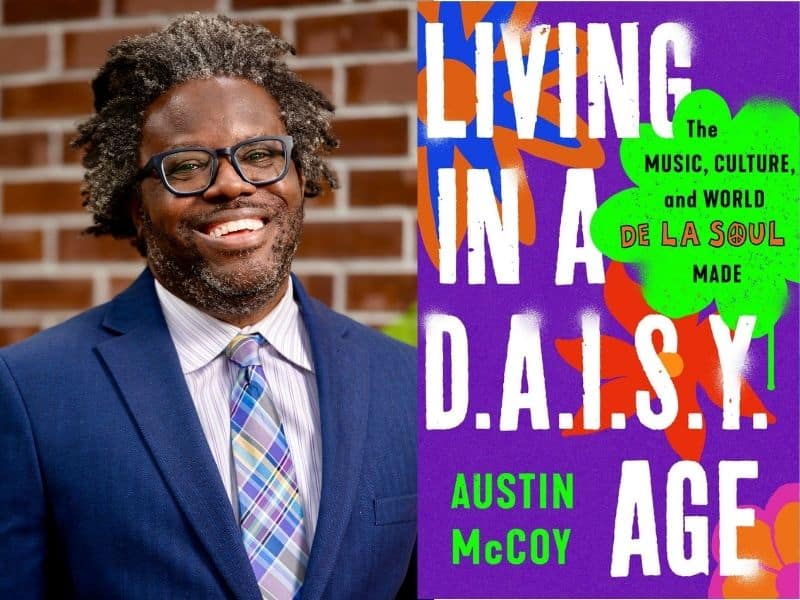
Austin McCoy grows up alongside De La Soul
The author and historian, who will be in town at Used Kids this week to discuss his new book on the pioneering rap trio, has uncovered new meaning in its work with each passing decade.
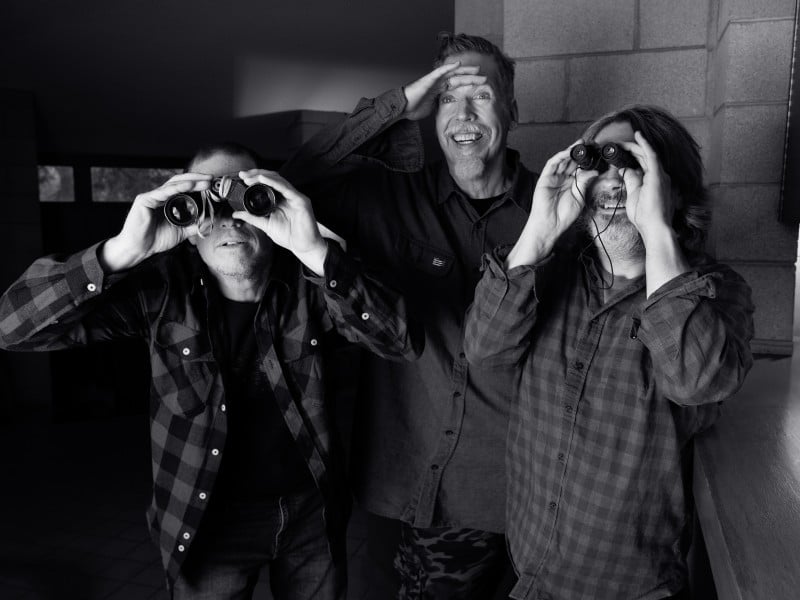
Eleven Plus Two = Twelve Plus One takes the long road to ‘Antenna’
The Columbus trio’s new album, out on streaming services this week, is nearly two decades in the making.
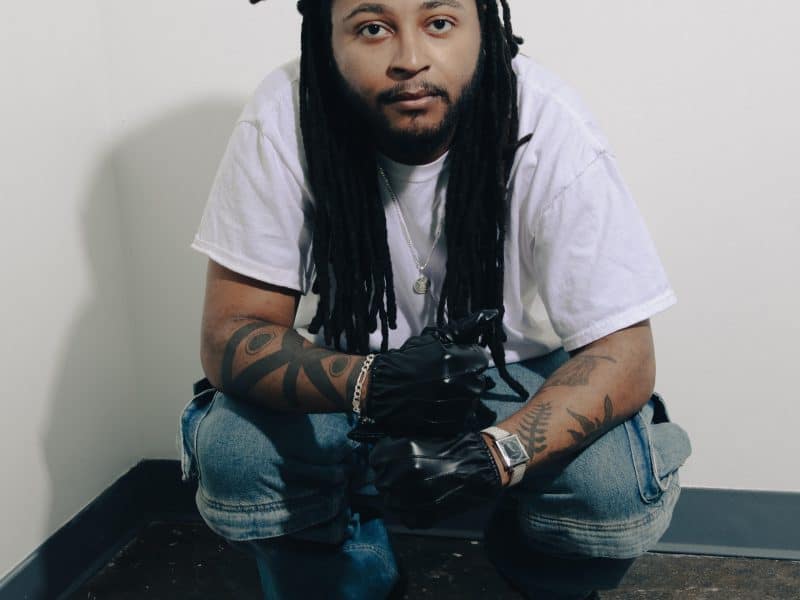
PeaceofMND brings listeners to the ‘LIGHT!’
The Columbus rapper views his new album, released in late December, as a needed antidote to dark times.