
The gradual return of Earwig
With a new live EP out now and a full-length album coming early next year, Lizard McGee is learning to be more comfortable with taking a back seat to his bandmates while simultaneously putting more of himself out there for listeners.
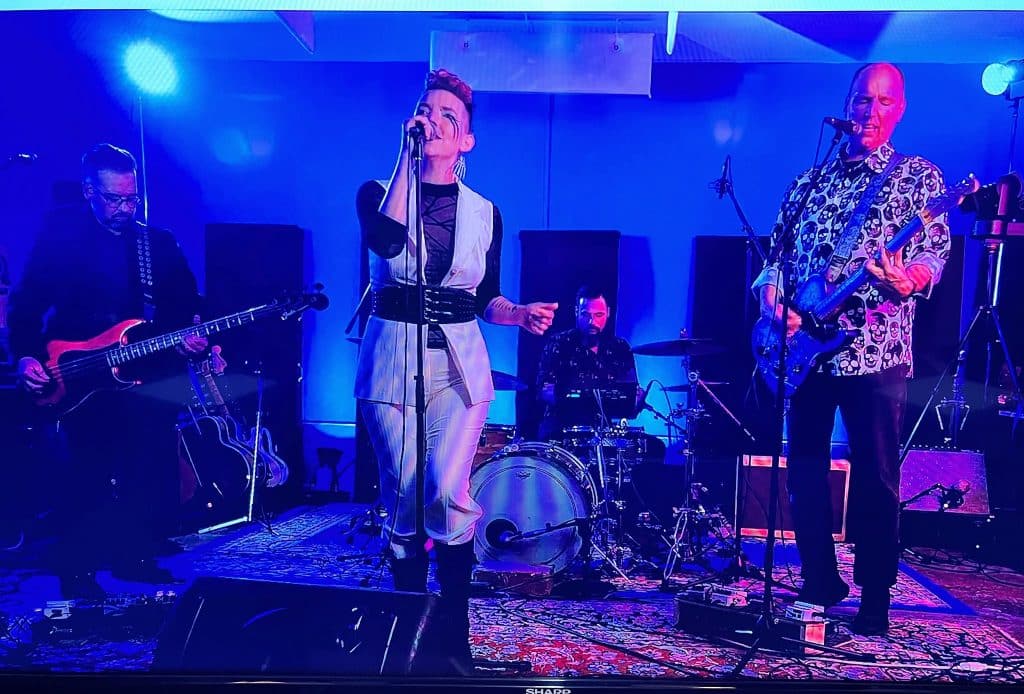
Earwig’s first full-length album, Mayfeeder, from 1994, included the track “Wounded Knee,” a guitar-driven ripper that hinged in part on the line, “The world is so fucked up/The world is so unkind.”
Decades later, singer and songwriter Lizard McGee has exhumed the first half of that couplet for “Late September Song,” which appears in live form on the band’s new EP, Secret Studio Sessions, released digitally in mid-October.
While the words are the same, the sentiments captured are radically different in scale, with McGee describing “Wounded Knee” as having emerged at a time in his early 20s when he was still a young punk rocker howling from great heights toward the world at large. “Late September Song,” in contrast, surfaced late one evening in the fall of 2017 or ’18, when the musician was in the midst of reconciling with his wife’s then-new breast cancer diagnosis.
A donation powers the future of local, independent news in Columbus.
Support Matter News
“We were apart, and I was thinking about her and what she was going through while we were still in that moment of being scared, and where this was still this fear of the unknown,” said McGee, who within the space of “Late September Song” questions who he would write songs for should he find himself suddenly on his own. (His wife has since recovered.) “And so, the first time I was singing that lyric … it was screaming from the mountain top. And then coming back to it in my kitchen late at night with some preparation for grieving, or just in thinking about the world and my own self, it came from a sort of smaller place.”
Other full circle moments permeate both the four-track Secret Studio Sessions EP and the forthcoming Earwig full-length, tentatively titled Rattle OK and anticipated sometime in early 2026. Witness a surging update of ”Coyote Cry,” which McGee wrote and recorded with his first band in high school, and which he revisits on the EP alongside his daughter, the singer and keyboardist James McGee-Moore, who takes over lead vocals from her dad.
“It’s a song about growing up, and I’m very much looking at those lyrics from a different perspective now than when I wrote it,” said McGee, who expressed an interest in continuing to explore different musical dynamics as Earwig moves forward, focused less on his contributions than the talents of bandmates McGee-Moore, singer/bassist Costa Hondroulis, and drummer Jeremy Skeen. “And it’s been a thrill to experience that and maybe lay back a little. … When I record stuff, it can be hard not to superimpose myself onto every bit of it. And I’m trying more and more to let everything work together as an ensemble. And really, the band has always been an ensemble. I’m just more conscious of it now, because everyone has so much to offer.”
McGee’s desire to forego some of his ego, as he explained it, coincides with a shift that has taken place gradually over the course of the three-plus decades he’s been recording and performing within Earwig, the musician describing how he came of age in the mid-90s indie scene hopeful that his band’s albums would break through to a mass audience, delivering bigger sales, bigger tours, and ultimately a bigger profile.
“And I think that’s sort of absent from my perspective now where I don’t think about those things at all,” he said. “I feel like where we are as a band now, it’s a more organic, natural thing. And that’s exciting to be part of, because a lot of great bands see their demise, or they go through a cycle, and then each person does something else, where maybe they’re not even making music. But luckily for me, Earwig has stuck around, and it’s still an exciting band to be a part of. … And right now, for us, it’s not hyper-focused on promotion. It’s focused on making ourselves happy and making something we can be proud of.”
For McGee, music has always served as an outlet in which he can reconcile both the world at large and his place within it. It’s also something he has typically approached with admirable patience, saying that even at Earwig’s most efficient, the act of creating a new album tends to be a three- or four-year undertaking. The making of Rattle OK, however, has tried even McGee’s patience, its making slowed by everything from the pandemic and the group members’ shifting family and career responsibilities to the reality that McGee and his daughter live south of Athens, Ohio, meaning a trip to Columbus for a two-hour band practice can quickly become a half-day endeavor.
But McGee also allowed that the time between records has been essential in helping him to better understand the songs, which often surface as mysteries and then gradually reveal their layered meanings to him over months or even years. “When I write them, it’s this ineffable moment where there’s just something interesting happening with the words and the music, but they don’t really hit me like full-blooded songs,” he said. “That was the case with ‘Late September Song,’ which started as this idea where I didn’t even know how I really felt about it. But once I showed it to the band, and we played it and juggled around a few parts and shortened some things, then it was like, wow, I really like this. And it’s fun seeing something you made and didn’t really understand come together in that way.”
In the past, McGee said he’s been somewhat more guarded about discussing these emergent connections, many of which are rooted in his life, relationships, and experiences, describing himself as someone whose shyness and social anxiety have occasionally been obscured by the rock star persona he’s deployed onstage for decades (and which a national television audience briefly experienced in the spring of 2020).
“I’m generally pretty guarded, although it might not always seem that way,” he said. “I do have a lot of reservations about letting certain parts of myself be revealed, but even on this phone call I’m trying to be super open and honest without thinking about it, because you’re asking good questions and that’s what you deserve. Just like anyone who listens to the music, that’s what they deserve to get out of it. It goes back to the idea of trying to write songs as I grow older. It’s a method of me understanding how to relate to the world and to let more of myself out, because it really feels more true not to hide.”
Author

Related Articles
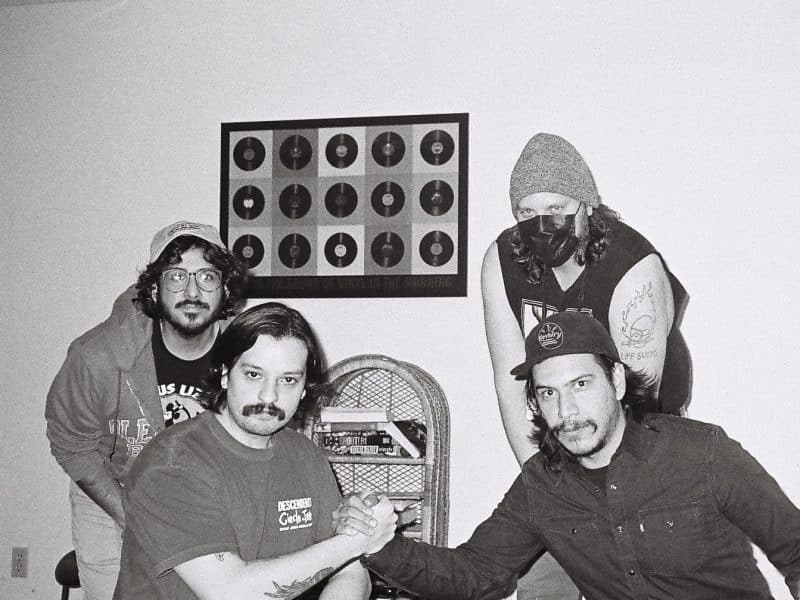
Desespera elbows out space with the ferocious ‘Bracero’
The Columbus four-piece will celebrate the release of its bracing new album in concert at Rumba Cafe on Friday, March 13.
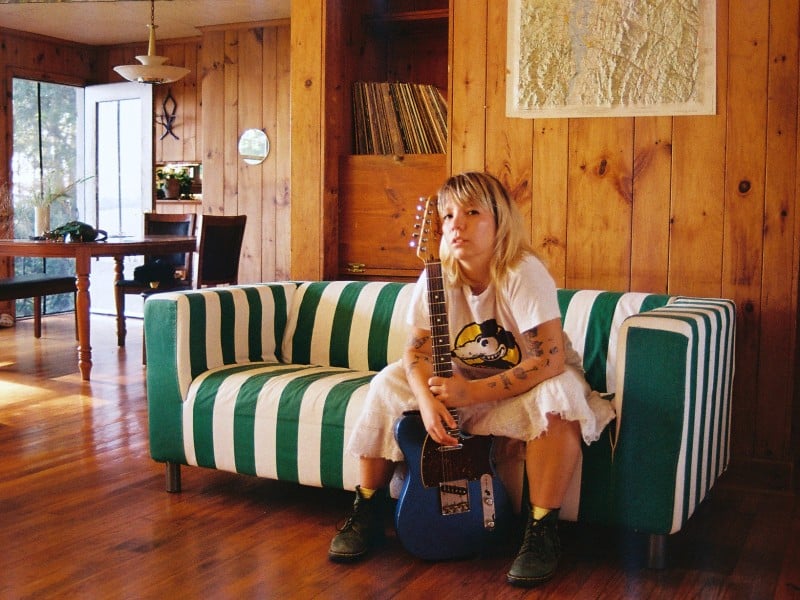
Lily Seabird feels slightly less like an impostor now
The Vermont musician, who visits Rumba Cafe for a concert on Thursday, March 12, has a new record coming this fall that finds her emerging from a tough couple of years with at least a shred more confidence.

Rashad Thomas looks God in the eyes with ‘I Was Told There’d Be Gold’
Written over a 10-year stretch, the latest record from the Columbus producer, singer, and rapper finds him expounding on spirituality, the nature of love, and the need to find heaven here on Earth.