
The top 20 Columbus albums of 2025
Here are the albums this writer found himself returning to the most often over this last calendar year.
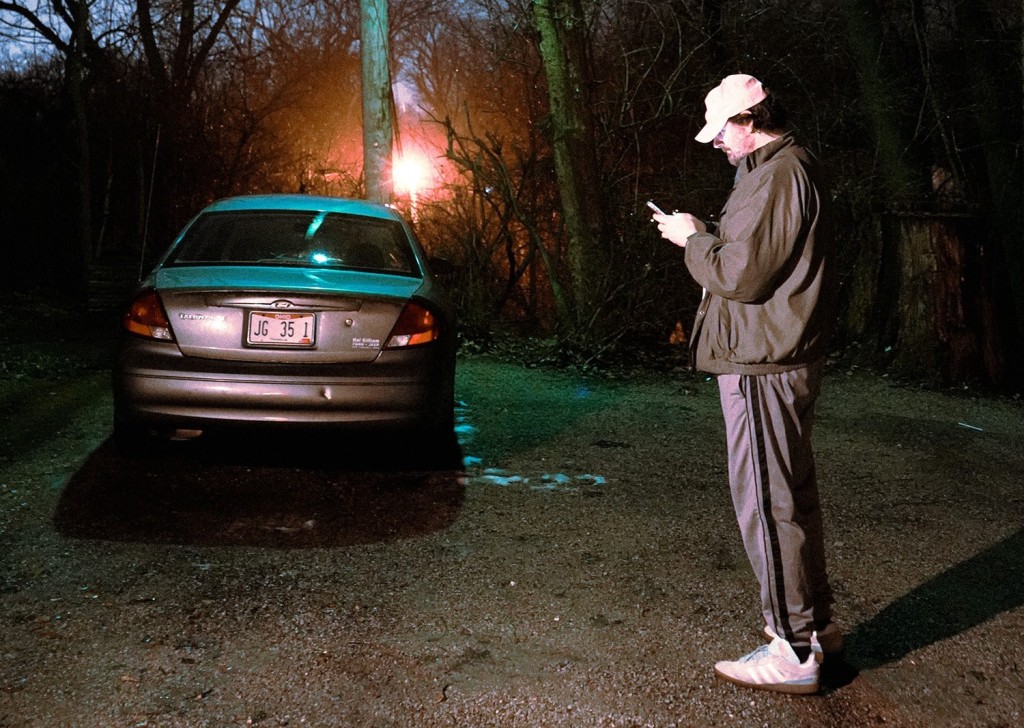
20. Kali Dreamer: Imperfect Dark
On previous efforts, Kali Dreamer tended to work with at least one foot planted firmly in the grave, his narrators offering their final words while swinging from the noose (“Gallows Type Thing”) or standing positioned on the edge of some all-consuming abyss (“Corpse Boyfriend”). Imperfect Dark can read as something of a thaw in contrast, the goth rocker embracing dreamier, shoegaze-indebted textures and a perspective that borders on hopeful. “Do you really want to die like this?” Dreamer sings on “Tiara,” a brutally cathartic track shot through with steely resilience.
A donation powers the future of local, independent news in Columbus.
Support Matter News
At its core, Spirits is an overwhelmingly dark, moody record, its midnight vibe evident from even a quick glance at the tracklisting (“Dark Angel,” “Come on Devil,” “Edgar Allan Poe”). Bloom traced this to a combination of factors ranging from her personal tastes – “Even as a kid … I always liked dark, sad music,” she said – to the reality that in the writing process she often found herself untangling the various anxieties that have long knotted inside of her. Witness the piano laced “Come on Devil,” a simmering, sultry lounge tune with lyrics that evoke the feel of experiencing a panic attack. “I sense the darkness in your lungs,” Bloom sings.
18. John Calvin Abney: Transparent Towns
The tunes populating Transparent Towns frequently open by introducing a narrator who is carrying some impossibly heavy burden, whether they’re trapped working the graveyard shift (“Last Chance”) or resigned by circumstances to life’s gutter (“Wait for Us to Be Home”). And yet, there exists throughout an acknowledgment that these characters, many of whom could have populated the kinds of rural towns familiar to Abney from his upbringing in Tulsa, Oklahoma, aren’t resigned to their fates. “Love can change, and people grow, come off the mountains of what they know,” he sings a few bars into “Jump the Gun.”
17. Qamil: Comfort Food I: Appetizers
The lush, comforting Appetizers opens with a brief intro in which the soul musician acknowledges the chaotic outside world while summarily shutting the door on it. In its stead, Qamil ushers listeners into an intimate space where grown-ass love is given room to flourish, the singer filling the release with songs centered on the necessity of maintaining romantic passions amid the demands of family life. Witness “On My Mind,” for one, where Qamil’s thoughts keep returning to the fires that will ignite with her partner once the laundry is folded, all the errands are run, and the kids are tucked away dreaming in bed.
16. Abel: How to Get Away With Nothing
With Dizzy Spell, from 2024, the Columbus band crafted a dense, shoegaze-leaning soundscape born in part of the headaches and the various emotional challenges singer and guitarist Isaac Kauffman experienced from childhood. The band’s new album could in turn be described then as the sound of the weather breaking, this relative sonic tumult giving way to slower, more sun-kissed turns such as “Grass,” on which the singer expresses a desire to take off his shoes and feel the tickle of the lawn between his toes.
15. Joey Aich: Moments Like These
The tracks on the Columbus rapper’s latest are informed by everything from his struggle to carve out a career in music to the two years he worked with students at Wedgewood Elementary. These experiences formed the basis for jazz-flecked “Footprints,” which emerges as the beating heart of Moments Like These, Aich embracing the experience of one of his students being shot at as a launch point to explore the ways violence affects young people in the city’s forgotten neighborhoods, the importance of leaning on elders, and the impacts our actions can have on those coming up behind us.
While the album is dotted with the occasional political track – “Hillbilly Effigy,” for one, is a clear shot across the bow of Vice President JD Vance – it casts a far wider net as the veteran Columbus musicians wrangle with everything from the regrets that can accrue over a lifetime to an awareness that our days on this planet are finite. Then there’s the loping title track, which touches on the importance of dealing with reality rather than existing solely in the clouds. “It’s almost encouraging or pleading with someone to come back down to Earth a little bit,” said band member Ted Hattemer.
The bulk of Gone Girl, the sophomore album from Cherimondis J, takes place internally, the Columbus musician wrestling with deep-seated anxieties, struggling with self-confidence, and, in its darkest moment, confronting passing thoughts of suicide. Intimately revealing, carefully crafted, and deeply felt, the record finds Cherimondis transforming this chaotic swirl of emotions into a series of overwhelmingly graceful, carefully composed songs, her voice ringing with the confidence she sings of lacking on the slinky “Vines.”
12. Big Fat Head: Mind Your Head
On earlier records, Big Fat Head traversed a wide sonic terrain, pinging between low simmering, electro-tinged numbers and pugnacious turns that could swing with scraped-knuckle intensity. On the surface, at least, the songs on Mind Your Head can read as more uniform, the musicians locking into a hypnotic, comparatively muted groove. Lyrically, though, the songs are as complex as ever, Nate Wilder and Co. confronting the idea of finding joy and inspiration in a world increasingly engineered to crush positive vibes in its brutally rotating gears. This struggle is inherent in songs such as “Kicking My Own Ass,” a loosely psychedelic surf-rock ripper whose narrator waffles between a desire to bury their head in the sand and the want to bare their heart for all to see. “It’s kind of that battle of getting down on yourself but then also wanting to press on because it’s worth it,” Olivia Stefanoff said. These tracks serve as a testament to that reality.
11. Mark Lomax: The Unity Suite
First composed in the aftermath of the terror attacks of Sept. 11, 2001, and predicated on the idea of finding connection in a society then being ripped apart, composer and drummer Mark Lomax found new resonance in reshaping the work to speak to this similarly disjointed era. Structured to mirror a Black church service, the composition encompasses a praise and worship section, a sermon, and a benediction but carries a musical resonance that can’t be contained by church walls. “I would be really interested to see how American politics would change if people just started sitting down and saying, ‘Okay, we’re human beings. What do we need as human beings to survive and thrive?’” Lomax said. “And not, ‘What do I need more than you?’”
10. Son of Dribble: Poking a Hole in a Bag of Tears
Musically assured and rippling with a type of swagger, the tracks on Poking a Hole in a Bag of Tears churn forward on craggy, interwoven guitars, thumping, barnacle-crusted percussion, and singer Andy Clager’s smeared, lounge-y vocals. Lyrically, however, the album can be far more slippery, Clager wrestling with the nature of spirituality (“Main Moon”), reflecting on the limited shelf life of dreams (“Opening of the Mouth”), and unpacking the human bonds that can help steady us amid life’s inevitable challenges. “If you’re lonely,” Clager sings on the patiently lurching “Just Hungry,” “crawl into my head.”
9. Corey Landis & the Finer Things: Dog Signs
A number of the deeply felt rock songs on the Finer Things’ latest date back more than a decade. In the years since, time and life circumstances have combined to draw out unexpected new meanings in the tracks, with songs Landis once viewed as more straightforward breakup tunes now reading to the musician as reflective of his lifelong struggles with anxiety, his fears of being alone, and a deep-seated concern that he wasn’t evolving as a person in the ways he felt he should. Take the languid roots-rock number “Head on Fire,” which plays like an ode to a partner – “I’ll love you through your frayin’ ends,” Landis sings – but now resonates as more of a personal affirmation. “It’s almost like a song where I’m reminding myself that it’s okay to go through those dark periods,” Landis said.
8. Mukiss: Everything That Shakes Is Changing
The songs populating Everything That Shakes Is Changing can be warmly nostalgic, Caeleigh Featherstone singing about trawling for crawdads on the childhood-evoking “In Your Room,” an enveloping song as lush and comforting as a pillow fort. But like the bushes from which Featherstone once picked blackberries as a child, this sonic sweetness can sometimes obscure barbs. Witness the gently surging “Spring Fever,” on which the musician sends her well wishes to an ex – “I hope you see me, and I hope you feel like you matter,” she sings – before swiftly pulling the rug from under them: “I hope life gets a little bit harder.”
7. PeaceofMND: Light!
On the track “Hunnidtimes,” PeaceofMND raps about their unsteady early verses, acknowledging that it took time and multiple failures before he began to find his footing as an artist. Lush, lyrically adroit, and awash in the life lessons that have allowed PeaceofMND to work toward peace of mind, consider Light! the sound of the Columbus rapper stepping fully into his own. Though released amid the bone-chilling cold that settled into the city in early December, the album exudes warmth, steeped in a bounty of vintage soul beats and the rapper’s inviting, deeply melodic sing-song flow. “Godspeed, I’m giving you all of my healing,” the rapper repeats towards the album’s close. And lord do these times demand it.
6. Six Flags Guy: You Look Terrible
Jonah Krueger wrote the songs dotting the slowcore band’s latest not long after he relocated to Columbus from Athens, Ohio, at a point in time when a couple of platonic and romantic relationships had imploded. “And I just felt very isolated,” Kroeger said. ““And looking back now, it’s like, wow, there’s a lot of space on the record. And there’s a lot of sitting in this melancholy and thinking, ‘I know this is going to end, but right now it feels like this is the only thing that has ever been and ever will be.’”
The loneliness Krueger experienced in those months ripples through slow-building tracks such as “I Miss My Friends,” on which the musician repeatedly howls the song title like a man desperate to again feel some sense of connection. These introspective turns are balanced by caustic political flamethrowers such as the rubbery, Shellac-evoking “The Children Yearn for the Mines” and “Ikea Way Gemini Place,” which traces the routine of a commuter en route to their job – a gig that consists of jumping daily into the same giant pit, which could be considered good work if you can get it these days.
5. Saintseneca: Highwallow & Supermoon
The graceful evolution that unfolds within Saintseneca’s latest can be attributed to singer and songwriter Zac Little opting to extend the songwriting process well beyond the point he would have called it quits in the past. “I think I was just in a place where I was like, ‘Well, I’m just going to follow this and see where it goes,’” he said.
In doing so, the album’s musical universe began to steadily expand from unadorned folk songs (“Green Ink Pen”) to more experimental turns such as “Bitter Suite,” which finds Little harmonizing with AI-generated versions of himself before giving way to a buzzing, doom-laden passage built around the skittish rhythm of his now 20-month-old daughter’s heartbeat recorded in utero. “And it’s so distinctive and almost shocking when you hear it, because you’re like, ‘Whoa, they’re in there swimming around in the void,’” he said.
This could also double as a description of how Saintseneca songs tend to view humankind existing within this given plane, Little and Co. frequently reckoning with the transitional nature of life and exploring deep concepts such as faith, violence, beauty, love, corruption, connection, and the challenge inherent in fumbling forward through this space with a semblance of humanity intact.
Wise from Ohio started work on the album that would become Chapter 88 more than three years ago, describing the making of the record as a tumultuous process nearly derailed completely by the death of his father.
“That was a shift in everything, where I was debating, do I even get back into music? Do I just let it go?” Wise said. “There were so many breaking points, and everything you can think of that could have stopped me from releasing it happened – every mistake, guilt, shame, death, hesitation. … But when my father passed, that really became a transitional moment for me, where I had to let go of my fears, let go of those things that were holding me back, and let go of who I was.”
Truth be told, the rapper didn’t so much let go of who he was as lean into it, filling this remarkable album with songs on which he drops his guard more often than Jake Paul when he squared off with Anthony Joshua. Take particular note of the album-closing one-two punch of “Sosa’s Song” and “More Changes,” which serve as bookends to existence, in a way, the former applauding the sense of promise the rapper sees in his 3-year-old daughter and the latter paying pained tribute to his late father.
The songs on DANA’s latest ripple with a mistrust of technology, an urge to push back against the isolation these supposed advancements can inspire, and a deep-set weariness brought about by the relentless, numbing grind of it all. And yet, the music maintains its aggressive, steely punch even in those moments when the lyrics might be looking for an escape hatch. “I thought this shit was supposed to be more fun?” singer and theremin player Madeline Jackson offers on the squealing noise-rock rumbler “7 Years Bad Coke.”
Coming into Clean Living, the DANA bandmates challenged themselves to create more musically accessible songs, with guitarist Chris Lute recalling one friend who drunkenly said to them, “Your music is great, but you don’t have any songs.”
“And at first, I think we were like, ‘You’re drunk, you’re an asshole, whatever,’ but I honestly think we really took it to heart,” he said. And these efforts have resulted in a career best.
The bulk of the songs on Golomb’s latest began to emerge in the early years of the pandemic, when singer/guitarist Mickey Shuman noticed how interactions between people increasingly tended to be tinged with anger, frustration, or indifference – a collective fraying that runs counter to his more genial, easygoing nature.
The Beat Goes On, in ways, serves as a collective balm, the trio (Shuman is joined in the fold by his partner, the singer/bassist Xenia Shuman, and her brother, the drummer Hawken Holm) bashing through a series of loud, immersive guitar jams frequently rooted in a desire for connection. Witness “Play Music,” a loosely jangly roots-rock tune on which Mickey sings of his desire to “play music that gives you a part of me.” Then there’s the percolating, hypnotic “Be Here Now,” which centers on the idea that the best counter to this often cruel, chaotic modern era is to focus on making your small corner of the universe a little bit kinder.
1. Giant Claw: Decadent Stress Chamber
The tracks Keith Rankin crafted for the latest Giant Claw release are rooted in a deep love and respect for pop music, favoring comparatively crisp, linear song structures and building on anthemic, radio-friendly vocal harmonies. The twist comes in how Rankin refuses to play it entirely straight, the electronic musician stretching, extruding and scuffing up the form by layering in distorted bass, squiggly synths, and blasts of programmed, death metal-esque kick drums.
Collectively, Rankin said these tracks serve as his attempt to capture an ineffable feeling he compared with “a bittersweet yearning,” and this emotional ache ripples through undeniable earworms such as “Die Endlessly” and “Pulled Me in Dark.”
“And with that, I tried to let go of some of the intellectualization about my process and just home in on that feeling, which is a little abstract and difficult to speak about,” he said. “But I was thinking about how music, for me, has served certain healing functions. And I noticed when I was really stressed, I would put on headphones and go to this other place musically.”
Nearly half a year after Decadent Stress Chamber‘s release, it remains a thrill to join Rankin on this journey.
Author

Related Articles
Healing & Peace delivers ‘A Treatise’
‘“The album is written from the perspective of someone who has spent 15 years in and around an art scene.’

‘Dolly Parton is in the foundation of society’: Columbus musicians pay tribute to the country great
‘Grindstones and Rhinestones,’ set to take place at Natalie’s Grandview on Friday, Jan. 30, features performances from Moe Reen, Mery Steel, and the Hen & the Crow.

Austin McCoy grows up alongside De La Soul
The author and historian, who will be in town at Used Kids this week to discuss his new book on the pioneering rap trio, has uncovered new meaning in its work with each passing decade.