
Vada Azeem comes to the other side with ‘The Difficulty Crossing a Field’
The Columbus rapper’s remarkable new album finds him making peace with the road taken.
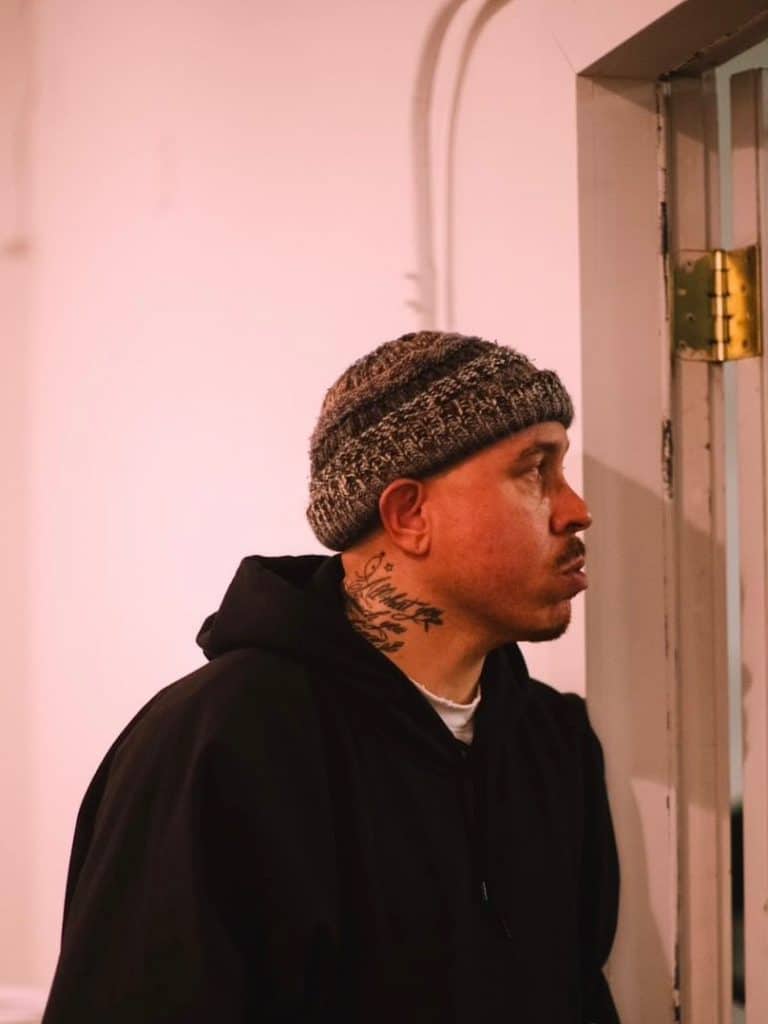
Vada Azeem didn’t want his new album, The Difficulty Crossing a Field, to sound immaculate.
At times, the Columbus rapper tracked his vocals with a hissing cassette recorder, intent on capturing a raw-nerve feeling that reverberates in everything from the album’s lo-fi production to a series of bloodletting verses in which the emcee unpacks his youthful missteps. Witness the brief, bracing “Even the Night Shall Be Light About Me,” on which Azeem raps about being driven by the pursuit of wealth as a younger man, often to his own personal detriment.
“In this day and age of AI, everything sounds sonically perfect, and I didn’t grow up on that. I grew up on cassette tapes. And I was very intentional in making it sound like it was a cassette – and not a regular cassette, but one that’s been played a lot, one that’s been dubbed over,” Azeem said in mid-March from the lobby of his East Side office, later expounding on how this decision to embrace imperfection impacted his songwriting. “I wanted to normalize being open about your flaws, because especially Black men, we’re not allowed to make mistakes. We can’t grow. There’s this expectation that our prefrontal cortex is fully developed as soon as we come out of the womb, so a lot of times we get judged for the things we do as adolescents, and that stain is on us forever. There’s no redemption. Or it’s like, ‘It’s cool you became a better person, but we still remember that you did that.’ And I think other groups of people get more grace in growing and becoming an adult.”
A donation powers the future of local, independent news in Columbus.
Support Matter News
It’s perhaps this idea that resonates most strongly within The Difficulty Crossing a Field, Azeem reflecting on the negative internal and external forces he has overcome on his journey to adulthood. Often, these outside forces – racism, genocide, white supremacy, a US war machine that asks Black men to sacrifice themselves in service of a safety they’ll never experience – reveal themselves in recorded snippets taken from news broadcasts, films, and other forms of archival media.
Azeem’s interior world, in turn, is contained within his conversational verses, the rapper wrangling with everything from his difficult upbringing – “To make it out of where I made it from, it’s a miracle,” he raps atop a beat that swings like a cranky screen door on “Computers, Bears, and Parables” – to the survivor’s remorse he still carries with him at having made it to the other side relatively unscathed.
In reflecting on this, Azeem recalled a time when his friend, the Columbus poet Hanif Abdurraqib, visited his home and commented on the beauty of his backyard and the arching, shade-rich tree contained within it. “And I told him that’s where I read at, that I come and read under this tree,” Azeem said. “And I was just reflecting on that moment, like, yo, I don’t think I’ve ever had a space where I could just go and be quiet and sit under a tree to read in my backyard. That’s a thing that didn’t exist. And sometimes I still get emotional thinking about it. I’ve literally walked out my backdoor and gotten emotional, because I know what’s going on, and I’m still aware, because I choose to be. I’m not one of those people where if I get to a certain point, the world doesn’t matter anymore. … It’s still my responsibility to know and understand what’s going on at Krumm Park, you know what I mean?”
Azeem credited this drive to similar examples he witnessed in his own life, and especially the influence of “Coach” Keith Neal, whose attachment to the city’s youth was so great that in a ceremony honoring his legacy, his own daughter expressed the annoyance she sometimes felt because “everyone was his kid,” Azeem said.
“And she had some frustration with that, because sometimes she just wanted her dad,” the rapper continued. “But he felt he had a responsibility to uplift his community. … And he could have been like, ‘Yeah, I’m just gonna go to work and I’m going to take care of my family,’ which is an admirable thing to do. But there’s a different level to it if you do that and then you’re also like, ‘I have to still pour back into this place where I was raised, and where I came up.’”
While Azeem’s daily existence is increasingly rooted in community, his music has evolved into a more solitary pursuit, devoid of managers, agents, and with The Difficulty Crossing a Field, at least, producers – the musician having created the project entirely on his own. “It’s not like how it was, where I’m making music and taking meetings with Def Jam,” said Azeem, who has no regrets about the career paths not taken as a younger man coming up in the Columbus hip-hop group Fly Union. “I’ve had fallouts and disagreements with friends and family because I didn’t take certain opportunities. Still to this day a lot of people are like, ‘Man, he’s stupid. He was signed to LeBron James and he walked away from it. Def Jam offered him $300,000 and he walked away from it.’ But that’s dead to me. The industry is literally scratching the top of the coffin. It’s gone.”
As another means to illustrate his point, Azeem shared how he recently crossed paths with a major label artist he once considered an acquaintance. “And, man, he was so visibly sad. And I wasn’t shocked by it,” the rapper continued. “That’s what this [industry] does to you. … Jewelry, money, cars, and all of these things, a lot of time that isn’t a good exchange for your happiness and your freedom and your wanting a family. And I always knew that. … And so, I’m okay with the decisions I made. I’m happy with my life, and I can still create the music I want. And my sons, you know, they love my music. They love it. And that’s the biggest gift of all for me.”
Author

Related Articles

Following extended layover, Paper Airplane again takes flight
The Columbus indie-rock quintet will celebrate the release of new album ‘In a Great Big Field’ in concert at Rambling House on Friday, March 27.
Dug offers a glimpse of the light with ‘The Cat EP’
Following a tumultuous stretch marked by a global pandemic, a mental health crisis, and a career pivot, the Columbus rapper returns with a new EP and a slightly sunnier self-perception.
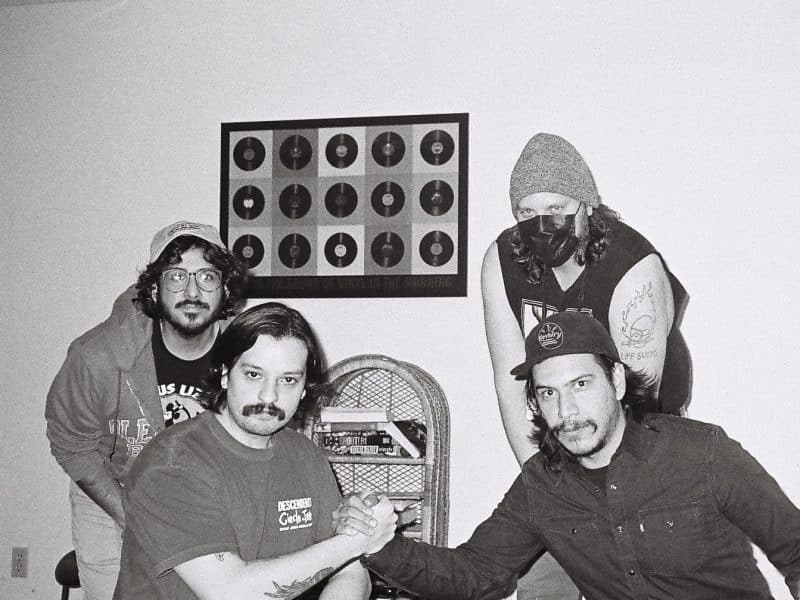
Desespera elbows out space with the ferocious ‘Bracero’
The Columbus four-piece will celebrate the release of its bracing new album in concert at Rumba Cafe on Friday, March 13.