
Theatre Reset strikes a hopeful tone in challenging times
The company’s short play festival, which takes place at Shedd Theater this weekend, embraces community at a time when the social and political climate is driving division.

In one play, a monster lurks in the basement. A second spends time with a snail-loving Amsterdam tour guide. And a third features an anatomically correct teddy bear.
But despite the diversity of subject matters and perspectives, Theatre Reset cofounder Colleen “Squiddy” Kochensparger said they see a common theme running through the nine works featured in the company’s forthcoming short play festival that is rooted in a desire for community.
“There definitely is a throughline of connection,” Kochensparger said of the fest, which takes place at Shedd Theater (549 Franklin Ave.) on Friday and Saturday, May 30 and 31. (Tickets can be purchased online here.) “And even if there’s fear in the middle, or sadness in the middle, there’s this hopeful tone. And it’s not that we were preselecting for that connection, but it’s just what [these plays] said to us. And it makes me so happy to see … because if I have to face this alone, there’s no way I can handle this. I’m just one person. I’m barely 30 years old. I’m a school librarian, for God’s sake. And everything is scary, and it’s so hard out here, and there are so many contributing factors. … But there are different ways we can come together and find community. None of us is alone right now.”
A donation powers the future of local, independent news in Columbus.
Support Matter News
That Theatre Reset would lean into these concepts in this social and political moment shouldn’t surprise. The woman and nonbinary owned and operated company, founded in 2023 by Kochensparger, Susie McGarry, and Frances Wiley, launched the short play festival with the aim of spotlighting feminist and queer voices. And the reality that the Trump administration is currently advancing policies designed to erase or otherwise sideline members of these communities, and in particular trans folks, has only steeled Kochensparger and Co. in their resolve to maintain their theater as a safe space.
“This is an environment where I personally, as a nonbinary person, feel more fear in my day to day life and how people respond to me,” Kochensparger said. “And in a way, that makes me throw myself into the storytelling more fiercely, because I know I have this platform to support people who may not see that support anywhere else in their lives. We have a couple of people [participating] who I specifically know their families are not coming to see the show. But they know they are beloved by our audience and by the other actors and playwrights and directors and tech people.”
Theatre Reset began accepting submissions for this weekend’s festival in late November, at a time in which fears driven by the returning Trump administration were beginning to take root, particularly within the queer community. “And it felt like people were scared and they were channeling that into their writing, because we got more queer stories and more stories that were like, ‘It’s scary out here,’” said Kochensparger, who was introduced to theater at a young age by their parents, who met as high school theater kids and soon became sweethearts. “But the overall message was still one of joy and love, where even if the circumstances were scary, people were still holding hope.”
As one example, Kochensparger pointed to a short play set to debut at the September festival (the short play fest is held twice a year, in the spring and fall) that tells the story of two female students who, unable to attend prom together, create their own garage prom complete with twinkling lights and rollerskating. “And so, while these two teenagers can’t solve this big, systemic issue … they are still like, ‘Okay, we’re solving this for ourselves,’” Kochensparger said.
In many ways, the founders are still adjusting to this new environment, which stands in sharp contrast to the world in which the short play festival debuted just two years ago. At the time, Kochensparger said the idea felt welcomed by the public at large. Now, they wrestle with every aspect of how to outwardly navigate the fest, concerned that something as simple as displaying a promotional flyer at work could lead to personal or professional rebuke. Regardless, Kochensparger said they have continued to “promote it with [their] whole heart,” determined to show everyone involved that there still exists a safe space in which people can tell their unique stories with their art.
The ability to present shows that represent the full spectrum of humanity is a calling to which the theater founders feel drawn, with Kochensparger recalling the sense of empowerment they felt the first time they were able to portray a character who lived at an intersection of identities yet wasn’t defined by any of them.
“And as I meet more and more nonbinary actors and people who identify outside of the gender binary, they haven’t seen their story onstage, or if they have, it’ll be something like ‘Hedwig and the Angry Inch,’ and that’s the only one,” said Kochensparger, who has been buoyed by the myriad sparks of recognition that continue to take place at each successive festival, with people seeing aspects of themselves reflected on the stage. “And now people are recommending us to their queer coworkers and their feminist friends who have not found a theater that works for them. … And that makes me so happy that we’re reaching people on the ground level. We’ve even had people who auditioned because friends saw us and they thought of that person and said, ‘This is a great place for you to be seen.’”
Author

Related Articles

Dug offers a glimpse of the light with ‘The Cat EP’
Following a tumultuous stretch marked by a global pandemic, a mental health crisis, and a career pivot, the Columbus rapper returns with a new EP and a slightly sunnier self-perception.
New report recommends cutting GCAC funding to increase the Experience Columbus marketing budget
Under the current model, GCAC receives 29 percent of the funds generated by the hotel/motel tax, which a FRAC report calls for reducing to 0 percent. In return, the share allocated to Experience Columbus would rise from 43 percent to 72 percent.
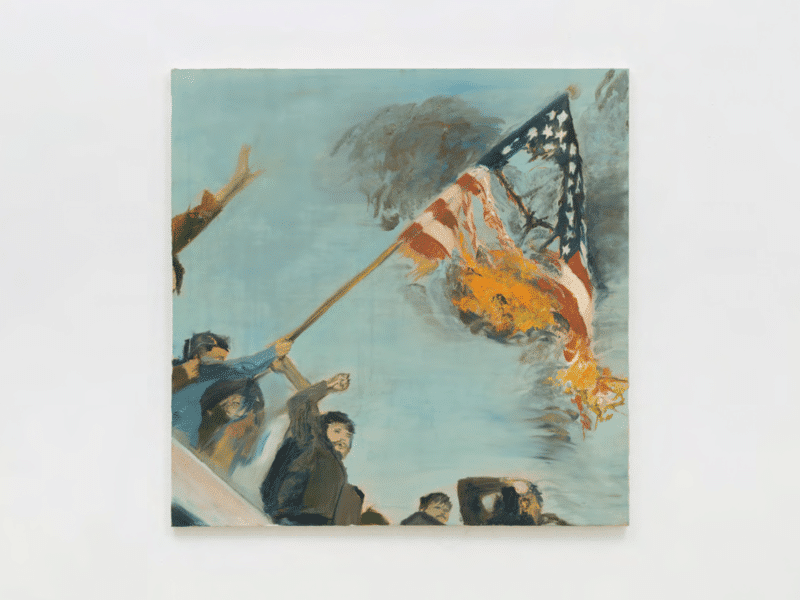
Shiva Addanki and Nikholis Planck continue the conversation in ‘American Inquisition’
The duo’s exhibition, now on view at No Place Gallery, looks both backward and forward, seeing echoes of this social and political moment in ‘the ruins of history.’