
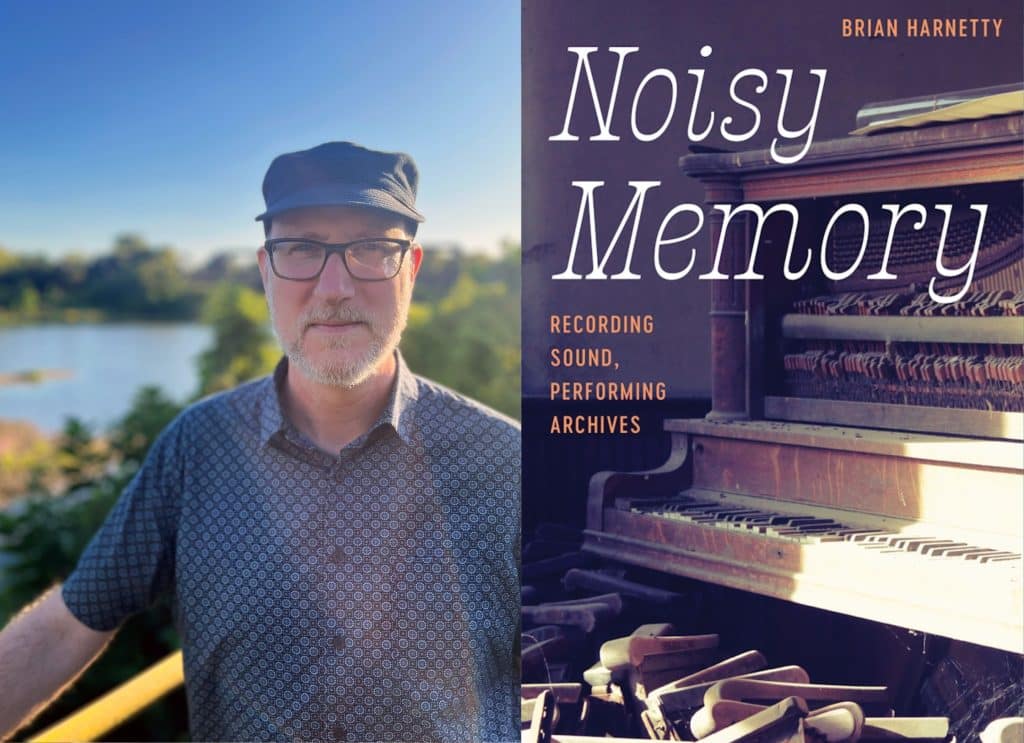
Brian Harnetty gets to the heart of his practice in ‘Noisy Memory’
The musician traces his winding artistic path in his remarkable new memoir, which he’ll celebrate with a reading at Two Dollar Radio Headquarters on Wednesday, Aug. 27.
At one point earlier in Noisy Memory, Brian Harnetty details a photo taken in the late 1960s of four of the women in his family – his grandmother Florence, his mother, Marilyn, and two of his four sisters, Lisa and Jane – going on to describe the impact of the frontotemporal dementia Jane developed in her 40s, which he wrote gradually erased her mind.
“If memory and presence are so easily wiped away, I angrily thought at the time, why do I even bother with photographs and recordings,” writes Harnetty, who goes on to call the picture “a weak, insufficient, desperate, and aching stand-in” for his sister’s absence.
Though Harnetty was not born at the time the photograph was taken, it impacts him deeply, the musician and now author reconciling with what the political theorist Jane Bennett referred to as “vibrant materiality,” or the way a thing can adopt its own vitality. The image also continues to grow in emotional weight, with Harnetty writing that when Jane was healthy, the picture didn’t exert the downward drag on him that it does now.
A donation powers the future of local, independent news in Columbus.
Support Matter News
Similar ideas of family history, shifting perception, and the resonance of recorded media surface repeatedly in Harnetty’s new memoir, Noisy Memory (University of North Carolina Press), which finds the musician tracing decades of his career in rich, engaging detail, and which he’ll celebrate with an 8 p.m. reading at Two Dollar Radio Headquarters on Wednesday, Aug. 27.
The musician mines his memories throughout, exploring the many human connections that have helped to bring his archival albums more fully to life, while also accounting for the ways that time has evolved the emotional weight carried by certain projects. This is particularly true of Silent City, from 2009, which Harnetty crafted alongside the musician Will Oldham while Harnetty’s wife was pregnant with the couple’s son, Henry, and which also features audio recordings of his late father.
“There’s a track on there where he’s telling oral histories, or stories, and … that has become really valuable in new ways,” Harnetty said. “So, yeah, there are aspects [of revisiting earlier albums] where you’re almost in conversation with your past self.”
Told in roughly chronological order, the memoir traces Harnetty’s evolution from a young and eager (if sometimes oblivious) composer, beginning with an admittedly transformative fellowship at Berea College, where he was granted access to the school’s Appalachian Sound Archives. At the time, the musician was so overwhelmed by the volume of material that he essentially froze, unsure how to even begin the process. “Finally, after a couple of days, the archivist Harry Rice came up to me and kindly said, ‘Aren’t you actually going to listen to anything?’” Harnetty writes.
“It was like being a kid on a diving board,” Harnetty said, and laughed. “And I think that kid probably needed to be pushed in.”
It turns out this gentle shove was all Harnetty required, and the pages that follow richly document the ways in which the musician’s careful listening practice has helped him to uncover his own voice. At one point, Harnetty writes of listening to certain recordings with such frequency that he could emulate the accents and dramatic pauses of the speakers, as well as pinpoint the sounds that existed in the deep background and tended to go unnoticed in early playbacks.
“I really like John Cage … and he basically said anything could be interesting. So, I took that idea to heart and developed these strategies for moving through these overwhelming collections,” said Harnetty, who adopted different means for selecting recordings to investigate, sometimes building lists of keywords from descriptions of the tapes, and other times leaving his selections completely up to chance. “I would often just wander the archives, and if something caught my eye, or if a drawer was left half open, I would investigate.”
Harnetty later embraced a similar process in the months and years he spent in Shawnee, Ohio, immersing himself in the town and its people with the same attention and consideration he did as a younger man in the Berea archives. “With the medium of recording, you can listen again and again and again, and … I started to adopt that as practice, like, oh, what if I returned to the same place over and over again,” he said. “But there [in Shawnee], it’s always changing, and you can note those changes. … And I started to realize how that aligned with the practice of ethnography, which is really just a more formalized practice of hanging out with a community of people over a long period of time and then writing about it.”
While the act of creating archival recordings can be marked by long stretches of solitude, the memoir frequently centers on community. This is true whether Harnetty is giving his account of a chance-run in with the great-granddaughter of someone whose voice has become a constant companion on tape or crediting the people of a town for helping to crack open a project. Indeed, the book is purposely bookended by two occasions where the musician recounts being struck by the realization that human connections are needed to activate things that would otherwise remain inanimate, be it the recordings stored in the Berea archive or the workbench that formerly belonged to his late father.
Harnetty first considered the idea of writing a book years ago, but he allowed that time – in addition to several written drafts – helped him to shake the more academic language that he hoped to avoid. The descriptions throughout are generally novelistic and vivid, with Harnetty at one point recounting a cup of coffee in such detail that the reader can practically taste it, for better or worse. (“It had the faint smell of sulfur from the well water” and “was strong, oil thick, and burned from being brewed early that morning and kept warm for hours.”)
It also helps that Noisy Memory is most often a personal story, with Harnetty and his family history both taking on greater import as the book progresses – a development he traced in part to the unintended path his career has followed.
“I really thought 25 years ago I would end up in some big, fancy city,” Harnetty said. “I had gone to grad school in Europe, and I thought I was going to stay there but didn’t. And every time I thought I would leave or something might change, I focused back on local issues or the friendships I had here, which resulted in all these odd left turns. Things became distinctly more rural, and all these things I hadn’t been interested in when I was in my early 20s – my own family history, the history of Appalachia – I just kept following them. And I think what that did was take me away from what those original dreams were, in some way, but toward something more fulfilling. The work now is rooted in my own stories, my family’s stories, the region’s stories. And I think it gives me something more to offer.”
Author

Related Articles
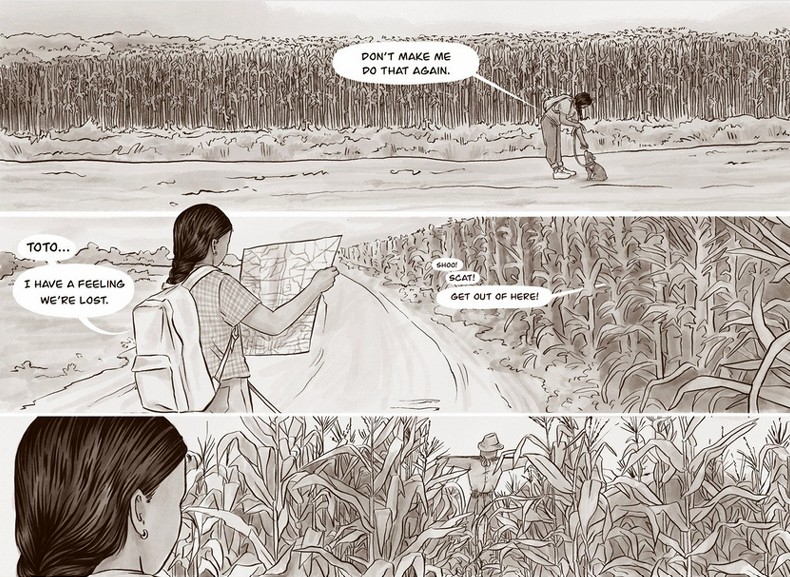
Angelo Thomas finds blue skies on the other end of the rainbow in ‘Somewhere…’
The filmmaker will join artist Rebecca Butterworth in celebrating the release of their new ‘Wizard of Oz’-inspired comic at Laughing Ogre from noon-2 p.m. on Saturday, March 14.
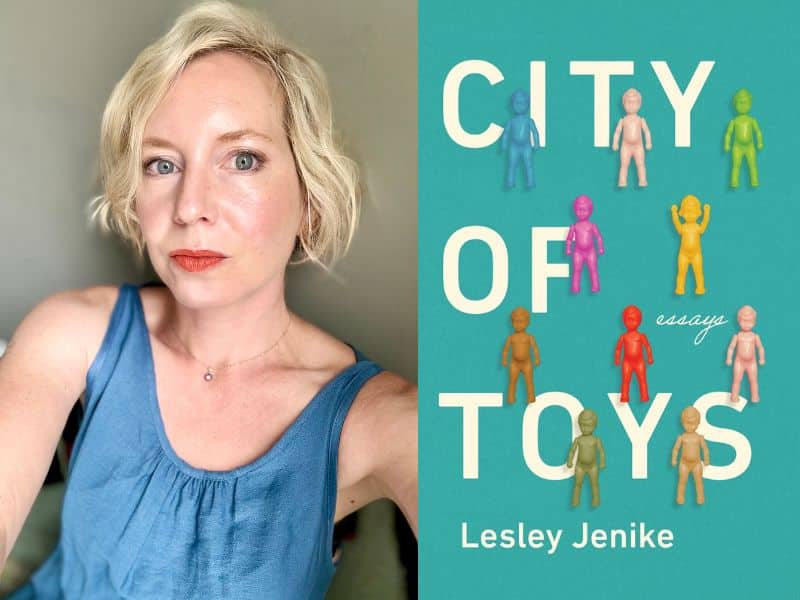
Lesley Jenike scrapes away the veneer with ‘City of Toys’
In her new essay collection, out today (Monday, March 9), the Columbus author said she opens up ‘in a way I don’t in my everyday life.’

Fifteen years in, Ken Eppstein remains committed to Nix Comics
‘There’s just the improbability of 15 years, and all of the things that have to happen to end up where I am now, doing what I’ve done, and doing what I continue to do.’