Danny Caine pushes back against book bans
In the newly released ‘How to Defend Books and Why,’ the Columbus writer offers practical advice on the best ways to fight against the book bans currently being championed by the right – with increasingly damning consequences.
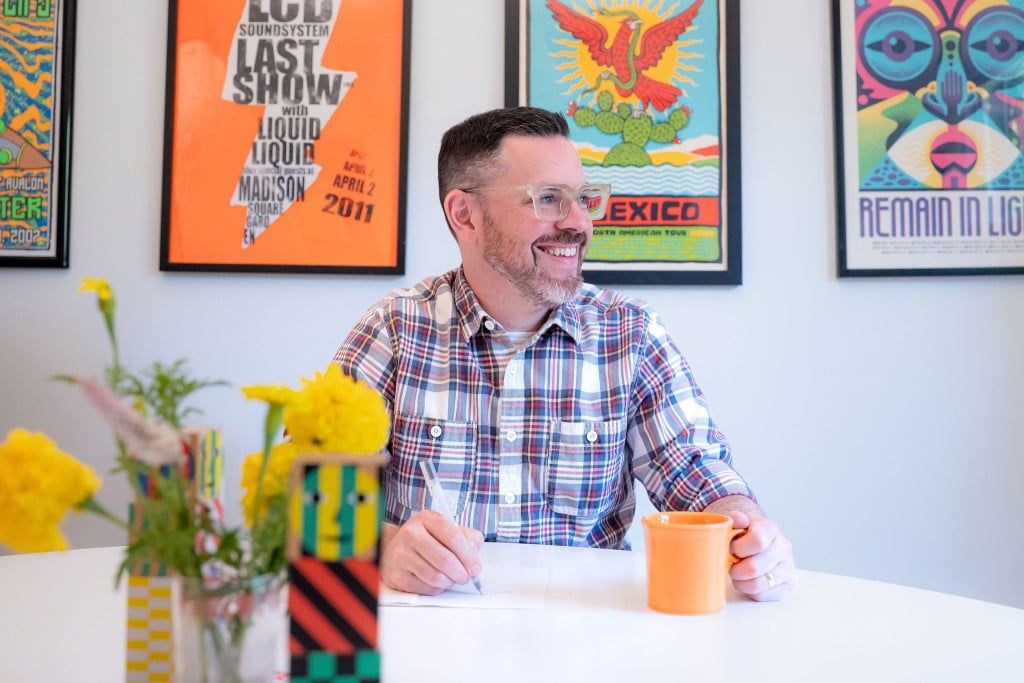
In his previous book, How to Protect Bookstores and Why, Danny Caine incorporated a couple of stories centered on the then-developing attacks being made against book sellers and librarians, including one about the Proud Boys’ violent interruption of a Drag Story Hour in suburban Washington D.C., and another centered on city council members who took legislative steps in an attempt to defund the public library in St. Mary’s, Kansas.
“And those questions were kind of relevant to that book, talking about the threats to bookstores, for sure, and how difficult it was to be a book seller, and especially a political book seller, in that moment,” said Caine, who in those asides began to see the roots of a new collection, this one focused on the importance of pushing back against book bans, which he envisioned as the final part in a trilogy that began with the 2019 publication of How to Resist Amazon and Why.
Released earlier this month, How to Defend Books and Why: Book Bans and How We Fight Them, traces the social and political forces that have conspired in an attempt to restrict access to books, and especially books in which queer folks and people of color are represented, while also doling out practical advice on the best ways to advocate against these policies.
A donation powers the future of local, independent news in Columbus.
Support Matter News
Caine’s research began a couple years back with a visit to the Greater Columbus Convention Center for the Public Library Association’s annual conference, where he attended a panel titled “Unbannable: How Libraries Are Ensuring Access to Banned Books.” Then living in Cleveland, Caine, who has since relocated to Columbus, described the mood within the room as “occasionally raucous,” defined not by apathy or resignation but rather a sense of defiance – a spirit that left a deep imprint as he began to shape the developing text.
“Going in [to the conference], I didn’t know what to expect, because they’re really on the frontlines, and it’s hard to be a librarian right now,” Caine said. “But there was really a fighting spirit there, and that really helped me to get to the central idea of this book, which is how to fight back against these people.”
There were, of course, countless twists and turns along the way, with Caine traversing grounds that have shifted continuously over the last couple of years, with new legislation and court decisions surfacing to completely reshape the landscape.
“Starting this two years ago, the fear was, what if do this and the book ban crisis goes away,” said Caine, who has instead been confronted by an ever-worsening issue. During the 2023-24 school year, for instance, more than 10,000 book ban attempts were reported by PEN America – double the previous school year.
In that time, the book ban crisis has also morphed into something even more nefarious, Caine said, with the erasure of trans and Palestinian literature serving as a precursor to the erasure of trans and Palestinian people carried out via increasingly restrictive legislation directed at the trans community and in the U.S.-funded genocide being waged by Israel against Palestine. “The way these books are being attacked, it’s pretty clear to me that it’s an attack on people’s identities, and then it’s a short leap to attacking them,” Caine said. “And that’s the authoritarian playbook we’ve seen time and again through history: It starts with books, and then it turns into attacks on people.”
Caine’s research led him across the country, where he explored the earliest roots of the book banning movement on a trip to San Francisco’s famed City Lights bookstore, which published Alan Ginsberg’s poem “Howl” in 1956 and then defended the work in a landmark obscenity case the following year. He then logged time in New Orleans for a conference centered on the right-wing attacks being made against Drag Story Hour events across the United States, and Brooklyn, where he met and interviewed Nick Higgins, the New York librarian behind Books Unbanned, which provides digital access to the titles being yanked from library bookshelves across the United States to readers nationwide.
In his travels, Caine also visited the Toronto Women’s Bookstore, which for decades has championed the voices of silenced Palestinian writers, embracing the Canadian detour as a way to make known that book bans aren’t strictly a Texas or Florida problem, or even unique to the United States. “It’s not just racists in Texas that are driving this,” he said. “The creeping rise of the far right and its impact on intellectual freedom is happening all over the world. And it’s not just happening in schools. The schools are a frontline. But you also have to look at prisons, and you have to look at Gaza, and you have to look at bookstores. … The far right is trying to limit the freedom to read everywhere and in many ways.”
Given the bleak nature of these developments, one might think How to Defend Books and Why would be an unrepentantly heavy read. But Caine’s ability to ground the response in easy-to-grasp actions serves as a constant buoy, with the author noting that because the authoritarian right is following a prescribed playbook, there also exists one for mounting a defense.
It also helps that Caine takes care to report on the resistances that have sprouted within those red states commonly seen as leading the book ban charge in the United States, such as the youth-led Students Engaged in Advancing Texas, which is working to increase the visibility of young people in shaping state policy.
“I think that’s a chip on my shoulder I got from living in Kansas, which is pretty frequently stereotyped and underestimated in the national discourse,” said Caine, former co-owner of the Raven Book Store in Lawrence, Kansas. “But a lot of what I learned about organizing on the left and good politics came from Kansas. … Then on the flipside, you’ve got Ithaca, New York, which is the perfect, idyllic college town – Ivy League, farmers’ markets, walkable downtown – and they’re getting bomb threats for their Drag Story Hours, too. So, I didn’t want quote-unquote ‘blue states’ to fall asleep, either. This is happening everywhere. … People in places like Ithaca or Columbus can’t rest easy, because that’s what they’re counting on. … It’s important to pay attention to this stuff, regardless of where you live.”
Author

Related Articles
Angelo Thomas finds blue skies on the other end of the rainbow in ‘Somewhere…’
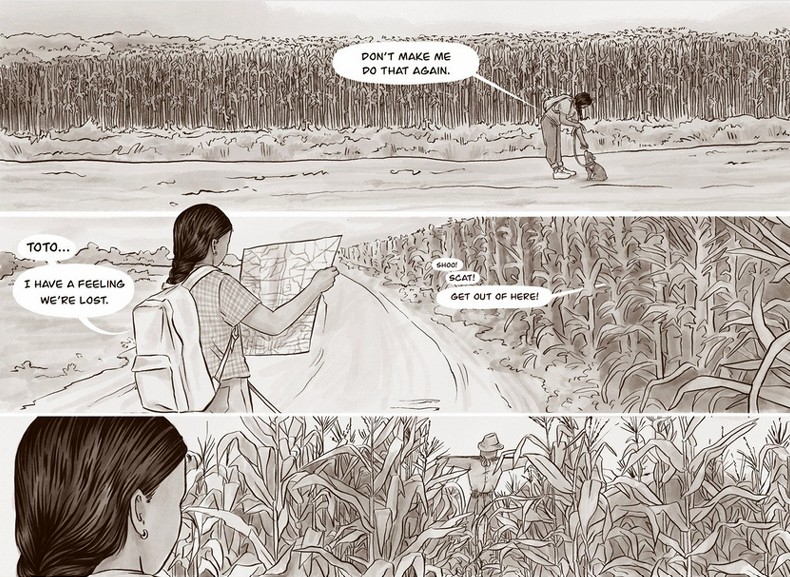
The filmmaker will join artist Rebecca Butterworth in celebrating the release of their new ‘Wizard of Oz’-inspired comic at Laughing Ogre from noon-2 p.m. on Saturday, March 14.
Lesley Jenike scrapes away the veneer with ‘City of Toys’
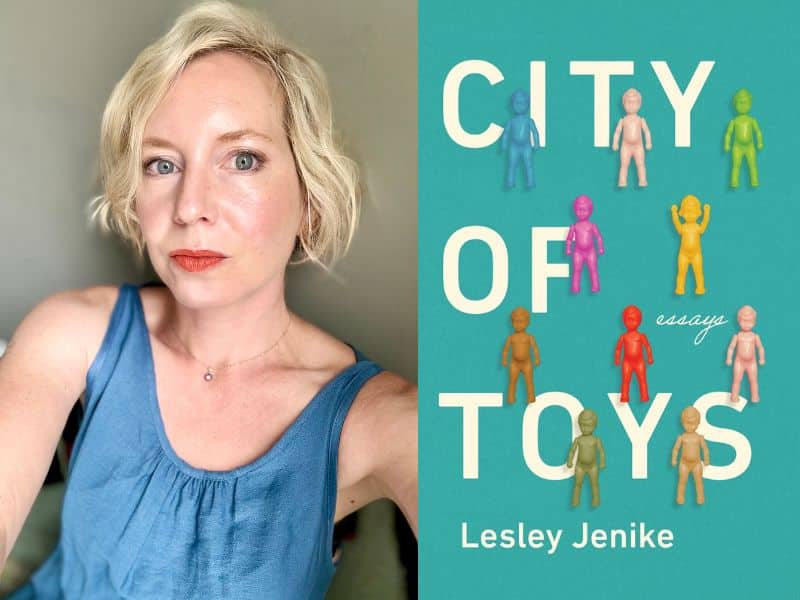
In her new essay collection, out today (Monday, March 9), the Columbus author said she opens up ‘in a way I don’t in my everyday life.’
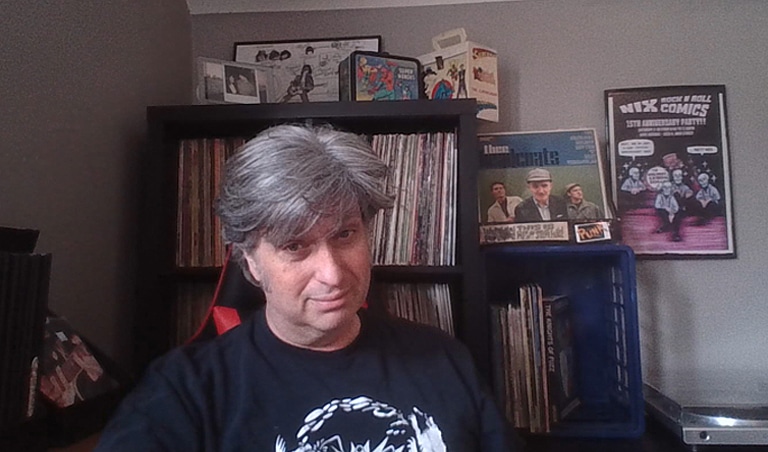
Fifteen years in, Ken Eppstein remains committed to Nix Comics
‘There’s just the improbability of 15 years, and all of the things that have to happen to end up where I am now, doing what I’ve done, and doing what I continue to do.’