
Namwali Serpell finds expanding resonance in the world of Toni Morrison
The Harvard professor, novelist, and critic will take part in a pair of Morrison-themed Columbus events this week, beginning with the Wednesday kickoff of ‘Beloved: Ohio Celebrates Toni Morrison,’ where she’ll appear in conversation with Hanif Abdurraqib.

Each time Namwali Serpell has immersed herself in the work of Toni Morrison, she has pulled something different from the experience – something that might have been unthinkable when she first encountered the Ohio-born Nobel laureate’s novel Beloved as a younger person.
“I picked it off my older sister’s bookshelf when she was in college and tried to read a few pages of it, and I was completely baffled,” said Serpell, a Harvard professor, novelist, and acclaimed critic, who will visit Columbus to take part in a pair of Morrison-themed events this week. First, Serpell will join the author, poet, and cultural critic Hanif Abdurraqib in conversation at the Columbus Foundation on Wednesday, Feb. 18, for the kickoff of “Beloved: Ohio Celebrates Toni Morrison,” a yearlong initiative honoring the deeply influential writer spearheaded by Ohio Humanities and Literary Cleveland (the conversation, which begins at 5 p.m., will also being live streamed). Serpell will then visit Bexley Public Library at 6:30 p.m. on Thursday, Feb. 19, to discuss her new book, On Morrison, a richly detailed analysis of the late author’s full body of work, including her novels, her lone published short story (“Recitatif), and a handful of poems.
Childhood flirtation aside, Serpell said her relationship with Morrison really began in college, describing her journey through the author’s body of work as one of “increasing wonder and reverence.”
A donation powers the future of local, independent news in Columbus.
Support Matter News
“There’s a sense when you’re reading Morrison that you’re not doing something to pass the time, or as a kind of pleasure-seeking or escapist exercise,” she said. “But an event is happening to you, and something very profound is opening up. … Morrison is very good at making the familiar strange for us. She’s also very good at opening up the doors to houses that have long been shut down or boarded up by contemporary discourse, to look inside to see what people’s actual lives are like. And she does the same thing with what we might call the haunted house of American history.”
These impressions continued to deepen and evolve when Serpell taught her first course dedicated solely to Morrison’s work in 2021, which afforded her the opportunity to revisit the author’s novels in order and affirmed the richness present within her body of work. The experience also highlighted how aspects of her novels spoke differently to the person Serpell had grown to become. “As you get older and have more and different experiences, aspects of the novel resonate differently with your life,” said Serpell, who pointed as one example to Jazz, from 1992, which she first read in college, describing how she was initially compelled by the puzzle-like construction of the text. “And when I reread it to teach, and I now was engaged, I was drawn to thinking of the novel’s depiction of love, and in particular of married love. And I started to realize a lot of my feeling for Jazz isn’t just about my mind, but it’s also about my heart.”
Serpell described these secondary, more granular readings as having given her access to “almost an X-ray of the text,” helping her to take greater notice of the precise seams with which Morrison so elegantly stitched together her novels.
“And this is kind of what the project On Morrison is,” she said. “The ideal, for me, would be for people to read or reread each Morrison novel, and then read the chapter in my book that gives my take on how we might interpret it, but also gives a sense of just how masterfully she shaped the experience of the reading you just had.”
Much of Serpell’s analysis is rooted in her lifelong devotion to Morrison’s texts – a backbone fortified by her immersion in the author’s archives, where the materials frequently supported her already developed perspectives. “One of the things that was really pleasurable for me is that suspicions, arguments, interpretations I had of the novels just from reading closely over the many years of my life were confirmed by the things I found,” said Serpell, who entered into the research process aware that there was unlikely to be a Rosetta Stone present in the archives that would unlock something new for her in the texts. “And I think part of that is because her works are so willfully open-ended. She was very drawn to Black cultural forms that evince an ambiguity or indeterminacy. And she spoke of African folk tales, where when you’re done telling the story, you turn to the listener and say, ‘What do you think? How would you understand this?’ Rather than giving you a single moral of the story, she said, ‘My fiction isn’t here to answer questions. It’s here to ask them.’”
And yet, there were still remarkable discoveries to be gleaned from Morrison’s drafts, where Serpell said some of the author’s best-known lines were penciled into later manuscripts. This includes the line “unspeakable things unspoken” in Beloved, which appears in earlier drafts as “unspeakable thoughts spoken.” “So, she obviously struggled with if these thoughts would be articulated out loud,” Serpell said, “or if they would remain in the minds of the characters.”
A similarly minor tweak created major reverberations within A Mercy, which Serpell said existed in earlier drafts simply as Mercy. “And then in a very late manuscript, and you can’t tell if it’s in her hand or the hand of her longtime editor, Robert Gottlieb, someone has penciled in an A on the title page, but also in the part of the novel where the phrase ‘a mercy’ finally appears,” Serpell said. “And it sounds like a simple thing, but there’s a difference between mercy and a mercy. Mercy is a grand philosophical, religious concept. And when you have a mercy, it changes the register. … And it sort of desacralizes the notion but keeps it in the profound realm of moral philosophy.”
In crafting On Morrison, Serpell said she wanted to approach the author’s work with the same critical eye she once applied to her peers, recalling a story she heard that Morrison’s personal library contains books by peers such as Philip Roth in which she penciled in her own corrections.
“And this is Morrison, the editor at Random House for decades coming through,” said Serpell, who within her book remains thoughtful, clear-eyed, and unflinching in her criticisms of the author. (“As quiet as it’s kept, Toni Morrison’s poetry is not good,” she writes.) “I think that level of commitment to seeing something clearly, even to the point of seeing where things aren’t working or where they’re flawed, is itself a form of love. [Morrison] always said of Black people, we are very fastidious and we are very rigorous, and so I really tried to aspire to that goal of hers, that ethos of hers. To me, that felt like the most responsible way to address the work.”
Author

Related Articles
Angelo Thomas finds blue skies on the other end of the rainbow in ‘Somewhere…’
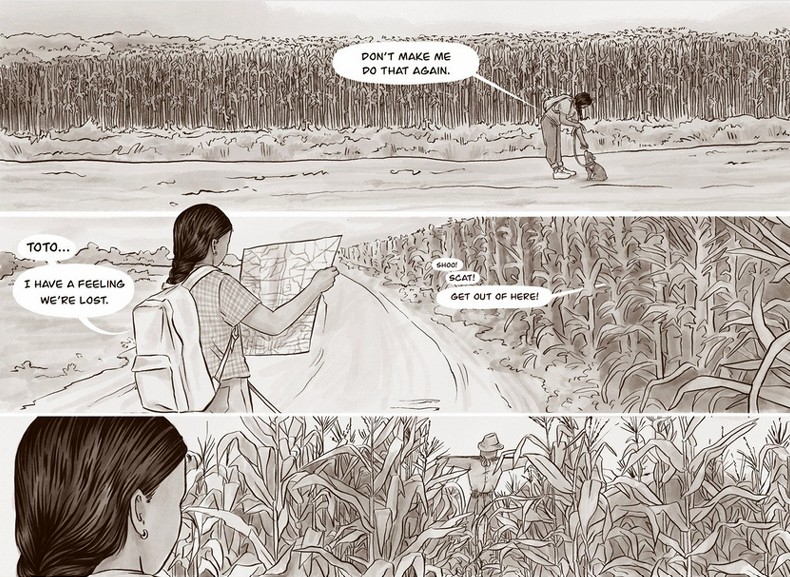
The filmmaker will join artist Rebecca Butterworth in celebrating the release of their new ‘Wizard of Oz’-inspired comic at Laughing Ogre from noon-2 p.m. on Saturday, March 14.
Lesley Jenike scrapes away the veneer with ‘City of Toys’
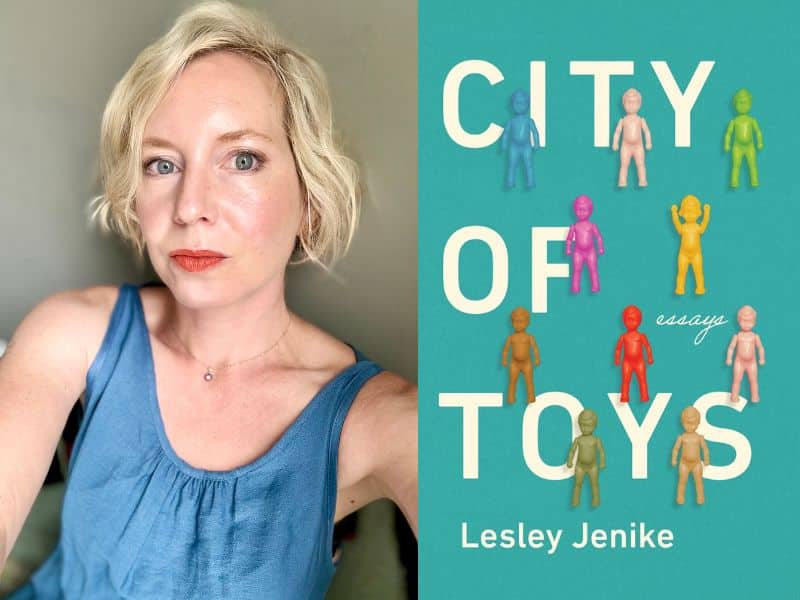
In her new essay collection, out today (Monday, March 9), the Columbus author said she opens up ‘in a way I don’t in my everyday life.’

Fifteen years in, Ken Eppstein remains committed to Nix Comics
‘There’s just the improbability of 15 years, and all of the things that have to happen to end up where I am now, doing what I’ve done, and doing what I continue to do.’