
‘People of Agency’ traces the history of USPS and finds lessons for today
Aileen Day and cohost Maia Warner-Langenbahn launched the podcast out of a belief that it’s easier to advocate for our institutions once you know their history.
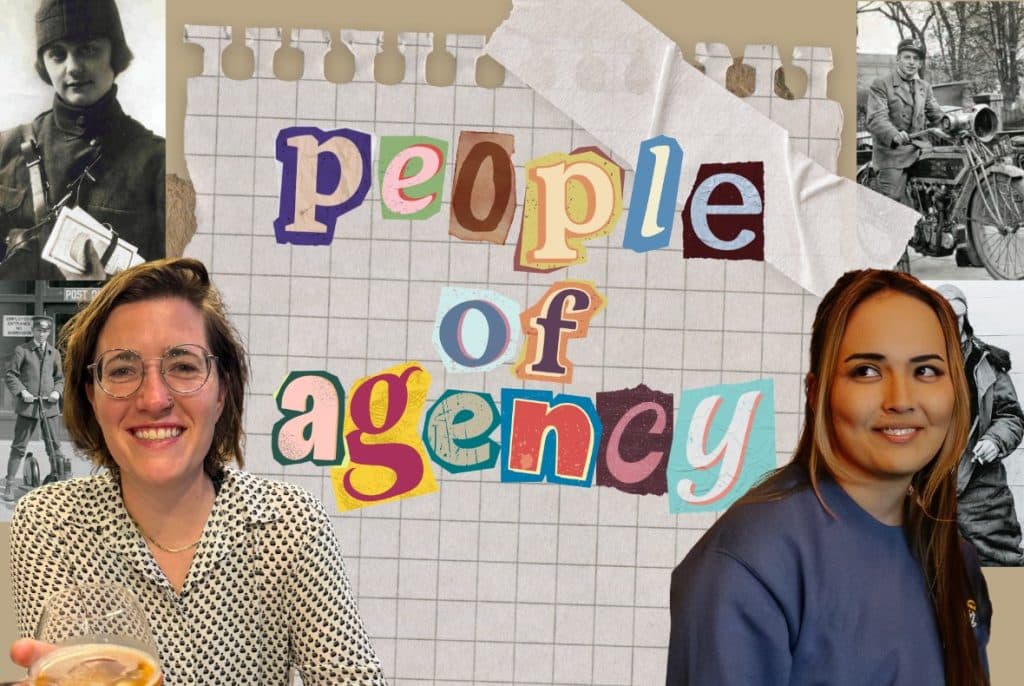
When the Elon Musk-led Department of Government Efficiency (DOGE) began in January to make deep cuts to federal agencies, slashing budgets and laying off thousands of government workers, Aileen Day was left fuming.
“They were really demoralizing the people who work for these federal agencies. … And, for myself and I imagine others as well, it was really hard to conceptualize the scale of these cuts,” said Day, who moved quickly to brainstorm a more productive means to channel her anger. “And I started to think about how these massive public institutions work. … And then I began to realize that I didn’t understand how these institutions were built, and if you don’t know how something was built, you can’t effectively defend it.”
This seed is what eventually gave root to Day and cohost Maia Warner-Langenbahn’s podcast, “People of Agency,” available now, which focuses its 14-episode first season on the history of the United States Postal Service – a governmental agency often taken for granted despite being tasked with a mind-bending responsibility: deliver mail six days a week to every address in the United States, from mountaintop homes in West Virginia to cabins off remote dirt roads in Alaska, as Day explains it in the first episode.
A donation powers the future of local, independent news in Columbus.
Support Matter News
Day said she opted to focus on the post office for a trio of reasons, including: the USPS is the one federal institution with which everyone interacts; it’s currently under serious threat, with Wells Fargo publishing a 2025 memo in which it outlined the steps required to privatize the agency; and the reality that the USPS serves as an ideal case study for how public institutions routinely get undermined.
“There’s this playbook they’ve been using for decades, and once you see it, you can’t unsee it,” Day said. “And the pattern is: block an institution from innovating or adapting, point to the fact it’s not keeping up with the times as evidence that it’s obsolete, and then move to privative or gut it.”
As just one example, which the cohosts detail at length in one mid-season episode, Day pointed to the hybrid email system, E-Com (Electronic Computer-Originated Mail), which the USPS introduced in 1982, and which allowed businesses to electronically send messages that could be printed and delivered by the post office. “And it’s hard to think of that as innovative now, more than 40 years later, but there was a roadmap where the post office could have become our internet provider,” said Day, who went on to describe how AT&T, which viewed the technology as competition for its own digital services, enlisted the Postal Rate Commission to force unsustainable pricing on E-Com, essentially strangling the technology. “And then in 1999, UPS bought the exact same concept from the person who created it for the post office. … And it’s part of that pattern where a development that could benefit everyone is killed by a corporation through regulatory capture, and then it becomes part of a private corporation where it makes shareholders rich.”
The podcast is filled with these kinds of revelatory nuggets, such as the fact that USPS, with rare exception (most notably during the early Covid pandemic), has received no federal funding since the 1971 passage of the Postal Reorganization Act. “And this introduced the concept of forcing a public institution to operate like a business when it was never supposed to be a business,” Day said. “And if you force something to operate like a business but cut it off at the knees at every turn, then it’s always going to fail.”
These repeated congressional efforts to undercut, which included the passage of 2006 Postal Accountability and Enhancement Act that mandated the USPS prepay retiree health benefits 75 years into the future at a cost of roughly $5.6 billion annually over a 10-year period, stoked Day’s anger throughout the research process. “Between 2007 and 2016, the post office reported $62 billion in losses, and that led to headlines and the public perception that the USPS bleeds money,” she said. “And that might have been the biggest misconception I had coming in. I thought it was going to be a project born out of nostalgia. I love writing letters. I love sending mail. And I really thought it was going to be like, ‘Even though it’s losing a bunch of money, it’s worth it to save.’ … But really, there are so many things along that history that illustrate this is a manufactured crisis.”
Part of the challenge in creating the podcast proved to be editing down the sheer volume of material, with Day at one point weighing a 25-episode season before winnowing it down to a more easily digestible 14 episodes covering everything from pioneering figures such as Stagecoach Mary to the complex business relationship developed between the USPS and Amazon. In the research process, Day created an elaborate timeline on a dozen-plus envelopes she stitched together with tape that traces the earliest days of the post office – the roots of which predate the founding of the United States – through the modern era. In compiling material, Day made several visits to the National Postal Museum in Washington D.C., fell down countless internet research wormholes, and employed color-coded tabs to mark dozens of pages in myriad books, including Winifred Gallagher’s How the Post Office Created America: A History, and Philip F. Rubio’s There’s Always Work at the Post Office, among others.
For Day, immersing herself in this history and then following the threads forward in time to this era’s many DOGE-driven crises proved oddly reassuring, and she hopes listeners are able to glean a similar sense of hope from the ability the USPS and its supporters have previously shown to navigate dark days.
“I hope this podcast really demonstrates that it might be bad now, but it’s been bad in the past and we’ve found our way out of it, and here’s a playbook,” she said. “It’s really going to come down to organizing. … Episode five, it’s my favorite episode, but it is about Rural Free Delivery and how farmers made that happen by organizing for years and years and defeating corporations. And I think that’s something we need to get back to doing again.”
Correction: This article initially stated that USPS stopped receiving federal funding in 1982 rather than 1971. Matter News regrets the error.
Author

Related Articles
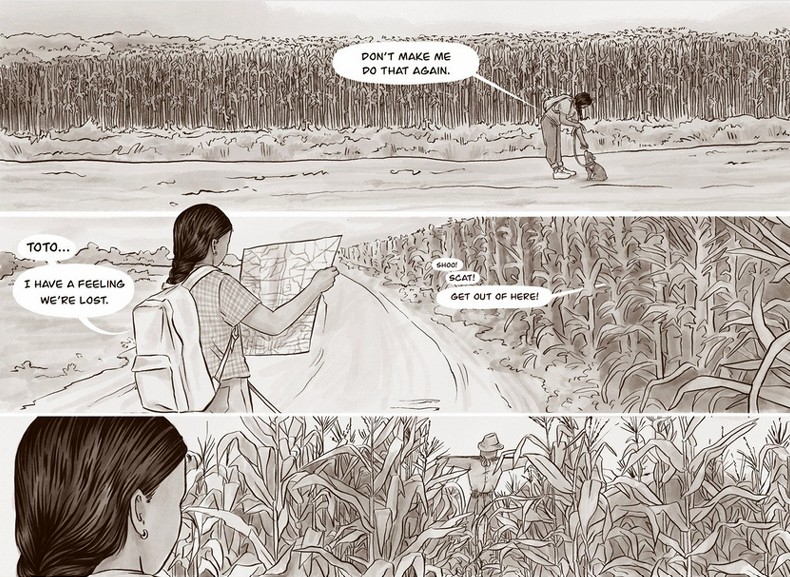
Angelo Thomas finds blue skies on the other end of the rainbow in ‘Somewhere…’
The filmmaker will join artist Rebecca Butterworth in celebrating the release of their new ‘Wizard of Oz’-inspired comic at Laughing Ogre from noon-2 p.m. on Saturday, March 14.
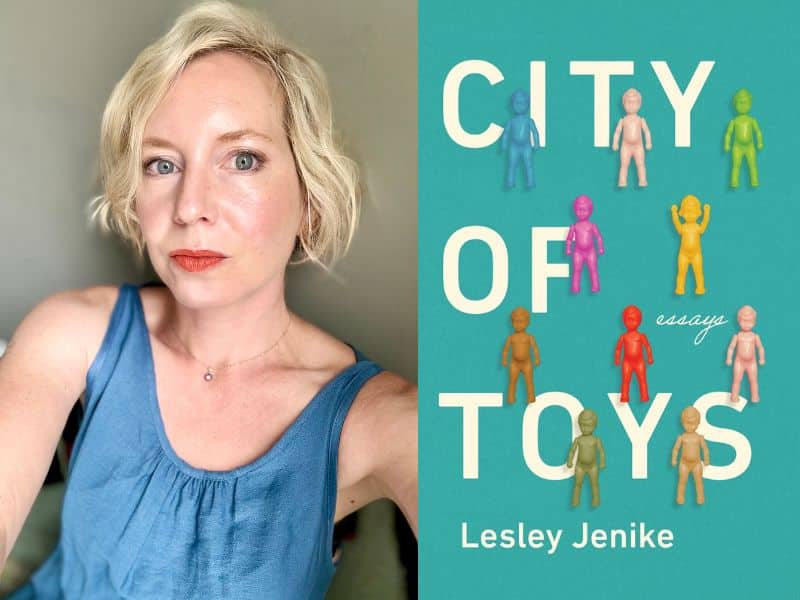
Lesley Jenike scrapes away the veneer with ‘City of Toys’
In her new essay collection, out today (Monday, March 9), the Columbus author said she opens up ‘in a way I don’t in my everyday life.’

Fifteen years in, Ken Eppstein remains committed to Nix Comics
‘There’s just the improbability of 15 years, and all of the things that have to happen to end up where I am now, doing what I’ve done, and doing what I continue to do.’