
Poet Rachael Scott dips back in time for ‘Harlem Renaissance Remix’
The Columbus writer is ready to fill her own plate, but not until she exhumes a quartet of poems by Helene Johnson at Streetlight Guild on Saturday, March 29

Visitors to Streetlight Guild can engage in a bit of time travel when the East Side arts space is temporarily transformed into a 1920s speakeasy for “Harlem Renaissance Remix” on Saturday, March 29.
In addition to live jazz, a handful of Columbus poets will be performing the works of notable Harlem Renaissance artists, including Rachael Scott, who will be reading select pieces by the writer Helene Johnson, who published dozens of poems beginning at age 19 and then retired almost entirely from public view at a young age. “So she was on the scene for a short period of time, and then she disappeared, and … I haven’t really found an answer as to why she stopped writing,” said Scott, who prepped for the performance by delving into Johnson’s poetry, searching out news articles on her life, and watching a YouTube interview with her daughter in which she discussed her late mother.
While Johnson’s decision to step away from poetry might be shrouded in mystery, her writing is generally not, Scott said, the poet filling her deeply humanistic verses with vivid imagery and playfully life affirming detail. Witness “He’s About 22, I’m 63,” one of four works by Johnson that Scott intends to read at Streetlight.
A donation powers the future of local, independent news in Columbus.
Support Matter News
“It’s a story about someone living in an apartment building with a younger man and wondering if she still has it,” Scott said. “And it’s… it’s a little sexy. But it’s also cute and funny, too. What’s that my mom says? ‘I’m not dead yet!’ You still have a life and fantasies.”
While Johnson published the bulk of her work in her late teenage years and early 20s, Scott has taken the inverse approach, having only recently started on her first poetry collection now that her children are grown enough to lessen the demands on her time.
Coming up, Scott idolized a trio of poets: Toni Morrison, Rita Dove, and Nikki Giovanni, whose death in December reduced Scott to tears for myriad complex reasons. “When I found out she passed away, I was laying in bed with my daughter, and I was so upset because I felt like I failed,” Scott said. “I hadn’t delivered a collection of poems, something [Giovanni] could hold up, or something she could critique and tell me, ‘No, don’t do that.’”
This sense of loss and a belief that she still had more to offer as a poet inspired Scott to finally begin work toward her first collection, which currently exists under the working title I Made My Plate First.
“And that literally came to me in the kitchen, cooking, and I’m still making plates,” said Scott, who started to assemble the book in the From Spark to Fire writing cohort run by fellow Columbus poet Sayuri Ayers, drawing on works that stretch back nearly 15 years with the aim of completing the anthology by the end of 2025. “I still have young children, but they’re old enough now where they can make their own plates, so I was like, you know, I’m going to make my own plate first. I have all of these things I want to do, so I need to make sure I put my palms out and that I get to live some for me.”
Scott first turned to poetry as a form of therapy in her teenage years, going on to experiment with the slam scene – a world she lost her taste for once she realized she was writing to win rather than allowing her vulnerabilities to more naturally surface. Later, she became an occasional presence at Writers’ Block Poetry Night (RIP), gradually uncovering a poetic voice reflective of her varied experiences as a mother, a wife, and a daughter. In more recent times, she has continued to expand on these explorations, even unpacking her work as a federal employee in a new, still-in-process poem titled “Five Bullet Points.”
For a time, Scott said, she struggled to bridge the gap between the subjects she felt like she should be writing about – “I wanted to be talking about politics; I wanted to be talking about all of these things,” she said – and the relationship-centered verses that often surfaced in those times when she sat down to write. And part of the early work on I Made My Plate First has involved learning to accept those things she does best.
“It’s just being honest with who I am and being okay with the idea that if I have love poems to give, and I can write them well and honestly, then that’s what I should do,” she said. “It’s allowed me to appreciate how multifaceted I am, and to appreciate all the different parts of me, because it can be easy to get caught up in not feeling great about myself. It’s a living love letter to me, and that’s beautiful.”
Author

Related Articles
Louise Robertson emerges from grief with ‘Body. Voice. Mind. Mouth.’
The poet will celebrate the release of her new collection at Two Dollar Radio Headquarters on Friday, Feb. 6, reading alongside Sayuri Matsuura Ayers, Jessie Scrimager Galloway, and Mikelle Hickman-Romine.
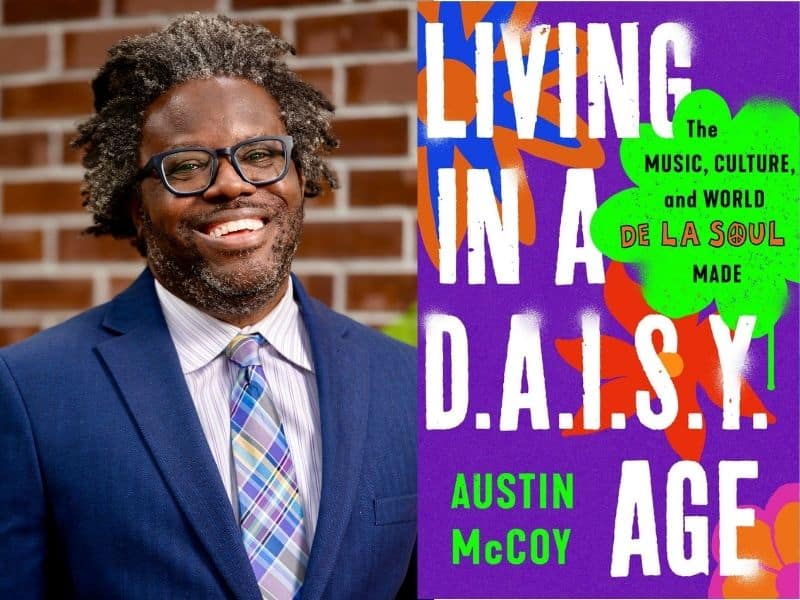
Austin McCoy grows up alongside De La Soul
The author and historian, who will be in town at Used Kids this week to discuss his new book on the pioneering rap trio, has uncovered new meaning in its work with each passing decade.

Even cities as auto dependent as Columbus can imagine ‘Life After Cars’
There’s certainly some irony in a visit from ‘The War on Cars’ podcast hosts Sarah Goodyear and Doug Gordon being canceled by a Level 3 snow emergency that prevented drivers from taking to the road on Sunday.