
Raeghan Buchanan learns to loosen up with the help of Aminah Robinson
‘Even though I’m here for the writer’s residency, in the first couple of weeks I started to experiment with different methods of drawing and crafting again,’ the Columbus artist said from Robinson’s East Side home in early July. ‘And it reminded me of what I naturally felt drawn to when I was younger.’
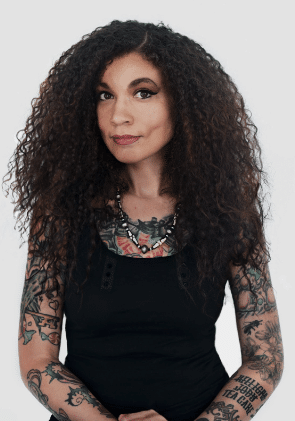
As a child, Raeghan Buchanan said she approached art with unchecked freedom, gluing and painting and coloring with little more than the aim of giving physical form to imagined visions. But as the years passed and creation gradually became more deeply entangled with the concept of career, this sense of play naturally faded to the background.
“And the stuff I gravitated to when I was younger, I kind of gave that up, because that’s not how you make money,” Buchanan said from Aminah Robinson’s former East Side home, where she’s worked since May as the Columbus Museum of Art’s 2025 Aminah Robinson Writing Resident. “There’s this certain, I don’t know… nudge from society where art is sort of elevated over craft, whether it’s someone telling you, ‘Stop sewing things together,’ or you just sort of realize, oh, they’re showing me all of this work by Michelangelo, so this must be what people respect. And then you start to think, well, I should learn how to draw figures rather than just glue things together.”
Entering into the residency, Buchanan hoped to tap into this lost childhood freedom, knowing she wanted to make progress on an in-the-works illustrated Black history book but content with embracing these few short months as an opportunity to allow her path to meander.
A donation powers the future of local, independent news in Columbus.
Support Matter News
In her first week in the home, for instance, Buchanan refrained from writing altogether, instead pausing to experiment and rediscover “a sense of comfort in tactile things,” as she described it. She also took time out to simply exist within the space, gaining a better feel and understanding for her surroundings by sitting in each room of the house and allowing it to imprint itself on her.
“And I was afraid I might not feel anything, because I’m not a very spiritual person,” said the artist and author, who allowed that she felt Robinson’s presence most strongly in the objects she left behind, including her robust collection of books, which Buchanan has taken to thumbing through between bursts of work. “So, even though I’m here for the writer’s residency, in the first couple of weeks I started to experiment with different methods of drawing and crafting again. And it reminded me of what I naturally felt drawn to when I was younger.”
Inspired by Aminah’s World, a pop-up book authored and illustrated by the late Columbus artist, Buchanan began to craft her own pop-up book, paying similar homage to the members of her tight-knit family. She also started to experiment with a comparatively looser drawing form, displaying a sketchbook filled with everything from richly detailed human hands to impressionistic textures created by dipping a trash bag in ink and pressing it to the page. Collectively, these exercises helped to put the artist at ease, allowing her to approach writing with a degree more freedom while also offering a place of escape.
“That’s why I have everything here in one place, because then I can crawl over here and take a little break,” said Buchanan, whose work has taken over the living room and adjacent sun room at the front of the house, her laptop stationed on the floor and surrounded by sketchbooks, historical biographies on loan from the library, and large-scale, posterboard-sized timelines covered with handwritten bullet points tracing Black history from the colonial era through modern times.
Buchanan initially envisioned a Black history book “that had a little bit of information about everybody,” hoping to create a more digestible alternative to existing texts, complete with illustrations of historical figures that might compel even more-hesitant readers to stick to the end. Coming into the residency, she had completed more than 100 illustrations along with a rough draft of the text, which included sections dedicated to specific people, places, and movements. Over the last couple of months, however, this initial concept has evolved, shaped in part by the looseness Buchanan began to see emerge in her art.
At first, this meant jettisoning sections that felt ill-suited to the book she hoped to create, including ones specific to the Ku Klux Klan and White Citizens’ Councils. Then the artist started to rethink her more linear, timeline-based approach, coming to see this history not as a series of isolated events but a living swirl in which people and events overlapped and intersected.
“And I started to develop themes, so this book wasn’t like, ‘This person lived, this person invented this, and this person died,’” Buchanan said. “In this house, the most important thing I’ve gotten is the space to rearrange things every day in my head, where I can just keep starting over without any sense of pressure. And what happened is that in that, I started picking up different things, and different ideas started coming together.”
As just one example, Buchanan recalled how a section on inventor Lewis Latimer went through various permutations, growing in scope and allowing her to touch on various historical eras and happenings that previously existed as standalone passages. “And because the story of Lewis Latimer actually begins with his father, George Latimer, their story actually goes from chattel slavery, past the Civil War, past Reconstruction, and into Jim Crow. And so, in that one storyline, I’m able to talk about the Fugitive Slave Laws, and I’m able to talk about Dred Scott, and I’m able to talk about the parts of Reconstruction that had to do with their lives,” Buchanan said. “And that really changed how I had sectioned everything off, and it made it all more organic to where I’m not freaking out in my head, like, I need a page of Black newspapers!”
Buchanan can’t recall a specific moment when she was introduced to the work of Robinson, describing her art as something she naturally absorbed living in the city – similar to the way she took in Columbus artist and woodcarver Elijah Pierce. In the course of the residency, though, she said she has gained additional understanding of those things that moved her – evidenced in the numerous books that line the living room shelves – along with a deeper appreciation for the sense of community she helped to foster, and which has extended well beyond her passing.
“I view Aminah as this benevolent figure for artists in Columbus, and this [residency] is her gift,” Buchanan said. “This is what she wanted for her house, and she was able to work with the Columbus Museum of Art to get it done. And now everybody who comes in here is a part of that line. So, I don’t know if I have a different view of her than I did [before starting the residency], but it’s like I’m now able to experience being in her sunbeam.”
Author

Related Articles
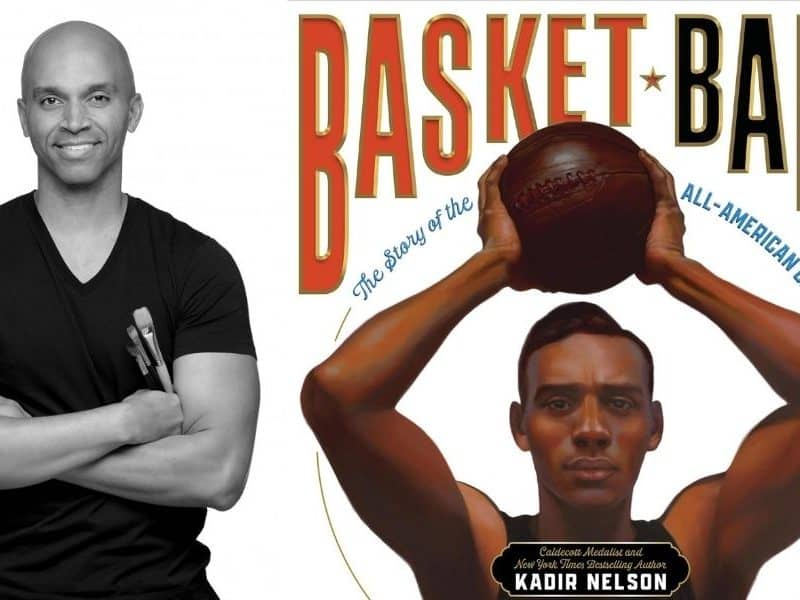
Kadir Nelson still driven by a love for the game
Following the release of ‘Basket Ball: The Story of the All-American Game,’ the celebrated artist and picture book author will appear in conversation with fellow roundball aficionado Hanif Abdurraqib at King Arts Complex on Wednesday, Jan. 14.
Leslie Battle seeks, finds connection in ‘From Spark to Fire’
The Columbus poet will read from her forthcoming collection at Streetlight Guild on Sunday, Dec. 7, joining the likes of Karen Scott, Marquita Byars, Schyler Butler, Rachael Scott, and Miccau McClelland.
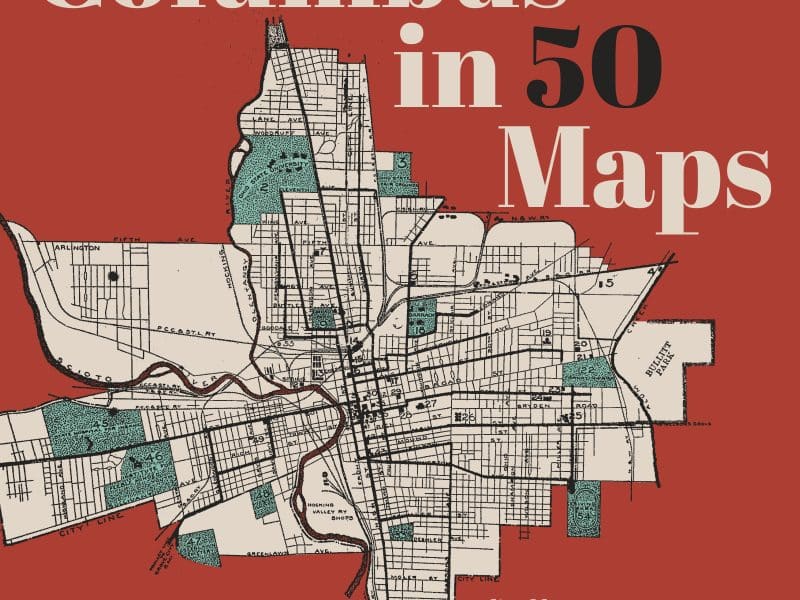
Brent Warren puts Columbus on the map
The longtime local reporter will celebrate the release of ‘Columbus in 50 Maps’ at Prologue Bookshop tonight (Tuesday, Dec. 2).