Sarah Schulman believes solidarity movements would benefit from embracing imperfection
‘If we can reconceptualize solidarity as a series of errors and self-criticisms and changing paths, I think it becomes something much less scary for people,’ said the author, who will discuss ‘The Fantasy and Necessity of Solidarity’ at Thurber House on Thursday, March 26.
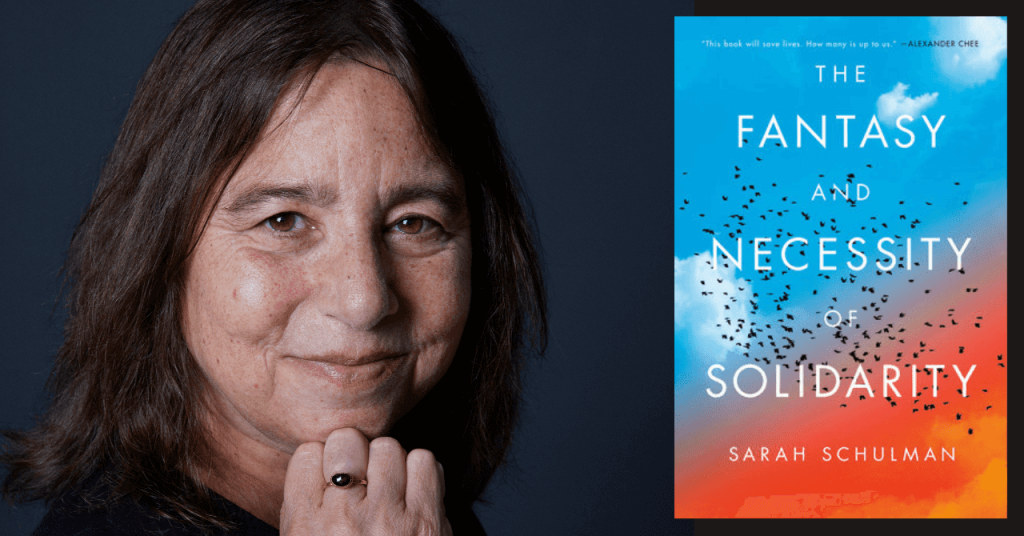
Sarah Schulman submitted The Fantasy and Necessity of Solidarity for publication months before President Donald Trump reassumed office – a political shift that the author said has made readers more receptive to the arguments put forth in her book.
“It’s easier under Trump, because the violations are so blatant,” said Schulman, who will appear in conversation with Stacy Jane Grover at Thurber House on Thursday, March 26, presented by Prologue Bookshop. “On the grassroots level, on the general population level, the anger and resistance are so profound. I was watching an interview with the woman in red – the woman who filmed Alex Pretti being killed – and Anderson Cooper asked her, ‘How long have you been an activist?’ And her answer was three weeks. And that’s the level of social transformation that’s being created by the outrageous behavior from the government.”
Drawing on 40 years of organizing experience, Schulman leans into her latest as a means to advocate for a solidarity rooted in big-tent coalition building, incorporating anecdotes from her work alongside HIV and AIDS activists, reproductive rights organizers, and those fighting for the liberation of Palestine. In both these first-person accounts and accompanying passages that delve into the activism of famous artists and authors such as Jean Genet and Alice Neel, Schulman embraces a warts and all perspective reflective of the reality that there is no such thing as a perfect ally, in the process advocating that organizers extend a measure of grace in their coalition building.
A donation powers the future of local, independent news in Columbus.
Support Matter News
“The purpose of the book is to try and make solidarity more doable. And my approach is to strip away concepts of heroism and perfection, because first of all, those things aren’t real anyway. But if we can reconceptualize solidarity as a series of errors and self-criticisms and changing paths, I think it becomes something much less scary for people,” said Schulman, who began to express this mindset with her book Israel/Palestine and the Queer International, from 2012. “And [in that book], I started giving a lot of examples of myself making mistakes and not understanding things and then realizing I was wrong and trying things different ways. … And that just feels like a more realistic way of looking at the world. If we could all understand that people make mistakes or don’t understand things and need to readjust, I think everything would be a lot easier.”
Further benefit could come from these various causes taking heed of past successes, Schulman writes in The Fantasy and Necessity of Solidarity, advocating for those fighting for Palestinian liberation to take note of the work done by early AIDS activists, and in particular the group ACT UP (AIDS Coalition to Unleash Power). “When I wrote my history of ACT UP … I really tried to cohere why they were so successful,” Schulman said of her 2021 oral history, Let the Records Show. “And the answers turned out to be very concrete. … And so, I know what’s possible, and that’s probably why I’m such an optimist.”
The idea that progress has been made on a number of these fronts further crystallizes in the final section of her latest, which reproduces the transcript of a 2016 roundtable in which Schulman discussed the death of her friend, the writer and artist Bryn Kelly, a trans woman who died by suicide in 2016. In her eulogy for Kelly, who lived in Columbus for a stretch in the early 2000s, Schulman described her death as a wound on a trans community routinely assaulted by a punitive and indifferent system – an idea that feels freshly resonant as politicians move to pass legislation restricting the access of trans people to health care. And yet, Schulman stressed that a decade later “the culture of trans people is so much more advanced.”
“I mean, first of all, many more people who are not trans know trans people now,” she said. “There is more representation, and there’s trans studies, and there are trans women in Congress. Things have really transformed culturally to where this legal backlash, as terrible and punitive as it is, is going against the grain of larger society.”
In the year since The Fantasy and Necessity of Solidarity published, Schulman has spent significant stretches on the road, visiting more than 30 independent bookstores across the country – interactions that have reinforced for the author the personal element central to solidarity work. Schulman said that coming out of early Covid, and in an era where social interactions increasingly take place in digital realms, she felt in those rooms a real hunger for tangible human connection. “I don’t think online worked out the way people thought it would,” she said. “And I think people are pretty lonely and really want community.”
These interactions have also further satiated the author’s natural sense of curiosity, which resonates throughout her latest and is rooted in a belief that people tend to do things for a reason. “And I’ve always wanted to know what those reasons are,” she said. “And the way you find out is talking to people.”
Author

Related Articles
‘Rollerderby’ creator Lisa Carver takes a rare look back
Attendees will portray everyone from Courtney Love to Carver’s mother in reenacting interviews from the landmark zine at Two Dollar Radio Headquarters on Friday, March 27.
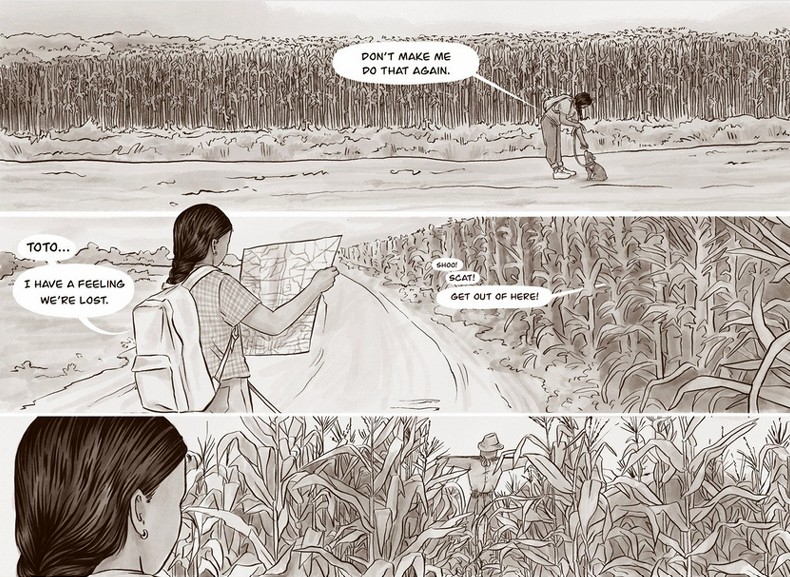
Angelo Thomas finds blue skies on the other end of the rainbow in ‘Somewhere…’
The filmmaker will join artist Rebecca Butterworth in celebrating the release of their new ‘Wizard of Oz’-inspired comic at Laughing Ogre from noon-2 p.m. on Saturday, March 14.
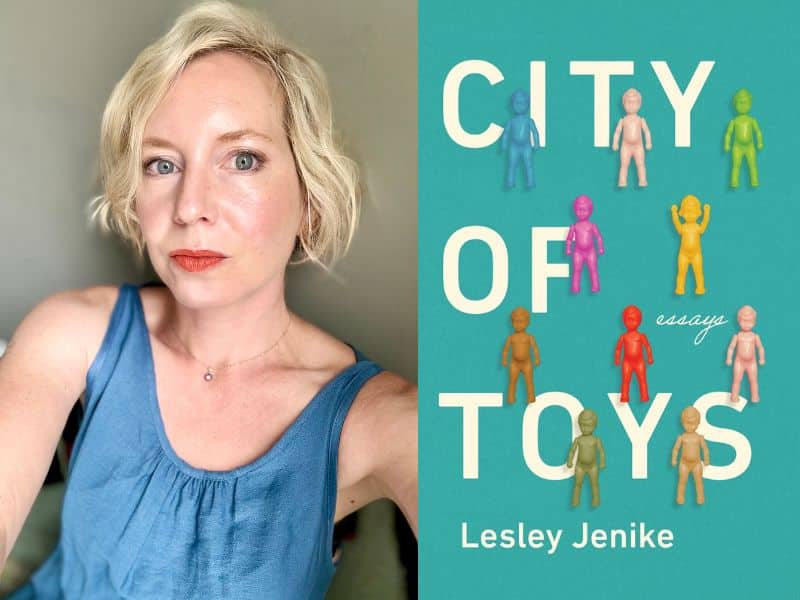
Lesley Jenike scrapes away the veneer with ‘City of Toys’
In her new essay collection, out today (Monday, March 9), the Columbus author said she opens up ‘in a way I don’t in my everyday life.’