
Scott Woods can still find the light in ‘Black Night Is Falling’
The poet, author and occasional Matter News contributor explores heavy topics in his latest collection, but even the darkest turns are infused with glimpses of joy.
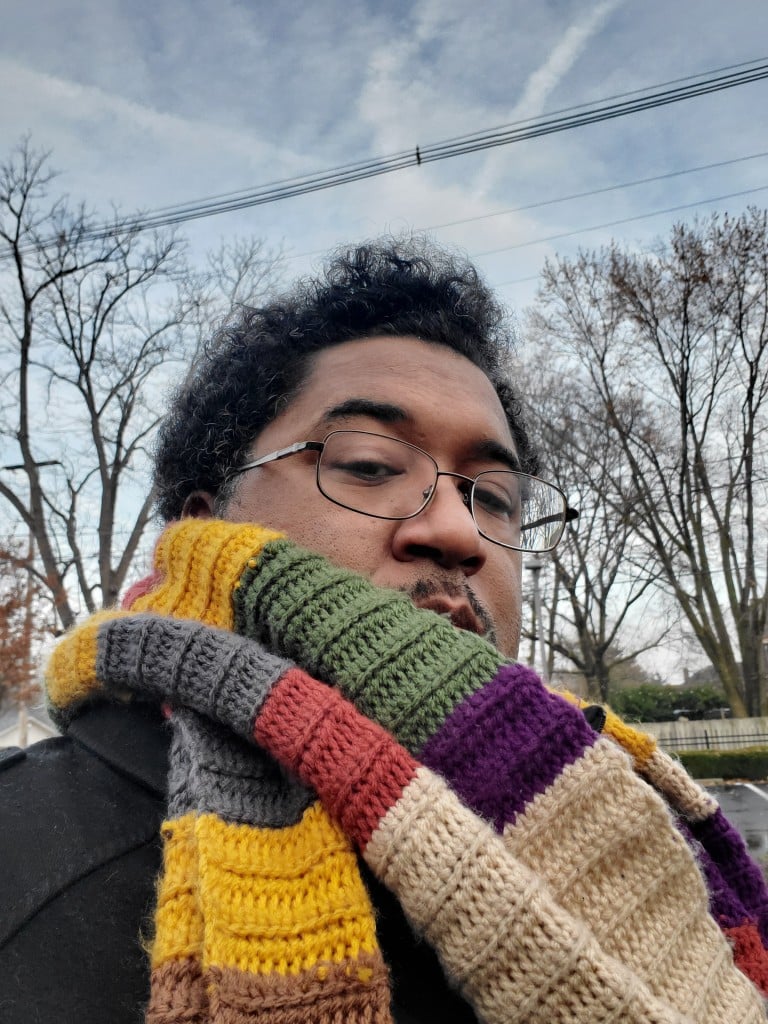
Black Night Is Falling, the sharply realized new collection of poetry from Scott Woods, arrives steeped in all manner of heavy subjects, exploring gentrification, the brutalities enacted on Black Americans, and the genetic predispositions that led Woods to accept he would one day succumb to clusters of cancerous cells.
And yet, Woods purposely bookended the collection in joy, opening with “The Ave,” a poem in which a small corner of East Side Columbus contains expansive universes, and ending with “The Cookout,” its verses filled with a spirit of communion so great it becomes physically expansive. “Full on the bounty of food like love and love like real love,” Woods writes, “we no longer fit ourselves.”
Both poems are culled from the “Black Odes,” a 2022 suite crafted by Woods, drummer/composer Mark Lomax and artist Richard Duarte Brown, and which Woods described as being centered on “living in a way in which joy is the only feeling.”
A donation powers the future of local, independent news in Columbus.
Support Matter News
“It’s very aspirational, and done with great intent from composition to performance to publication,” Woods said in mid-November at Streetlight Guild, the East Side arts space he owns and operates. “And with this book, if nothing else, I want people to enter it that way and leave it that way. And if they read straight through, that’s how it will happen. … Because, ultimately, Blackness is joy. I love being Black. I love it. The very existence of Black people is amazing. The things we had to endure to be here today, right? … And so, I take great pride in that, great joy. And I want my art and the experience of my art to always have some aspect of that.”
For Woods, this sense of joy is often the hardest to uncover, with the poet, author and occasional Matter News contributor describing himself as the type of person who instinctively focuses on the negatives. “If you show me something that looks great, I’m going to start looking for the cracks,” he said. “And if you show me something bad, I’m going to bust those cracks wide open.”
A number of the poems in Black Night Is Falling find Woods pulling against this urge, including “Franklin Park,” which is rooted in gentrification and doesn’t shy from those things that have been lost, but holds tight to the hope that some aspects of the place might be preserved. “I pray, at the curling smoke altar of every cookout/That it is not too late, that there is still/A duck feather dipped in gold,” Woods writes. “Where the sun sets on your hips and knolls.”
The poet drew a line between his naturally pessimistic nature and a particular strain of the blues that has always held on him a powerful sway. “Not that all blues is sad or bad, but that’s the kind of blues I gravitate toward,” Woods said of the music, which worms its way into the bones of many pieces collected here, and sometimes explicitly (“The Blues Is Your Reparations”). “The point of a poem is to get in and out of someone’s head and leave something behind. And the blues does that for me as a musical form, but also as a cultural concept. There’s this idea that you can make something out of nothing, this idea that if I give you one string, you can turn it into an instrument and say something powerful. And that’s me all day. That’s how most of the things I do happen.”
Throughout the collection, Columbus remains a constant presence, viewed not how politicians and civic groups want to sell the city to outsiders, but rather how it presents itself to those who have long existed here along the fringes, be it the unhoused (the hostile architecture of “A Symphony of Uncaring”), the struggling people populating neighborhoods ignored until developers turn an eye toward them (“In Search of a City”), or Black residents routinely subjected to the fears, prejudices and brutalities of those meant to protect and serve (“Nonsense & Regulation”).
In “Gallery Hop,” Woods explicitly addresses the spirit of misdirection in which the city frequently engages, his verses recalling the 2019 Gallery Hop during which firefighters used a large, white sheet to obscure police officers in the act of arresting people who had chained themselves to an art car, their movements secreted from other protestors and the parade of oblivious, wine-buzzed visitors to the Short North neighborhood.
Traditionally, many poets lean into confession, but these types of personal revelations are rare within Black Night Is Falling. So, while Woods includes a handful of mentions of his mother, along with one poem in which he recalls the myriad family members who have succumbed to cancer, he generally exists at a purposeful remove. “I’m a private guy, and my art still tends to be that way,” said Woods, who will celebrate the book release with a reading at Two Dollar Radio Headquarters at 8 p.m. on Friday, Nov. 15, joined by Ajanaé Dawkins and Sierra Leone. “I think a lot of that has to do with the fact that I want people to take the work on its own merits, not because I wrote it, but because the poem has something to say. And if I’m constantly inserting literal aspects of my life into the work, I always feel like it’s not going to reach people objectively.”
Regardless, poetry has so long been entwined with Woods’ being that it can be difficult to locate any air between the two. Seated inside of Streetlight, he acknowledged that virtually everything he has in this life – the building in which we talked included – he owes in some way to poetry. Indeed, the ways in which the form has snowballed for him into other realms – essay writing and arts curation included – is what has allowed him to step back from it, leaning into verse only in those moments in which it feels most needed.
“I take more intention now with the poems than I used to when I was starting out in open mics and then moving into poetry slams,” said Woods, who shared that it wouldn’t be unusual for him to write as many as a dozen poems a month in those early days, working with the awareness that he’d be able to read at least two from the stage on any given week. “And now I don’t walk around with poetry in my life that intensely. When I’m in it, I’m in it. But it’s easier to pull myself out, because the rest of my life doesn’t let poetry get comfortable anymore. … And I don’t miss that exchange. Maybe someday I’ll miss it, but as long as I am able to still knock a poem out at will, I do not.”
Author

Related Articles
Leslie Battle seeks, finds connection in ‘From Spark to Fire’
The Columbus poet will read from her forthcoming collection at Streetlight Guild on Sunday, Dec. 7, joining the likes of Karen Scott, Marquita Byars, Schyler Butler, Rachael Scott, and Miccau McClelland.
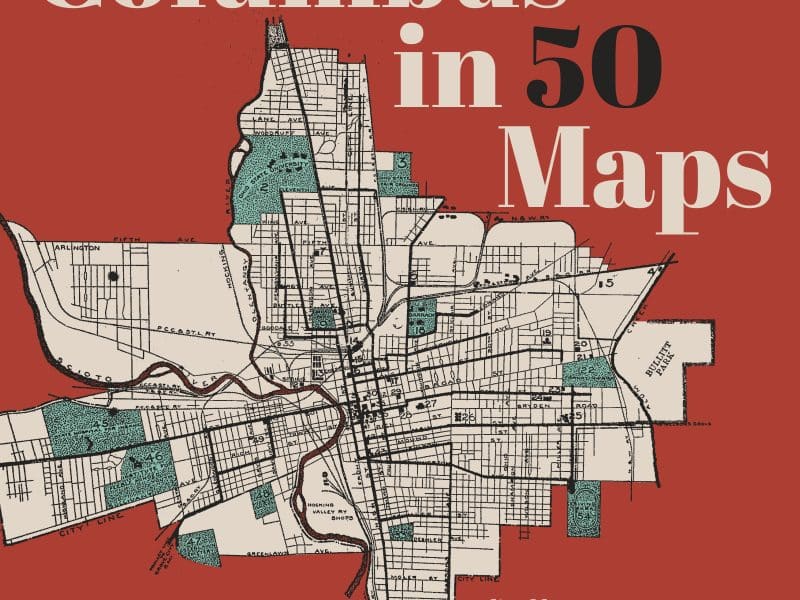
Brent Warren puts Columbus on the map
The longtime local reporter will celebrate the release of ‘Columbus in 50 Maps’ at Prologue Bookshop tonight (Tuesday, Dec. 2).
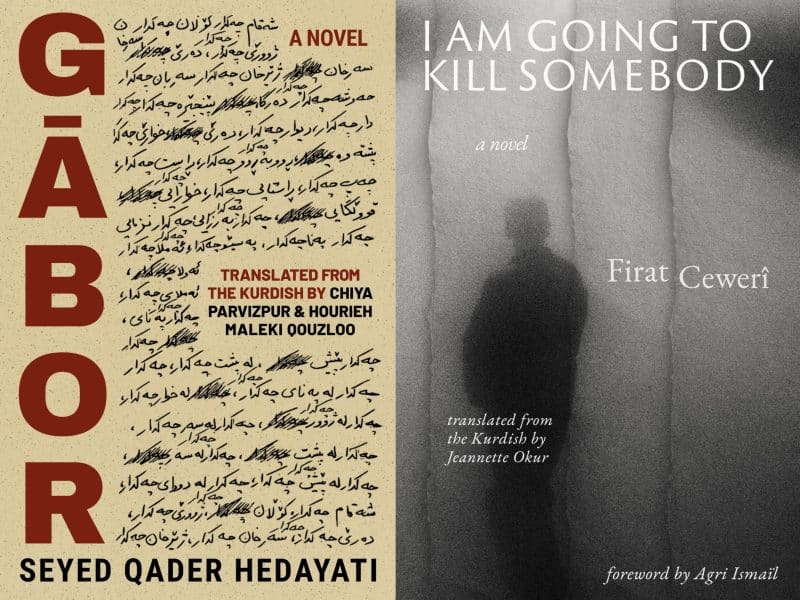
Aryan Omar Hassan finds his way home with Henar Press
The Columbus-based publisher, which is set to release its first two books next year, hopes to draw greater attention to the more experimental strains of Kurdish literature that have long been overlooked.