Two Dollar Radio turns 20
The Columbus-based indie publisher will celebrate its 20th anniversary with a bash at Two Dollar Radio Headquarters on Saturday, May 17.
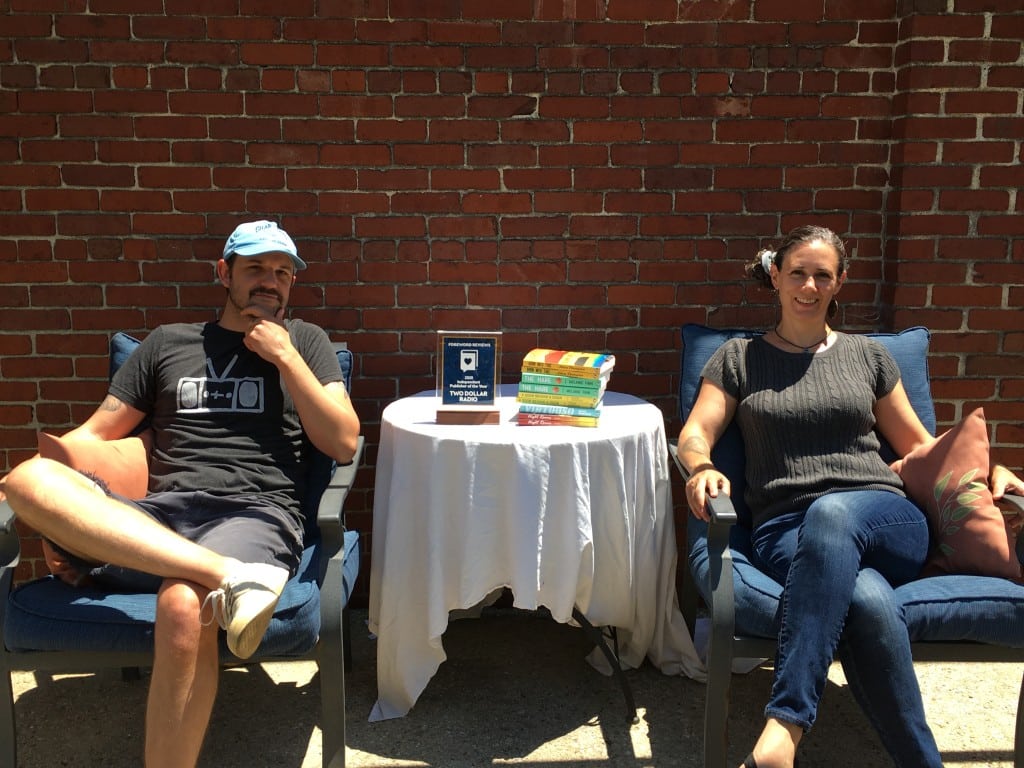
Eric Obenauf has existed at a strange crossroads in recent weeks, his attentions split between the future of Two Dollar Radio, the indie publisher he co-founded with his partner, Eliza Wood-Obenauf, and its two-decade-long past.
In April, Seven Stories Press publisher Dan Simon joined Obenauf to announce that the New York-based Seven Stories had acquired the Columbus indie, with Obenauf remaining in place as Two Dollar’s publisher and editorial director in a business deal that has reinvigorated him and stoked his excitement for the days and years to come. At the same time, Two Dollar Radio celebrates its 20th anniversary this week with a bash at Two Dollar Radio Headquarters on Saturday, May 17, and the milestone has led Obenauf to linger more on years past, reflecting on the unique challenges the couple faced in growing the publisher from a rough concept to an indie darling with a wide, deep catalog of inventive books.
Looking back, Obenauf recalled the first time Two Dollar Radio had one of its books reviewed by The New York Times and author Joshua Moore phoned him at Whit’s Frozen Custard in Granville, where Obenauf worked as a manager.
A donation powers the future of local, independent news in Columbus.
Support Matter News
“And I was hiding behind a custard machine and he read me the whole review,” said Obenauf, who will join Matter News and celebrated Columbus author Hanif Abdurraqib for a community conversation at Two Dollar HQ tonight (Thursday, May 15), during which he will unpack similarly surreal experiences from the indie’s two-decade history, including the time it was nearly sued by actor Shia LaBeouf and the occasion when Brazilian government officials rebuked one of its books. “We’ve had a pretty ornery past, which is fun, and I’m really proud of all our success. But what I’m most proud of is that we never had to crimp our original goals and the mission that we set out with by publishing horror-romantasy novels or something like that. We’ve always been able to publish edgy literature and topical nonfiction essay collections that really speak to the moment without getting down into the muck and the mire of pandering to trends.”
“The work itself is always risk-taking, interesting, different, where I knew I was going to be exposed to something that didn’t color in between the lines,” said author Nora Lange, who noted that the publisher hasn’t lost touch with its mom-and-pop roots, recalling how Obenauf would send her notes on her debut novel, Us Fools, while on site at his kid’s soccer practice. “We’re all people, in the end, and we’re all juggling. … But they’re really smart and they push themselves fucking hard. They’re hard workers who are dedicated and just love books. … They’re like The Little Engine that Could. I think they’re mighty.”
Obenauf first hit on the idea of launching an indie publisher while living and bartending in San Diego following college graduation, sparked by the realization that he was paying more attention to the publisher logos on the book spines more than authors or even specific titles when he visited local bookstores. This coincided with what Obenauf termed “a fortuitous time” for indie publishers, with the larger publishing houses still in the midst of a decades-long consolidation effort that opened the door for upstarts willing to take chances.
“When that [consolidation] happened, you ended up with these big corporations that were less willing to take risks on literature. And it also elbowed out some of what they would refer to as ‘mid-list authors,’ those fantastic writers who can still pop and sell 5,000 to 10,000 copies of a book, which wasn’t as appealing to these big publishers. They’re trying for home runs. They want to win awards each year and sell 100,000 [to] 200,000 copies of each book,” said Obenauf, who in past conversations recalled tabling at massive conventions in the early Two Dollar Radio days and finding themselves positioned a couple of tables away from glossy Amazon and Random House displays with their piles of appealingly DIY, zine-style catalogs. “And that created an environment that was really fortuitous for us and other presses of our size, where we could essentially come out of nowhere with zero publishing experience and make an impact from the get-go.”
One early opportunity presented itself when Obenauf crossed paths with the author Rudolph Wurlitzer in a still-surreal scene that unfolded at Philip Glass’ townhouse and in which the two engaged in conversation while Glass played piano in a room above. Drawn in by Obenauf’s youth and idealism, Wurlitzer eventually struck a deal with Two Dollar to publish The Drop Edge of Yonder – his first novel since Slow Fade released nearly 25 years prior. Owing to this extended absence, Obenauf said Wurlitzer’s reputation had tapered off slightly with the sales reps at the major publishing houses, which allowed the upstart to swoop in.
“At the time we signed his book, we didn’t even have distribution,” Obenauf said, and laughed. “The day after I met with him, we got a letter saying we were accepted for distribution by this company. … And then we got even better distribution six months later. And so, we just kept moving up the ladder.”
Amid this ascent, Two Dollar has consistently hit upon acclaimed books from a diversity of authors, including early releases from Abdurraqib (They Can’t Kill Us Until They Kill Us, which remains among the best-selling books in the publisher’s catalog), Scott McClanahan (Crapalachia: A Biography of Place), and Kalani Pickhart (I Will Die in a Foreign Land), among countless others.
Obenauf said this steadiness has helped to buoy the publisher over time, enabling it to take a measured approach toward growth. He also benefited from seeing what can happen when those odd booms hit, recalling his early friendship with the publishers who ran the Bay Area imprint McAdam/Cage, which first released The Time Traveler’s Wife and then became a casualty of the book’s runaway success. “They tried to grow too aggressively and within a couple of years they were out of business,” Obenauf said. “And seeing that starting out, it kept us very honest and practical, and it kept our heads from getting too big when we did have those successes, which is good, you know?”
Considering Obenauf’s low-key demeanor, it’s a challenge to imagine him falling prey to ego. Author Kevin Maloney, who released The Red Headed Pilgrim with Two Dollar Radio in 2023, said it was this unassuming nature that first drew him to the publisher when the two crossed paths randomly at the AWP Conference and Book Fair some years back. “His personality was so different from any other publisher there,” Maloney said. “He just had this surfer, skater energy that really resonated with me coming from Oregon.”
Maloney initially turned in his manuscript for The Red Headed Pilgrim via Two Dollar Radio’s open submissions process – a rarity in an era when most known publishers solicit works direct from authors. “We’re one of the few publishers our size to still accept unsolicited submissions, and some of our best and best-selling books have come through that pile,” said Obenauf, pointing to books such as I Will Die in a Foreign Land, The Deeper the Water the Uglier the Fish, and the forthcoming Shelter Is Necessary for Existence, due in September 2026, which he described as a dark social satire in line with the films of director Bong Joon Ho (“Parasite”; “Mickey 17”). “It might take a little more elbow grease, but it’s thrilling to work on those kinds of books with those authors.”
Indeed, it’s this kind of passion Obenauf believes he’ll be able to reconnect with in the wake of the Seven Stories deal, which he said will free him from certain business dealings and allow him to focus more intently on his work with authors.
“Oftentimes, selling books and being in the book industry can feel like pushing water uphill with a broom. And I think for us, the day-to-day stressors of running a publishing company and a storefront, it was too much, and it gets to a point where you’re chasing money, and then things start to become less fun,” said Obenauf, who looks forward to fewer calls negotiating distribution percentages and pressing to learn why a particular book isn’t selling better in a certain market. “It’s nice now to feel like a part of a team … where you’re all working together to make sure a book succeeds as opposed to everything falling on our shoulders. I just didn’t want to do that anymore, and I’m excited to spend more time working on the actual material.”
Author

Related Articles
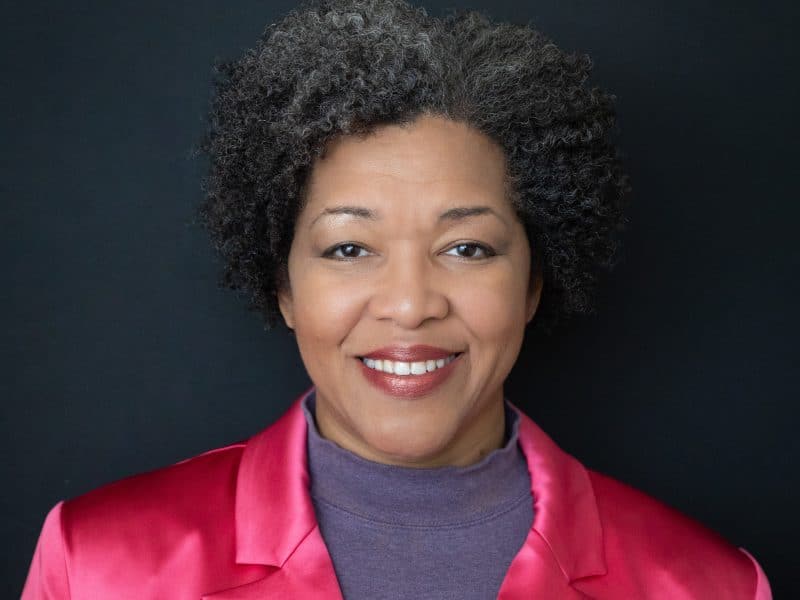
Leslie Battle seeks, finds connection in ‘From Spark to Fire’
The Columbus poet will read from her forthcoming collection at Streetlight Guild on Sunday, Dec. 7, joining the likes of Karen Scott, Marquita Byars, Schyler Butler, Rachael Scott, and Miccau McClelland.
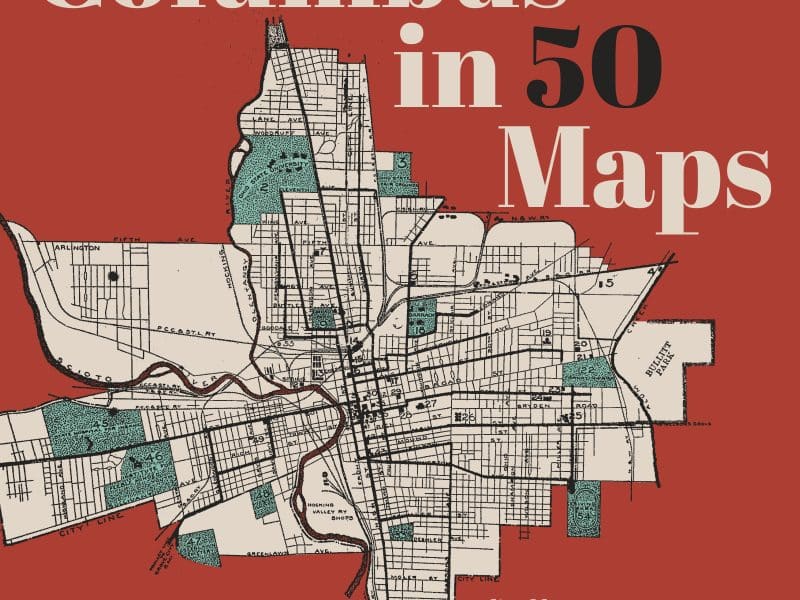
Brent Warren puts Columbus on the map
The longtime local reporter will celebrate the release of ‘Columbus in 50 Maps’ at Prologue Bookshop tonight (Tuesday, Dec. 2).
Aryan Omar Hassan finds his way home with Henar Press
The Columbus-based publisher, which is set to release its first two books next year, hopes to draw greater attention to the more experimental strains of Kurdish literature that have long been overlooked.