
Keith LaMar seeks release in Freedom First concerts
The Cleveland-born author, musician, and poet will phone in from death row at the Ohio Correctional Penitentiary during an improvisational jazz concert at Antioch College on Sunday, Oct. 26.
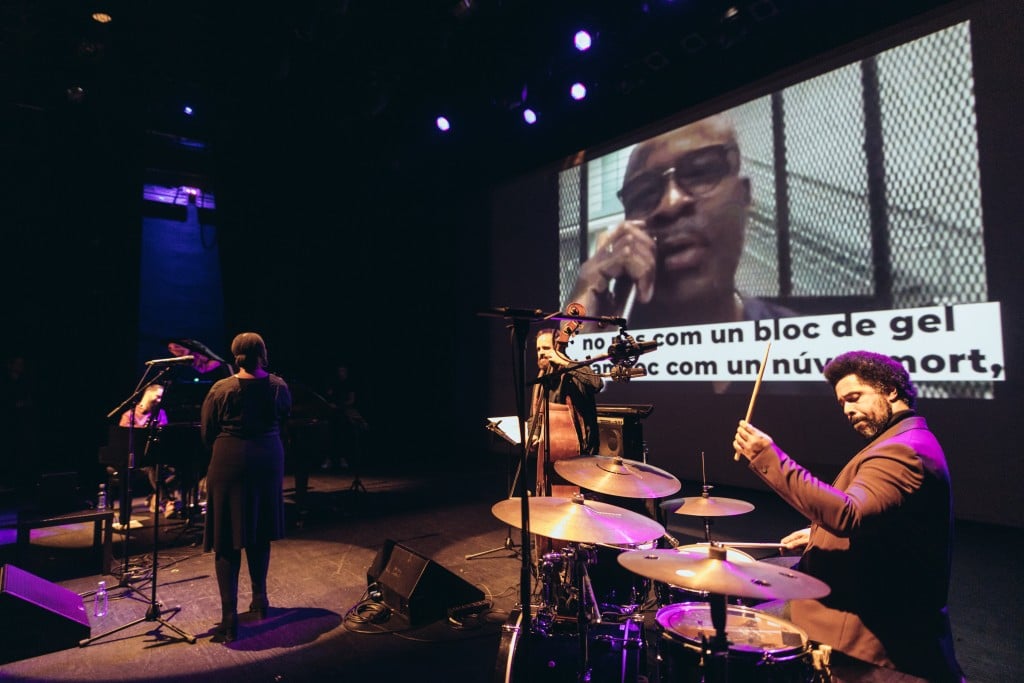
Toward the end of the performance that yielded the album Live from Death Row, recorded at a concert in Brooklyn in 2023 and released in May of this year, the phone line connecting Keith LaMar from his cell on death row to the musicians onstage abruptly cut out.
“And I’m just a listener, but everybody in the band, without having any plan, all just started playing with this incredible amount of energy, anger, rage, grief, love – all of it,” said Amy Gordiejew, who was in the room at ShapeShifter Lab for the live recording and joined LaMar and musician Albert Marquès for a late October Zoom interview. “And you hear it on the album, too. It’s the most incredible finale. … And it felt, to me, like [the musicians] were saying, ‘If we don’t come together and fight, he’s really going to be gone.’”
Of course, LaMar couldn’t hear any of this from his cell in the Ohio State Penitentiary (OSP) in Youngstown, where he’s been incarcerated on death row for more than 30 years, almost all of it in solitary confinement. LaMar is scheduled to be executed in January 2027 after being convicted in the 1993 killing of five incarcerated men during what became known as the Lucasville Prison uprising, though he has maintained from day one that he was wrongfully convicted. “I refused to take a plea bargain at 23 years old and stood on my innocence,” he said.
A donation powers the future of local, independent news in Columbus.
Support Matter News
Before the call to Brooklyn cut off, however, LaMar found himself at least spiritually onstage with an ensemble that included the likes of alto saxophonist Caroline Davis and drummer Zack O’Farrill, reciting poetry he had written as the musicians improvised a jazz score. But as the line went dead and the players locked into an extended musical coda, LaMar again found himself alone in his cell, seated on a mattress he had wedged between the wall and the toilet, where he generally sits for performances because it’s the spot that offers the best phone reception.
“And I couldn’t celebrate with them. I couldn’t join in the euphoria at the end of the concert,” said LaMar, who will phone in from OSP for a Freedom First concert at Antioch College at on Sunday, Oct. 26, where he’ll read poetry accompanied by Marquès on piano, drummer O’Farrill, bassist Devon Gates, and trombonist Dr. N. Michael. (Following the concert, the Ohio Innocence Project will lead a conversation about LaMar’s case and death penalty legislation in Ohio.) “And so, I picked up my mattress and walked back to my bunk. And I thought that was fitting, you know, because this isn’t a celebration. It’s my life. And I don’t think it’s time for me to celebrate.”
Marquès, a Barcelona-born, New York-based musician, composer, and public-school teacher, said he has known LaMar for six years, the two initially striking up a correspondence that has flowered into an artistic relationship.
“And when he put forth the idea that we do an album together, I thought because of the logistics and the complexities involved in undertaking such a project that it wouldn’t be possible,” said LaMar, whose love for jazz took root in prison, with John Coltrane’s A Love Supreme serving as a continual source of escape and inspiration. “The way I write, you know, I dropped out of school in tenth grade, and I don’t really have a formal structure to express my thoughts. So, the improvisation fits the things that I’m talking about in my writing and what I’m doing in my day-to-day life, second to second, to survive. … The difference between formulaic music and improvisation is the feeling. I believe inside of my blood, inside of my DNA, that through my music my ancestors have the opportunity to speak. This is not my first time in captivity, not my first time struggling against brutality, oppression.”
When LaMar began performing in the Freedom First concerts alongside Marquès and others, he hesitated to call himself a musician – a label he still found challenging to adopt following the release of the full-length album Freedom First, from 2022. Even now, he calls himself an artist first, sharing that his muse can surface in many forms, from painting to writing essays and long-form non-fiction. (LaMar’s book, Condemned: The Whole Story, released in 2013, is an autobiographical account of his life in incarceration.)
Marquès, however, pushes back on this idea, noting the many challenges required of LaMar from the moment he picks up a phone and connects across sometimes-great distance with an improvisational jazz band, from the technical hurdles (a natural one- to two-second delay, dropped calls, etc.) to the more musical elements associated with his spoken-word approach.
“When you see him live, he’s able to interact at this level rhythmically through the phone, with what rappers would call flow. Now imagine what he will be able to do when he’s free,” said Marquès, who allowed that the project has also helped to draw out a different focus in him as a player. “When you spend every day during your entire life practicing your instrument, it is easy to forget what the music is about, or it becomes a very athletic experience, almost like going to the gym. And what Keith does is remind us [of] the direction, what are we playing for, why we started playing in the first place. And that makes any musician sound better, because when you play for the greater good, it sounds more like a band, more like a collective effort.”
“It’s really complicated what we’re doing, and I can’t really explain it, because there is a couple second lapse [on the call], but when I listen back, I don’t hear the lapse. And that’s because the musicians are so razor sharp in terms of their instincts,” LaMar said. “Sometimes in mid-stream, the call might drop. And then when I call back, we just continue. And that’s the beauty of this music. It’s life, you know? It’s the good, the bad, the things that catch you off-guard. … And so, [when we perform], I bring everything I am, everything that I’ve been doing, everything that I’ve conquered. It’s my last will and testament. No matter if I’m able to survive what these people intend for me, this is my legacy. … And it took me a while, and you can hear it on the first CD that I didn’t really feel like I belonged alongside these consummate musicians. But now, it’s like, damn, this wasn’t a fluke. And it’s really going to stand as a record of my life, and it’s something I take very, very seriously.”
In many ways, it’s also become even bigger than his own life, with LaMar sharing that his story has evolved and expanded in the decades he has been telling it to anyone willing to listen with an open heart.
“When I came to death row, I met this older guy named Snoop, and he helped me to understand this is a struggle [against] oppression and grief that originated in chattel slavery, of which my ancestors were victims,” LaMar said. “So, what I’m talking about now, it’s obviously larger than me. And that’s how I look at it. And I don’t think it’s a foregone conclusion I walk out of here. That’s the hope. But the essence of life is the journey. Not the destination, but the getting there. With all the stuff we’re doing, if I’m somehow unable to prevail, it doesn’t mean I’ve failed. We are here on the planet to achieve ourselves, and not a lot of us are able to do that.”
Author

Related Articles
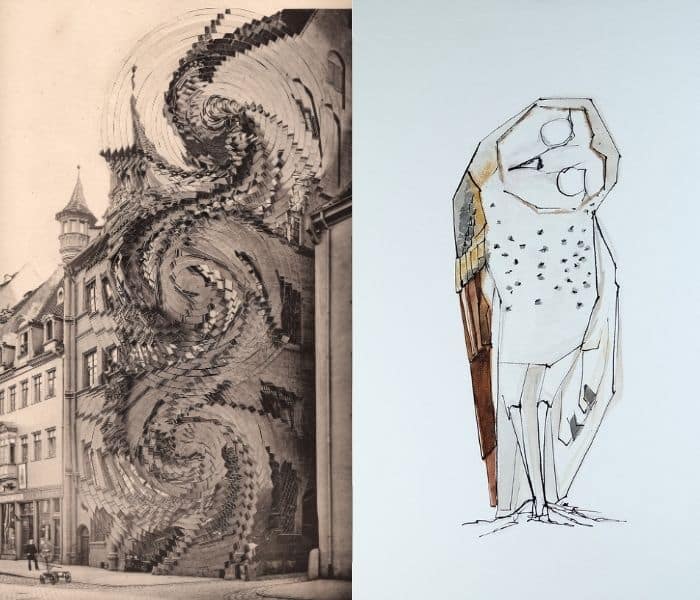
Emily Morgan and Hannah Maltry rely on instinct for ‘We Did It Wrong’
The two artists will host an opening reception for their exhibition at High Road Gallery & Studios from 6-8 p.m. on Saturday, March 28.

Chaos Contemporary Craft and Rivet Gallery venture together into the past
An exhibit opening in Chaos’ new Gallery D on Sunday, Nov. 16, extends from a conversation the two gallery founders had about revisiting artists who once exhibited in long-gone Short North spaces.
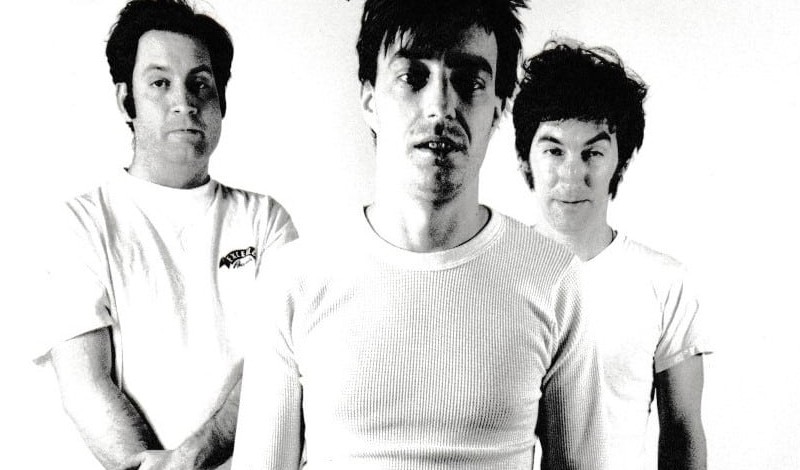
Thirty years on, Cheater Slicks revisit the tumultuous making of ‘Don’t Like You’
The influential garage-punk veterans will celebrate a trio of archival releases in concert at Cafe Bourbon Street on Saturday, Sept. 6.