
Local Politics: ICE at Columbus courthouses
Beyond the obvious impact on the administration of legal proceedings and the rights of court attendees, the policies currently in place at Franklin County Municipal Courthouse send a larger, more damning message about our city.
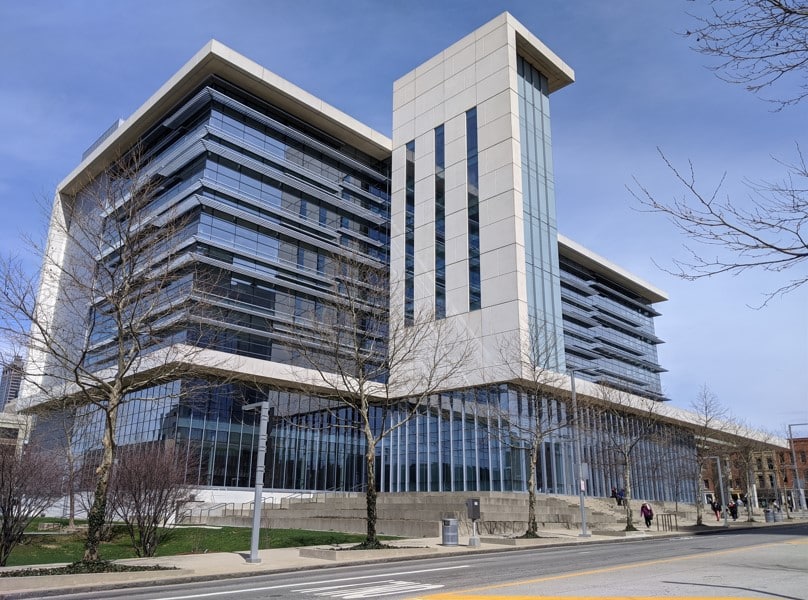
The Franklin County Court of Common Pleas issued new policies at the beginning of March regarding immigration enforcement and arrests within the courthouse premises.
One of the policies states that people cannot be arrested on courthouse grounds without a criminal warrant. Since many immigration warrants are administrative, this policy should prevent law enforcement from acting on site. The other policy prohibits criminal arrests within a judge’s courtroom unless the judge has given the agency written permission. The rules also instruct court personnel not to ask a person’s immigration status or to disclose their personal information to immigration officials, with limited exceptions.
The new policies were implemented due to an increase in immigration enforcement occurring at the Common Pleas courthouse. However, just across the street from the Common Pleas Court, the Franklin County Municipal Courthouse has not implemented any new policies, despite experiencing a similar increase.
A donation powers the future of local, independent news in Columbus.
Support Matter News
The Municipal Court issued a statement on March 3 regarding its policies: “The Court has a long-standing practice of allowing law enforcement to perform their duties as required by law within the courthouse, as long as they are performed consistent with the Court’s expectations. Two primary concerns are protecting the security and safety of all visitors to the courthouse and ensuring the integrity of court proceedings without disruption. These continue to be the Court’s expectations today.”
Continuing on, the Court added that it is “respecting” presidential directives: “The Court remains committed to the fair and impartial administration of justice for all individuals appearing before it while recognizing and respecting the legitimate duties of federal law enforcement agencies operating under applicable federal law and presidential directives.”
In other words, the Court is inviting ICE to show up and interfere with the people who need to appear in court. Some of those people will have warrants issued for their arrest if they fail to attend, which puts Franklin County residents in the position of having to decide between attending Court and risking detention, and worse, by ICE, or staying home and receiving the attendant penalties from the Court. (I am intentionally not limiting that risk to people of any particular immigration status, race, or ethnicity, because ICE’s recent enforcement targets have included U.S. citizens, green card holders, U visa holders, and valid tourist visa holders.)
Unsurprisingly, on Thursday, March 6, ICE was present at the Municipal Courthouse and detained at least one person. A bystander filmed a short video taken directly in front of the High Street entrance to the Municipal Court that shows three white men, all wearing jeans and black jackets or hoodies, leading away a man in handcuffs.
It’s worth noting that claiming “applicable federal law and presidential directives” as the reason for allowing ICE in the Municipal Court could be a reasonable position if the laws and directives were legitimate, non-discriminatory, and actually being applied as written. Those are big ifs! And there is plenty of evidence that this isn’t currently the case. It is also worth noting that the law has historically been used as a tool to legitimize loss of citizenship and to advance segregation and genocide, so the law shouldn’t be the only foundation for a policy.
It is extremely disappointing to see the Municipal Court allow ICE on its premises, particularly when you consider that 12 of the 15 judges who now sit on the bench are Democrats. Beyond the obvious impact on the administration of legal proceedings and the rights of court attendees, this policy sends a damning message about our city. In a state and nation actively criminalizing peoples’ identities, Columbus has worked hard to set itself apart as a welcoming place. But how can we continue to hold ourselves up as an inclusive community when not everyone can go to court freely to enforce their rights?
Columbus should be different. As the country and state become more exclusionary, we have to continue to welcome everyone. And we should demand that our institutions set policies based not just on the law, but on our principles.
Related Articles
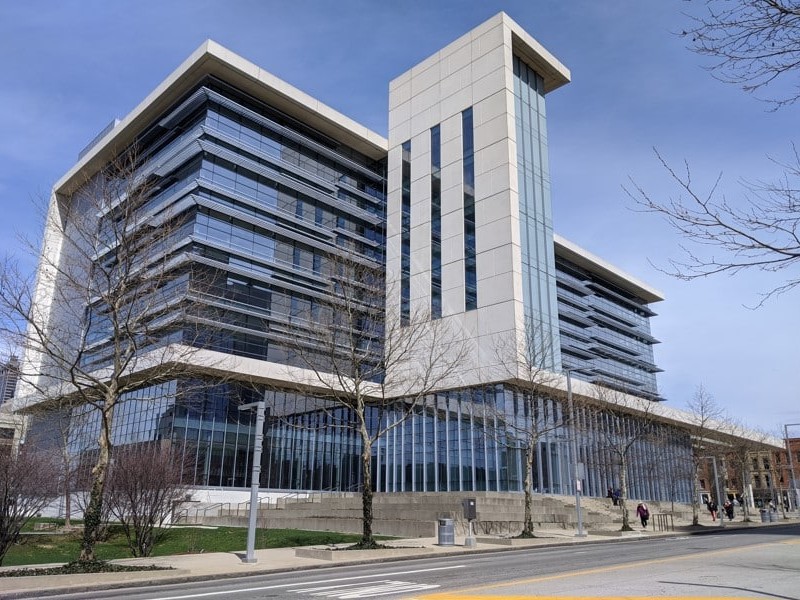
Opinion: Get ICE out of the Franklin County Municipal Courthouse
Allowing federal agents to make arrests at the courthouse without judicial warrants or a court order is an affront to justice.
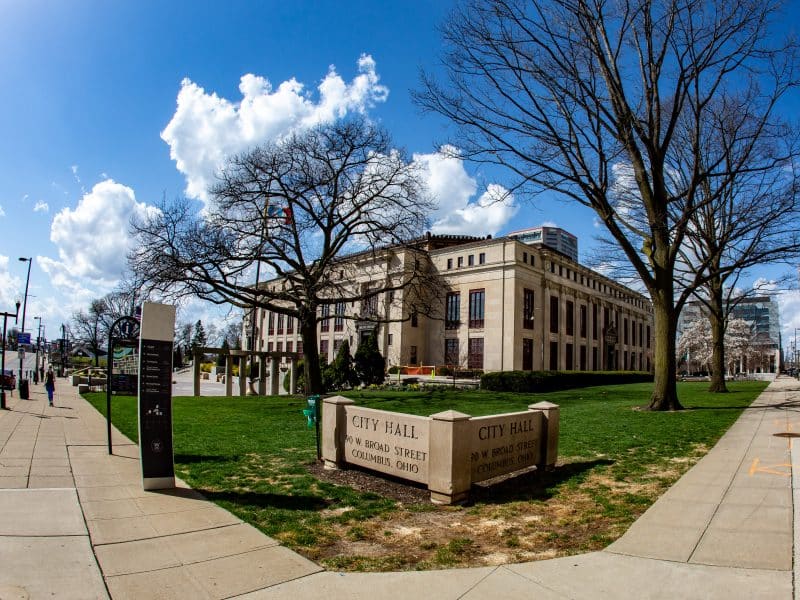
Local Politics: Show me the (weed) money
Under a new state law, Columbus will get payouts from a cannabis sales tax fund. We’ve been owed that money for two years.

There’s nothing passive about hope
They expect you to give up when they ‘flood the zone,’ marshalling chaos and outrage to divert your gaze. In the face of despair, we must continue to rise.