
‘You don’t have to try and con us’: Area Commission meeting reveals tensions underpinning Columbus’ growing housing crisis
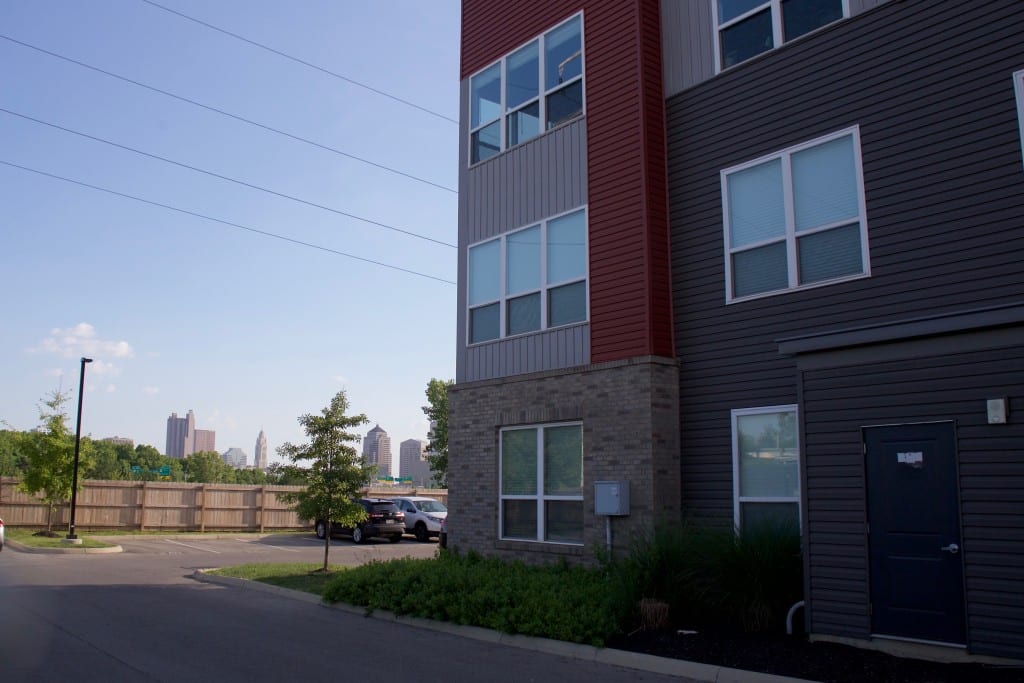
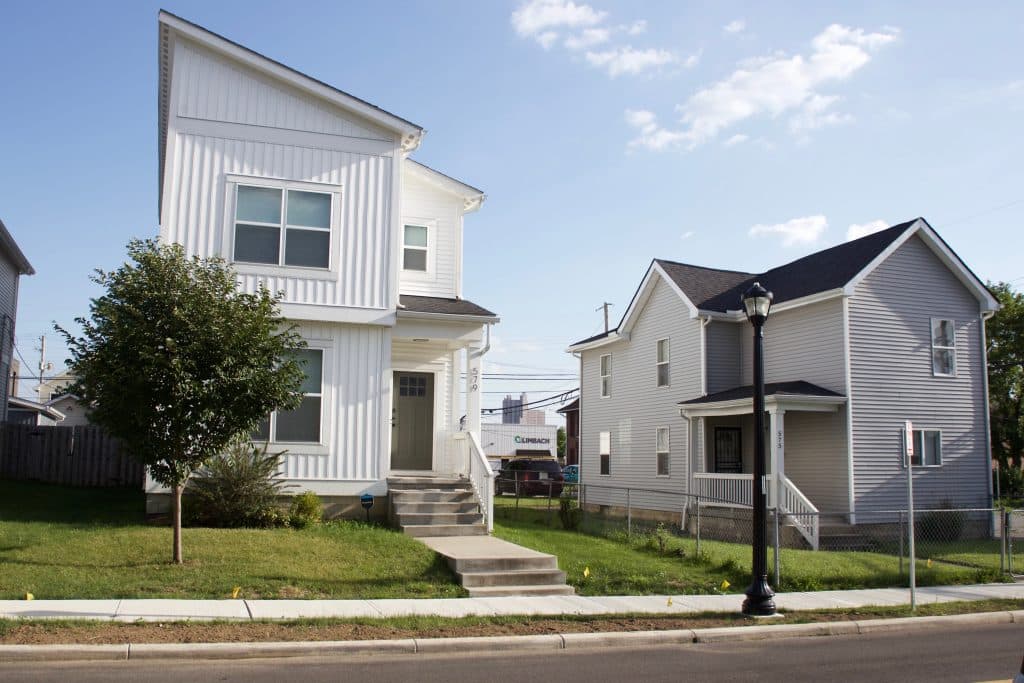
Owing to its affordable homes and proximity to downtown, Milo-Grogan has become the latest local frontier for developers. On Second Avenue, modest houses that cost under $200k sit next to sleek new half-million-dollar builds, creating a tension that bubbled over in a heated public meeting earlier this month.
“You can’t do that. I’m not gonna let you do that,” Charles Thompkins, chair of the Milo-Grogan Area Commission, said as he cut off a presentation about a proposed housing variance during a public meeting on June 10, later telling developer Brad Howe, “You don’t have to try and con us.”
Up until that point, the meeting had featured a rather dry, bureaucratic explanation of an eight-page packet with digital renderings and measurements that laid out Howe’s plan to convert two vacant lots into six new “farmhouse”-style homes. Tensions exploded, however, when David Hodge, the attorney for the developer, defended the use of tax abatements – a flashpoint for Columbus residents, a number of whom have come to view the practice with skepticism – in a project featuring single-family homes with high starting price points.
Howe then took over from his attorney, assuring the room that these new homes would be smaller and more affordable than the typical $500,000 builds going up nearby. “That’s the goal of this, and I don’t want to lose sight of what our goal is,” he said, acknowledging the proposed homes would start at prices north of $400,000.
A donation powers the future of local, independent news in Columbus.
Support Matter News
Milo-Grogan is a small neighborhood northeast of downtown Columbus boxed in on all sides by train tracks and split by Interstate 71. Once an industrial hub, it still bears the marks of deindustrialization, white flight, and disruptive highway projects. Nonetheless, it remains a tight-knit community where everyone knows their neighbors, and everyone has an opinion about the wave of expensive housing spreading across the area.
Like many cities across the country, Columbus is facing a housing shortage. There aren’t enough homes to host the 700,000 people projected to move to central Ohio in the next 25 years. A higher demand on a limited housing supply causes prices to increase. As a counter to this, the city has passed a number of policies to help spur the development of new housing in urban areas. One of these pieces of legislation is the Community Reinvestment Area (CRA) policy, which aims to boost the housing supply to meet this growing population. But in neighborhoods such as Milo-Grogan, the new incentive can increase the development of houses that cost far more than local residents can afford, in essence subsidizing gentrification.
Owing to its affordable homes and proximity to downtown, Milo-Grogan has become the latest local frontier for developers. On Second Avenue, modest homes that cost under $200k sit next to sleek new half-million-dollar builds such as 593 E Second Ave., which has a 15-year tax abatement worth $252k – an incentive worth more than the average home in the neighborhood ($158,514 at the time of writing, according to Zillow).
Melissa Thompkins, who is married to Charles Thompkins and serves as vice chair of the Milo-Grogan Area Commission, explained how her family has watched the neighborhood change over the four generations it has called Milo-Grogan home. She and other commissioners say flooding such a small community with high-priced, tax-abated homes directly raises costs for everyone else – especially those living on fixed incomes.
These growing tensions boiled over in exchanges between the developer and community members in early June, particularly when Howe claimed that squeezing more homes into lots would actually increase the taxes going to school. (Under the CRA policy, the six properties would be exempt from paying property taxes for 15 years.)
“You’re talking out of both sides of your mouth,” said Samantha Baker, a Milo-Grogan resident and a member of the housing advocacy group Affordable Housing Columbus.
“We could put in four per lot if we wanted to,” Howe snapped. “We could put in more and no one can stop us.”
“Today you’re here because you need those changes and those variances,” Charles Thompkins said in reply to Howe.
As the room gradually descended into arguing, Howe threatened to bypass the Area Commission altogether. “As of right now, we can go to City Council and get this approved,” he said.
In the end, the commission voted to reject the variances requested by the developer. And in a phone interview a little over a week after the meeting, Howe again expressed his desire to sidestep the neighborhood group in bringing his development to Milo-Grogan.
“The commissions are supposed to be an extension of the politicians,” he said, citing the ways he has worked with other commissions in the past. “Now we’re basically looking to bypass the commission to get the housing approved because the Milo-Grogan Area Commission as currently constituted is harmful to the city of Columbus’ housing cause in many, many ways.”
Howe is currently scheduled to take his proposal directly to Columbus’ Board of Zoning Adjustment at 4:30 p.m. on Tuesday, June 24. The Milo-Grogan Area Commission has asked for the project to be tabled until July.
Melissa Thompkins said the commission’s goal for Milo-Grogan is to preserve a variety of affordable and market-rate housing. “We need a good mixture of housing price points to grow a stable community,” she said via email, highlighting the community’s small geographic size as a unique challenge in considering potential projects.
There is a growing body of research that argues both sides of the coin in building new housing. Some studies claim that growing housing stock by a significant percentage lowers nearby housing costs by a small percentage. However, the U.S. Department of Housing and Urban Development has observed a clear demographic shift in urban populations when pricier housing is built in neighborhoods with lower housing costs.
According to the DOH study, more expensive housing results in the displacement of residents who can’t afford increasing rents or property taxes, meaning historically Black, working-class neighborhoods are becoming more expensive and racially more white. This trend can be seen in neighborhoods such as Milo-Grogan, accelerated as the city subsidizes housing far out of the price range for the community in which it’s built.
Bee Tolber from the North Central Area Commission was in attendance at the June 10 meeting and said neighborhoods should maintain a degree of control over proposed developments. “We know what we need in our neighborhoods,” she said. “We’re not saying no to all [developers].”
While there is a long, defined practice of NIMBYism (Not in My Backyard), in which neighborhood groups across the U.S. shoot down would-be housing projects under the guise of protecting the character of a place, the Milo-Grogan Area Commission has shown itself to be open to development. A block over from the half-million-dollar homes on Second Avenue stands The Rise apartment complex, with 192 units built in 2020. The Area Commission worked with the developers to plan the project even though its owners received a 15-year tax abatement worth $15.5 million.
“We worked together to address residents’ concerns, they tweaked a few things and together we came up with development that still aligned with their proposal but also something that neighbors supported,” Melissa Thompkins said. “There were residents from Milo who moved in after they were built, preferring to downsize while staying in the community.”
Melissa Thompkins said it was unfortunate that the June 10 meeting was cut short because the commission wanted to discuss the project further. While residents at commission meetings voice their concerns openly, the commission’s goal is to approve developments that satisfy both the community and the developer. “Really we wanted to talk about it,” she said. “It was disappointing.”
After the developer and his attorney left the meeting, Charles Thompkins told the room that this wasn’t the first time he’d seen Howe cause a stir at an Area Commission meeting, but that he, as one developer, wasn’t the problem.
“The thing about it is I try to be as respectful as I can, but I’m not going to sit here and let a guy act like we don’t know what’s going on,” he said. “He has no idea about the people [that are] in the room. He has no idea about the knowledge you have.”
Related Articles

The Coming Out Party for the Country’s Largest Gas Power Plant (Serving the Largest Data Center) Was Surprisingly Quiet
A developer hosted the first open house for a gigantic Ohio project, with no signs of organized resistance.

On Development: The cloud is still made of concrete
The ongoing data center construction boom has our columnist asking himself some questions.
Opinion: To meet climate goals, Columbus leaders must address data centers
With the City Council presenting its draft proposal for municipal data center policy this week, residents must seize the moment to demand meaningful safeguards that will actually minimize the climate impacts of data centers.