
Be bold. Be brave.: Lessons from a visit to the Resistance Museum
The catalog of harm keeps growing, with new pages added every day. But we are not afraid.
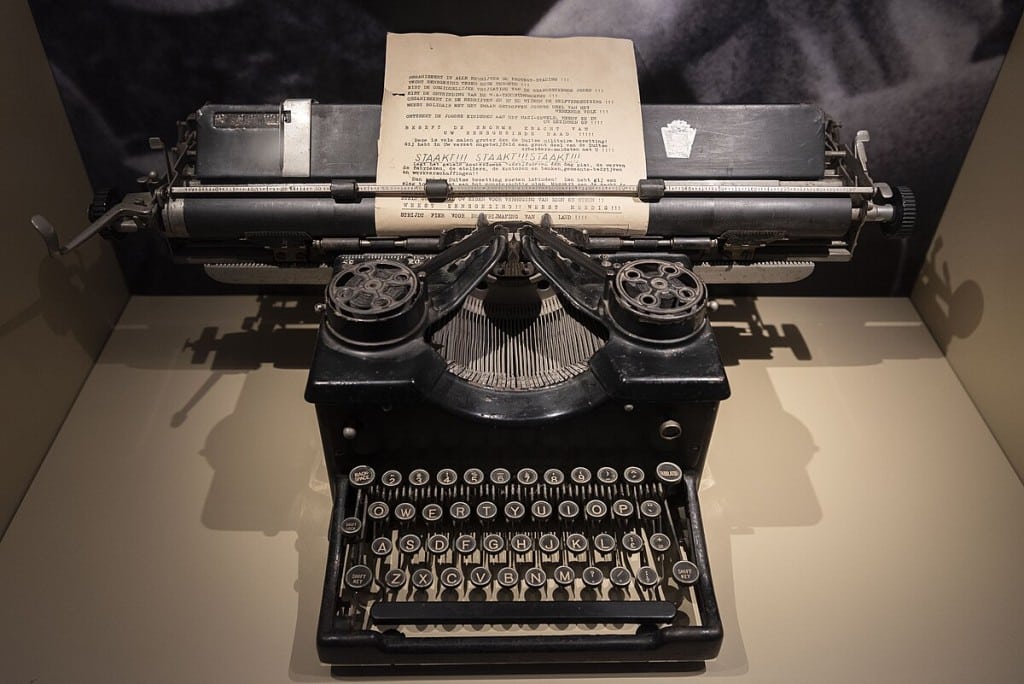
In late February 1941, more than 400 young Jewish men were rounded up and taken away in Amsterdam.
A meeting was organized, and a strike was called to protest the arrests. A young activist named Coba Veltman left the meeting and got to work on her typewriter, creating a pamphlet to help spread word of the action. Veltman’s pamphlet reads: “Strike! Strike! Strike! Demand the immediate release of the arrested Jews” and “Be brave!”
Veltman and others took to the streets and distributed the pamphlet. Days later, there was a general strike, and the trams and ferries didn’t run in Amsterdam. It was one of the first public protests against the Nazis in occupied Europe. Veltman was arrested and sentenced to six months in prison. She was later moved to the Ravensbruck concentration camp. She survived and reunited with her family after liberation.
A donation powers the future of local, independent news in Columbus.
Support Matter News
I learned about Veltman last summer during a visit to the Verzetsmuseum, or the Dutch Resistance Museum in Amsterdam, which explores the Nazi occupation of the Netherlands between May 1940 and May 1945. It tells the stories of activists such as Veltman, as well as ordinary people who saw what was happening to their neighbors and to their country and chose to act.
The museum is honest about what happened in the Netherlands. There were Nazis. There were collaborators. And there were resistors. People have choices, and when pushed into a corner, their true nature will emerge.
What struck me most, were the actions of journalists who at great personal risk chose to speak, to document, to inform. Johannes Jesse began printing the resistance paper, Het Parool, in 1944, distributing some 20,000 copies a week. The broadcasters for Radio Orange would broadcast news from the exiled Dutch government and songs sung by Jetty Pearl that mocked German occupiers. And then there was Anne Frank, who wrote in her diary that she wanted to be a journalist. And yet, she already was one – one of that war’s greatest, documenting the intimate details of a family under siege.
These journalists were brave beyond measure.
Years ago, my niece learned a mantra at Bible School. Whenever you’re feeling scared or nervous, she was told, repeat the phrase, “Be bold. Be brave.”
It became an earworm. Nervous about a test? “Be bold. Be brave.” Scared of the dark? “Be bold. Be brave.”
Somehow it reached my children and when our families would gather, we’d repeat it over and over. Sometimes when discussing serious things and other times when adding extra hot sauce to collard greens, “Be bold. Be brave.” My daughter told me that she used it when she drove on a highway for the first time, “Be bold. Be brave.”
That mantra came to mind last summer when I read about Coba Veltman. “Be brave!” her pamphlet implored. Meet danger. Encounter it. Defy it.
But bravery feels so hard right now.
The catalog of harm keeps growing, with new pages added every day. A strongman president and his administration target their enemies. Send soldiers into cities. Erase complicated history. Disappear immigrants. Fire missiles killing suspected drug runners. Make universities seedbeds of anxiety. Ramp up the cruelties heaped on the unhoused. Stifle learning. Censor free speech. And plow under a rose garden.
We’re not in a resistance museum. We’re in a resistance.
But we are not afraid. We start where we are. We get to work. We go outside. We talk with people. We maintain institutions. We document. We write.
We do this because we believe and know something that they do not: America is stronger because of its diversity, complexity, and mistakes. He may try to erase that history in the halls of the Smithsonian, but for every exhibit they censor, there’s a kid in rural Ohio reading about John Rankin risking his life to secret enslaved people to freedom. For every soldier or Federal agent roaming the streets of D.C., there are groups of people filming and asking questions. For every unhoused person they arrest, there’s someone making sandwiches to feed them, or a social worker helping them search for housing when they’re inevitably released from crowded jails.
And for every action by this destructive crew, there is a journalist taking notes.
If you are wondering what you should be doing to help maintain our democracy, if you are wondering how to act, look to these models of peaceful resistance.
Do what you can where you are. Look to the institutions around you and participate in them. Be present at local government meetings. Help the vulnerable if you can. And when you are called to do so, protest.
There is a corner of your community in which you belong, a place where you can find strength. Use that space to recharge, breathe deep. Then go back out there.
Be bold. Be brave.
Author
Related Articles

Local Politics: A rundown of what the Flock is going on
The Columbus City Council is seeking public testimony ahead of an early August hearing on the future of Flock, a license-plate-reading surveillance camera system.
The Worker’s View: Stauf’s union campaign stalls amid lack of support, fears of retaliation
‘We’re really at a standstill,’ one barista said.
Care is a verb: Lessons in building supportive community from lifelong advocate Vince Engel
Times of uncertainty and fear can foster societies of care.