
‘I wanted the kids to … understand this could be a possibility for their future’
In curating the ‘Young Artists of Columbus’ exhibition now on display at Urban Arts Space, Imara January wanted to open the eyes of young creators to the potential of life in the arts.
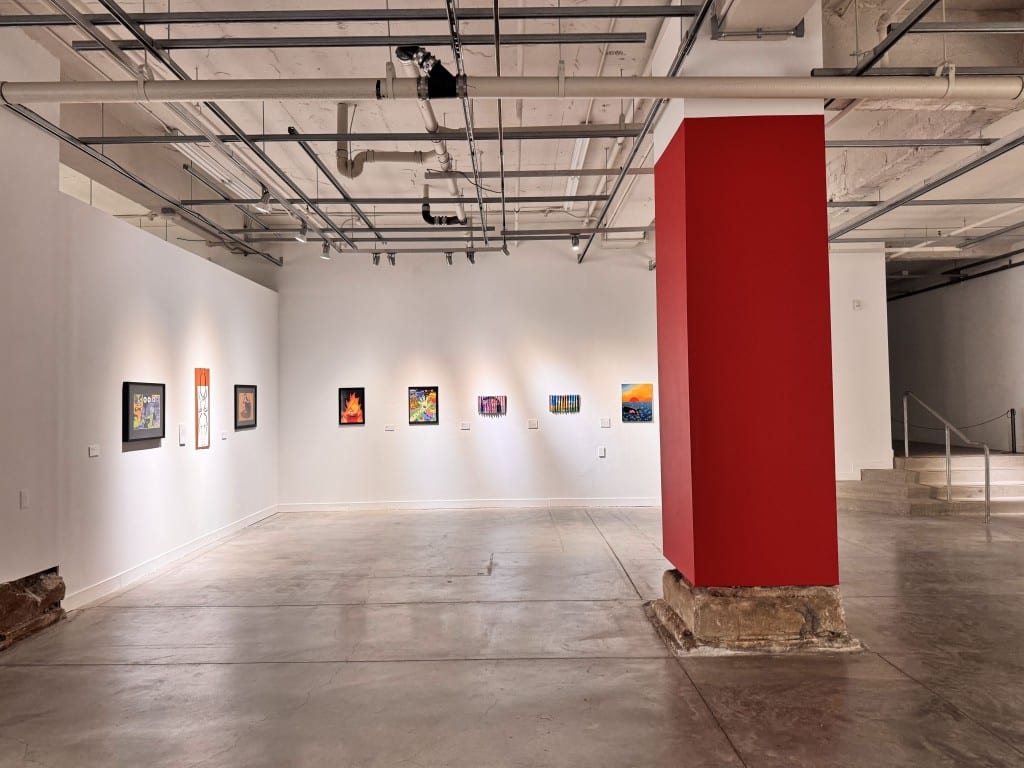
The “Young Artists of Columbus” exhibition now on display at Urban Arts Space features a number of firsts, from the curatorial debut of Imara January to the dozens of sixth through twelfth grade students whose work fills the gallery – many of whom have never before shown publicly.
“I was a Columbus City Schools kid myself, and as somebody who has always enjoyed the arts … you want to do anything you can to fuel that interest,” January said, pointing to obstacles such as school budgets where arts funding is typically the first thing on the chopping block and the challenge of taking art classes alongside others who might harbor little to no interest in the subject. “When you’re going to public school, you might be in a class of 30 where maybe three of you like art. … So, I wanted to give them a space outside of school to be with other artists.”
As a means of fostering this sense of connection, January will host both an opening reception and a “Creative Futures” meet and greet at the gallery on Friday, Jan. 30, during which the student exhibitors will have the opportunity to sit with and ask questions of a handful of working Columbus artists, including Iyana Hill. (The reception, initially scheduled to take place on Saturday, Jan. 24, and postponed due to the weather, will take place from 5-6:30 p.m. with “Creative Futures” taking place immediately after.)
A donation powers the future of local, independent news in Columbus.
Support Matter News
January said she would have “jumped for joy” if afforded a similar opportunity as a younger artist, recalling how she initially struggled to find her place within the art world after first taking up painting in high school. “When you go to museums, the lack of people of color can be a little halting, especially as a woman of color,” she said. “And so, I started by painting the people I see and the world I want to live in.”
Once enrolled at Ohio State University, where she studied art management, January said this world began to open up, particularly once she started interning at Urban Arts Space, where she crossed paths with artists and educators including Terron Banner, Ky Smiley, and Ayat Ibraham, who in turn introduced her to the likes of April Sunami and Arris’ J. Cohen.
“And the first time I saw [Cohen’s] work, I got to meet him, and he did a gallery tour with our class. And getting to talk to him about his process and his mindset and why he made the work he did, it was just so flooring,” said January, who allowed that up until that moment she had never considered that a career as an art maker could even be possible. “The adults of my childhood really pushed me to do something like art therapy, because until you’re in the art world, you’re not going to understand you can make money in the art world. And that was one of the biggest pushes behind this show. I wanted the kids to be able to see themselves in this professional space, so they could understand this could be a possibility for their future.”
Raised by a mother who worked as a nurse and an accountant father, January said her earliest introduction to art arrived via dance, with a series of injuries eventually limiting her from the pursuit. In its absence, she began to paint, experimenting with a variety of mediums and styles until her own voice began to surface in the work. One early turning point arrived earlier in high school, when January painted colorful portraits of two women on both sides of a small wooden square worn and textured by having served for years as a tap-dancing platform for her mom and sister. Looking back, the artist now draws a connection between the wooden canvas and the female figures she painted on each side, seeing in the work echoes of family, femininity and ancestral lineage – a story she would have been loath to share as a teenager even if she had recognized it in the moment.
“As a child, I hated naming my pieces and I didn’t want a storyline,” said January, who now sees in this hesitancy a desire to maintain some aspect of privacy. “It was part self-preservation and part irritability in being a teenager and having questions asked of you all the time. It’s just something I didn’t want to talk about or have to deal with then. … But looking back now, I can see it was really me trying to find my place as an artist. It was a way of me trying to free myself.”
Author
Related Articles
‘Immigration: A Journey of Belonging’ seeks deeper understanding
The new group exhibition, open now at the Losinski Gallery at the Main Library, will host a reception from 2-4 p.m. on Saturday, Oct. 3.
Deep conversations pave the way to ‘Chasing the Light’
A couple of years ago, Loren Bucek invited a group of artist friends to her Clintonville home. The gathering soon evolved into regular meetups that shaped the creation of a new exhibition opening this week at McConnell Arts Center.
Henry Hess says goodbye to his longtime Chromedge studio
Faced with a rent increase of more than 30 percent, the Hess family opted to move on from the artist’s creative home of the last eight years. And while the next steps remain uncertain, they stressed that Henry would maintain a presence in Franklinton. ‘We’re not going anywhere,’ Sophia Hess said.