
Arris’ J. Cohen comes full circle in curating ‘A Seat at the Table’
The group exhibition, which opens at the Ohio State Faculty Club today (Monday, Jan. 6), features multiple generations of Black Columbus artists, from Pheoris West and Richard ‘Duarte’ Brown to April Sunami and Tiffany Lawson.
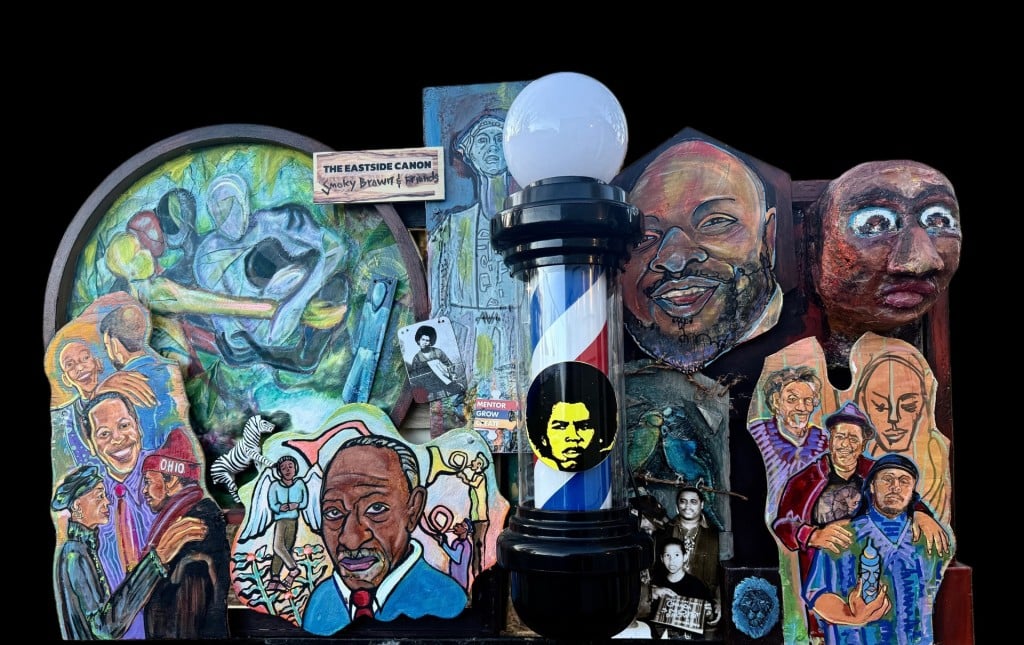
Around 2012, when Arris’ J. Cohen was still courting his now-wife, she lived in Columbus’ Bronzeville neighborhood with her aunt, an art appreciator whose collection included a pair of works by the late Pheoris West, which Cohen used to lose himself in for indeterminate stretches on those early visits.
“One was maybe a 60” by 48” portrait with all of these amazing colors in it, and the other was a smaller 9” by 12” graphite drawing of an African woman, and I would just gaze at them for a long time,” said Cohen, who now recalls that period as a low point in his life, owing to a growing awareness that he wanted to pursue a career as an artist kept in check by self-doubts that made the pursuit feel impossible. “It was something I didn’t see happening, ever. … When I think of that scene and seeing Pheoris’ work, it was like, I know I’m capable of this. And it wasn’t that I could be better than him or anything like that, but it was knowing this is what I want to do. And that was one of those moments that led to me doing this.”
More than a dozen years later, the moment comes full circle in “A Seat at the Table,” a group show curated by Cohen with assistance from artist and Faculty Club art coordinator Robie Benve and opening at the Ohio State Faculty Club today (Monday, Jan. 6). The generation-spanning exhibit finds Cohen showing his work alongside paintings by a number of artists who have influenced him along the way, including West.
A donation powers the future of local, independent news in Columbus.
Support Matter News
“It’s literally a Sankofa moment where you’re going into the past and remembering where you come from,” said Cohen, whose exhibition combines pioneering figures (West, Aminah Robinson, Queen Brooks) with contemporaries who have absorbed the lessons from these earlier generations, including April Sunami and Tiffany Lawson. “I feel connected to all of these people in so many ways. It means literally everything to me.”
At times, these connections existed without Cohen’s awareness, the artist recalling how he was exposed to Aminah Robison’s paintings throughout his life but never attached a name to them until after he had embarked on his own art career – her work essentially embedding itself in his DNA almost absent his knowledge. “And once I made that connection, and after I really started to take it seriously, it pushed me to dig deep,” he said. “If I’m going to be an artist in Columbus, it’s important that I know who paved the way, that I learn about her work, study her, meet the people who knew her.”
Cohen’s relationship with other exhibiting artists is more pronounced. Dr. Terron Banner helped to shepherd Cohen through a recent residency at Urban Arts Space, while Richard “Duarte” Brown has served as an early champion and an ongoing mentor since the two first crossed when Cohen was doing a live painting event. Brown, in particular, helps to bind the various generations displayed within “A Seat at the Table,” owing to the way the world-class artist has embraced a connective role within the local art scene, serving as cartilage, of sorts, between early artmakers and the rising generation of creators.
“His energy is binding,” Cohen said. “That idea of Duarte being connective tissue, that’s so true, especially for this. … He’s all heart, all positivity. And you feel it when you’re in his presence.”
Assembling the show has served as further reminder to Cohen that he exists as part of a larger continuum of Black art – one that often has been overlooked or neglected everywhere from the classroom to museums, whose collections have traditionally ignored Black-owned art spaces. When I interviewed the artist AdaObinna Moore in January 2023, she spoke about her time studying art at Ohio State, and how the instruction almost entirely centered the work of white artists whose experiences tended to feel distant from her own. “We were never taught about African or traditional art,” she said. “It was never part of the main coursework. It was always something private, or self-discovery, for me.”
Cohen sees this group show as a small move toward larger change, the title for the exhibition rooted in the reality that this is the first all-Black group arts show hosted at the Faculty Club. “We’re here to show that this work is important,” Cohen said. “That it should be taught as part of the curriculum. … I would love to be the professor of a class that speaks specifically about Black art. And in order to make that change that’s needed, you have to be a part of and immerse yourself in the system. And so, ‘A Seat at the Table’ is literally that.”
Author
Related Articles
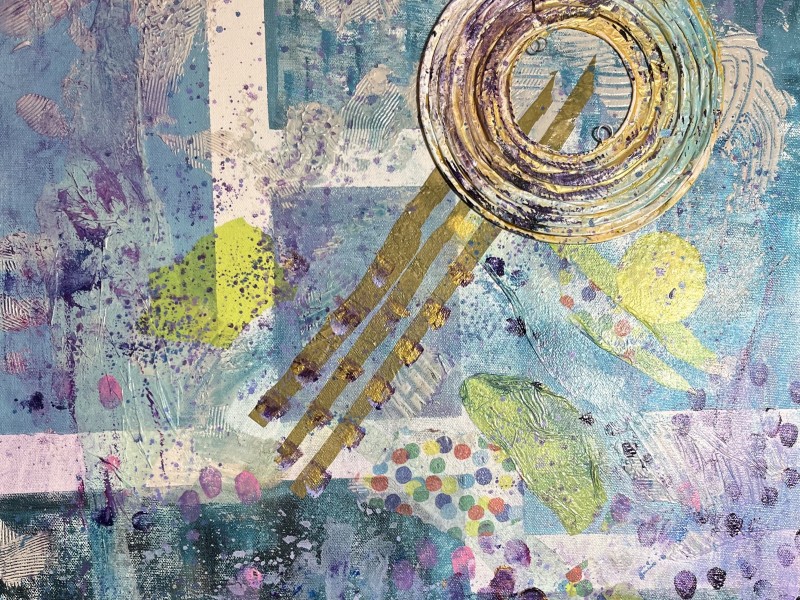
Deep conversations pave the way to ‘Chasing the Light’
A couple of years ago, Loren Bucek invited a group of artist friends to her Clintonville home. The gathering soon evolved into regular meetups that shaped the creation of a new exhibition opening this week at McConnell Arts Center.
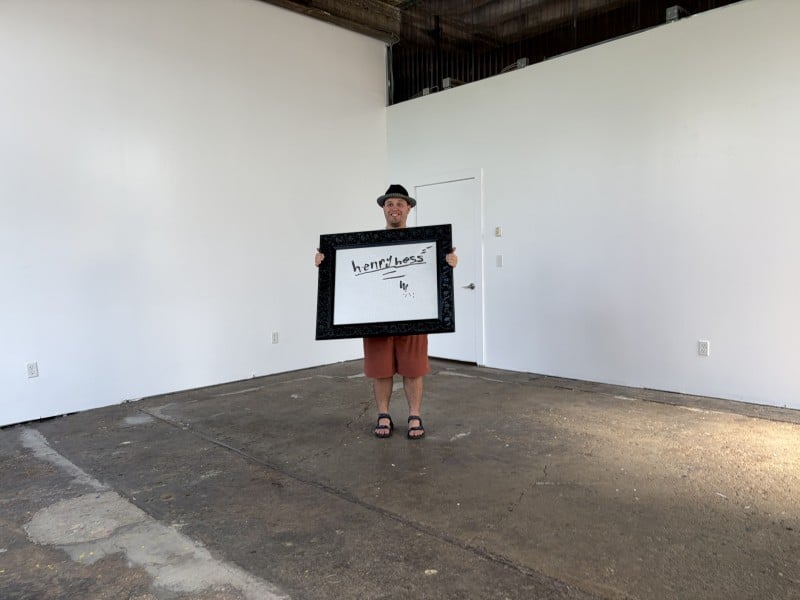
Henry Hess says goodbye to his longtime Chromedge studio
Faced with a rent increase of more than 30 percent, the Hess family opted to move on from the artist’s creative home of the last eight years. And while the next steps remain uncertain, they stressed that Henry would maintain a presence in Franklinton. ‘We’re not going anywhere,’ Sophia Hess said.

Nick Stull adopts a quieter approach
With his latest collection, on view at Sarah Gormley Gallery beginning today (Friday, Sept. 11), the Columbus artist hopes to entice viewers to linger a little longer in his world.