
Even cities as auto dependent as Columbus can imagine ‘Life After Cars’
There’s certainly some irony in a visit from ‘The War on Cars’ podcast hosts Sarah Goodyear and Doug Gordon being canceled by a Level 3 snow emergency that prevented drivers from taking to the road on Sunday.
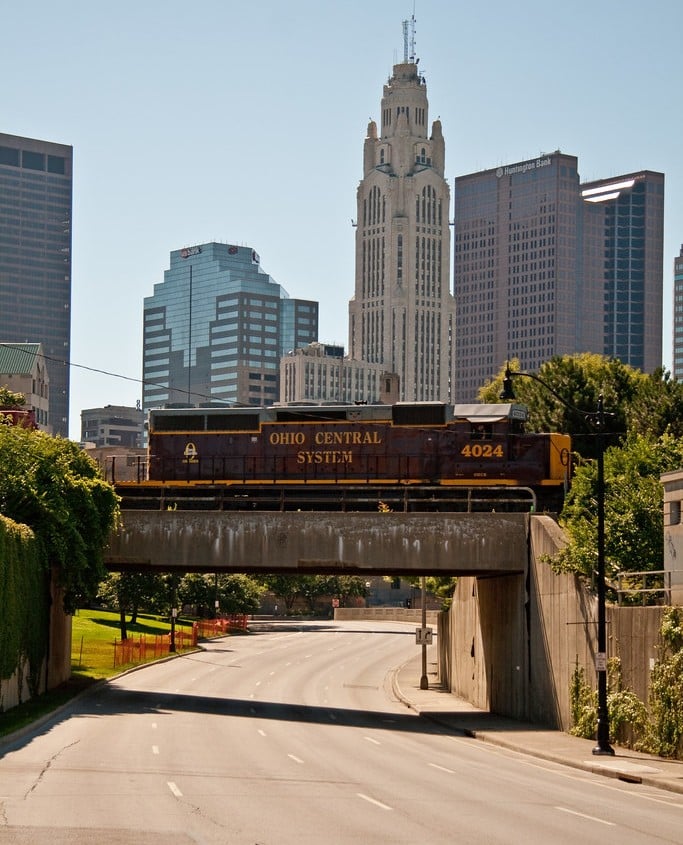
There would have been something kismet about Sarah Goodyear and Doug Gordon, hosts of “The War on Cars” podcast and coauthors of the book Life After Cars: Freeing Ourselves from the Tyranny of the Automobile, trekking to Columbus just days after Franklin County issued a Level 3 snow emergency, closing roads to all drivers except for emergency personnel.
Instead, the pair’s visit will have to wait, with Winter Storm Fern dropping so much snow on the region that the two were forced to cancel a trio of local events set to take place over the next few days, including a meet and greet, a ticketed event at Wexner Center for the Arts, and a forum at the Columbus Metropolitan Club. (Transit Columbus wrote on Instagram that it was working to reschedule the pair’s visit and would post details at a later date.)
For more than seven years, Goodyear and Gordon have advocated for the adoption of public policies that would decentralize the automobile, expanding access to public transit and bike lanes and curbing our reliance on a form of transportation that is increasingly expensive, dirty (SUVs alone now emit more carbon than the nations of Germany, South Korea, or Japan), and deadly, with traffic accidents accounting for more than 40,000 deaths in the United States alone in 2024.
A donation powers the future of local, independent news in Columbus.
Support Matter News
“I think there’s an underlying dissatisfaction with how we’ve built our society [around cars], but it’s difficult getting people to see how they can get out of it,” said Gordon, who joined Goodyear for a late January interview. “They just have to take some risks or maybe be a little inconvenienced now and then as bike lane networks are slowly being expanded, or as bus networks are slowly being expanded. And that’s the hard part.”
And yet, both Gordon and Goodyear said they have seen signs of progress, noting even the way the conversation around autos has shifted in the years since they launched “The War on Cars” alongside Aaron Naparstek, who also co-authored the book but no longer appears as part of the podcast. When the earliest episodes were released, Goodyear said, she generally refrained from telling people the title or even the concept, and it was at least a couple years before any politician deigned to appear as a guest, hesitant to turn off voters steeped in the American auto mythology.
“And now we’re having elected officials who are eager to come and sit on the stage with us to talk about these issues, and who see people who want to live car light and car free as constituents,” Goodyear said. “And that, in itself, is a radical shift, because it used to be as if this movement didn’t exist politically. You know, everybody has these stickers that say, ‘I bike and I vote,’ but that used to be something you had to really say, like, yes, people who bike actually vote. And now there are a lot of elected officials themselves who understand the issue from the inside.”
The two attributed this evolving attitude to factors that range from a generational shift, with young people coming of age at a point in time when our institutions are failing to address issues such as affordability and climate – “Both of which of are of course tied to transportation,” Goodyear said – to the aftereffects of the pandemic, when the expansion of in-street dining and open-street concepts awakened more people to the potential of spaces that had long been the sole domain of cars.
“Those of us doing this work and covering these issues, we had spent so many years saying, ‘Things are better [without cars],’ but we were pointing to international examples a lot of the time. And then the pandemic happens, and one of the first things people talk about is how the air is cleaner,” said Gordon, who went on to note the impact the decreased traffic had on even the noise pollution in New York City, where he and Goodyear both reside. “And Sarah and I live far enough away from each other … that there’s a river of traffic between us. But that river was calmed, and I could hear church bells from her neighborhood. And everybody noticed that.”
Additionally, Gordon said, the two observed business owners who used to throw fits at the idea of bike lanes being installed, worried that the loss of a single parking spot in front of their shop might put them out of business, begin to pivot from that way of thinking. “And it was like, ‘Please, take as much parking as you can and put in outside dining,’” he said. “And I think it became a real turning point where tactical urbanism, street fairs, and urban streets became tools of resilience. And cities began to say, ‘Hey, wait a minute, we could snap our fingers and rewrite some regulations and use these things as tools.’”
Not all cities, of course. While Columbus has recently taken gradual steps toward expanding public transportation with the adoption of LinkUS, commuters here are unquestionably reliant on cars, as is the case in cities such as Atlanta, Los Angeles, and Houston – all places Gordon and Goodyear have taken their show in recent years.
“Sometimes we’ll get dismissed as two urban elites living in a brownstone in Brooklyn, where it is possible to live entirely car free,” Gordon said. “And so, seeing more of what people are up against, it does help. … It helps us strengthen our arguments. And then it also shows what’s possible. Houston is obviously, as Sarah said, not just the belly of the beast but the entire skeletal structure and organs, but they also have a light rail system that is very good and reliable, and they’re pedestrianizing their main street through downtown. And we’re seeing examples of that in every city.”
“And I think it’s been important to take the message from San Diego to Houston, or from Houston to Columbus, and let them know there are people who are not in Portland and not in Brooklyn and not in Seattle doing this work just like you are,” Goodyear said. “And those are the people we’re hoping and aiming and trying constantly to connect.”
Author

Related Articles
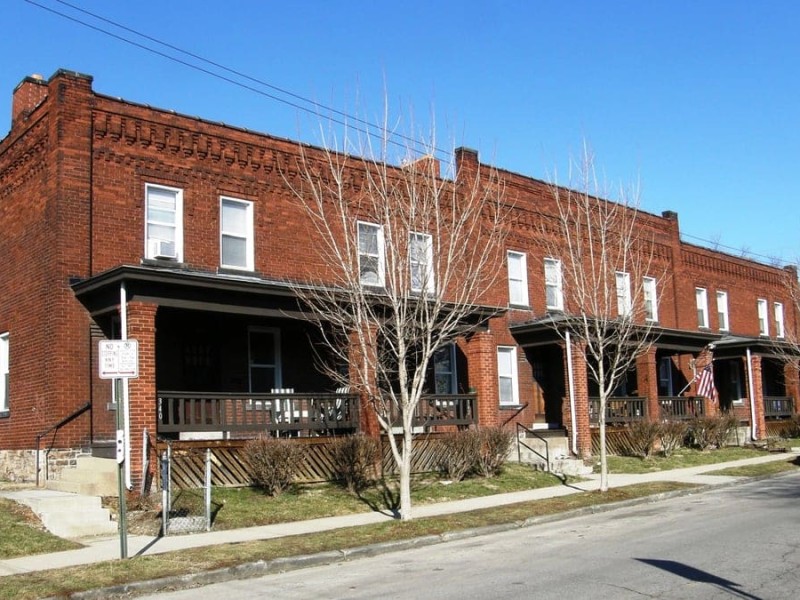
On Development: Of salad greens and sensible growth
Many developers and sellers confuse demand for a certain type of housing and a willingness to buy. There are hundreds of thousands of people in central Ohio who prefer older houses and apartments.
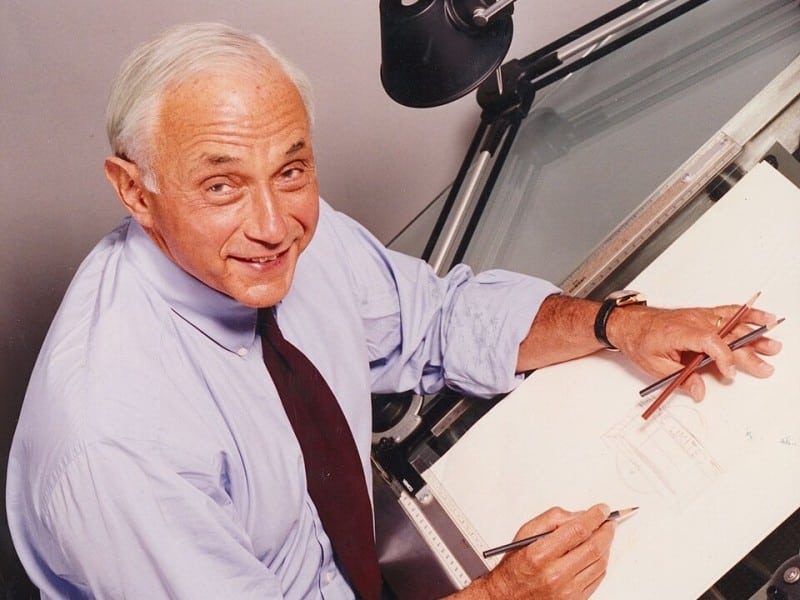
How Wexner’s desire for a city center led to a more fragmented Columbus
As the central Ohio retail magnate faces a larger public reconciliation owing to his ties with disgraced financier Jeffrey Epstein, a look back at how the Wexner name became so synonymous with the city.
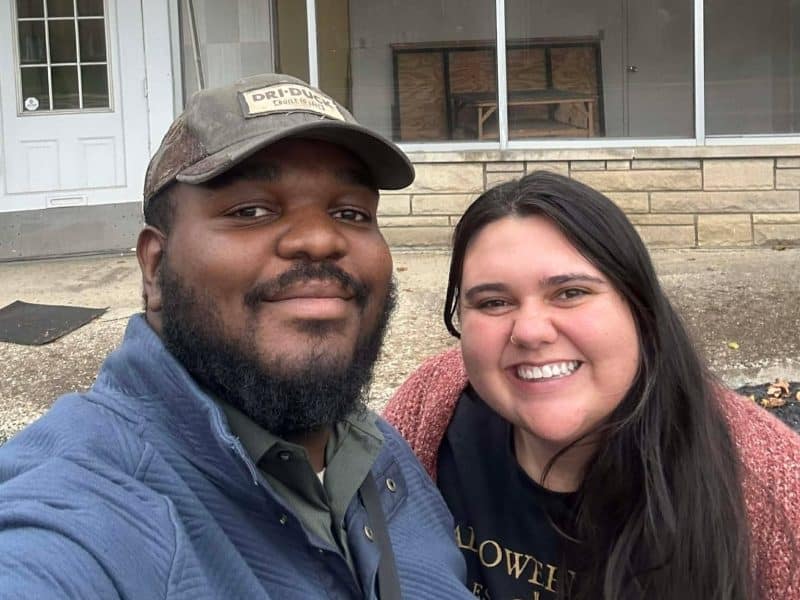
The Ambry Library prepares to open its doors to the Linden community
Opening Saturday, the arts-focused space will serve as an intimate concert venue, a gallery, and a library, as well as a center for community gathering and education.